After Islamabad Talks Stall, Europe Prepares Postwar Hormuz Security Plan Without U.S.
U.S.–Iran ceasefire talks in Islamabad last weekend failed to produce a deal, and U.S. negotiators led by Vice President J.D. Vance returned without an agreement after about 21 hours of face‑to‑face talks. Washington had demanded an affirmative commitment that Iran would not seek a nuclear weapon and the surrender or removal of highly enriched uranium; Tehran pressed for compensation, release of frozen funds and guarantees over Israeli operations in Lebanon. With talks stalled, the Trump administration moved to pressure Tehran by expanding naval operations around the Strait of Hormuz — including mine‑clearing transits and a partial interdiction of vessels bound for Iranian ports — even as Iran continued to control who can pass through the chokepoint, at times allowing vetted tankers and reportedly seeking transit fees of up to $2 million. The impasse has left the ceasefire fragile, oil and shipping markets volatile, and U.S. calls for allied naval escorts largely unanswered despite additional American troop and naval deployments.
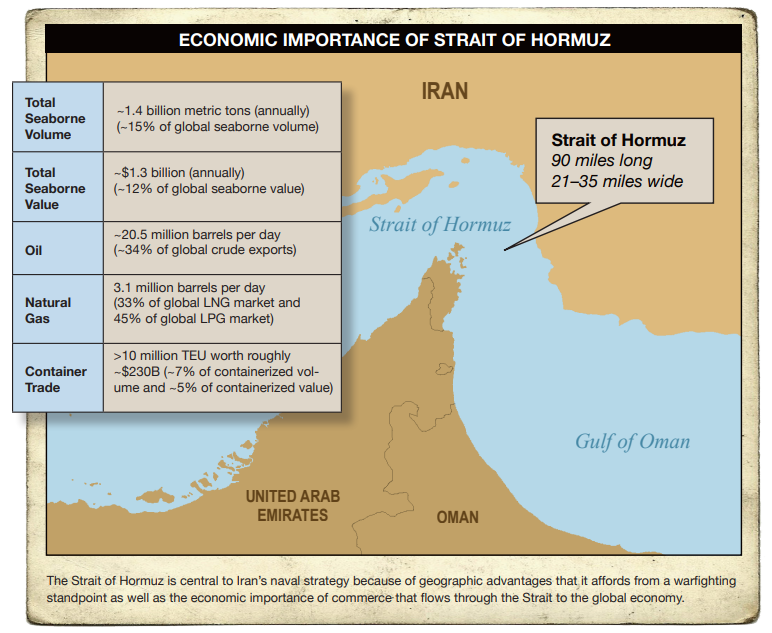
As Islamabad talks faltered, European capitals quietly began drafting a postwar plan to reopen and secure Hormuz without placing European ships under U.S. command. French and German officials have signaled support for a multinational defensive mission focused on mine‑clearing and convoy protection once major hostilities end; the plan, as described by European diplomats, would explicitly exclude the belligerent parties and aim to avoid tying European forces to U.S. operational command. That political choice reflects a broader hesitation: even as NATO members collectively have pushed defense spending higher — the alliance’s overall outlays reached 2.77 percent of GDP in 2026, the first year every ally cleared the 2 percent threshold — many European publics and leaders remain reluctant to place sailors and marines in direct combat roles in an active warzone. The economic stakes are acute for Europe: analysts warn a prolonged disruption in Hormuz could spike European gas costs by as much as 50 percent (from about €30/MWh to €45/MWh), deepening inflationary pressures across the continent.
Reporting on Hormuz has shifted noticeably over the past weeks. Early coverage emphasized Washington’s push to assemble a coalition and President Trump’s repeated appeals to allies to send warships, with outlets like MS NOW and ABC News foregrounding U.S. pressure and the prospect of allied escorts. More recent coverage, driven in part by reporting in the Wall Street Journal and in‑depth accounts from PBS and other outlets, has stressed Iran’s effective chokehold on the strait, the emergence of a de facto “toll booth” and Europe’s independent planning to reopen the waterway without U.S. combat forces. That evolution matters: what began as Washington’s public campaign to marshal partner navies has increasingly become a diplomatic and logistical problem Europe is preparing to solve on its own, a development that observers on social media have framed as Europe bypassing Washington — some accounts even suggesting direct talks with Tehran or a wider re‑balancing of postwar security arrangements. Those online perspectives underscore the political sensitivities at play and the real risk that the postwar order for Hormuz will look very different from the U.S.‑led model initially touted.
📊 Relevant Data
In 2026, for the first time, all NATO allies are spending more than 2 percent of their GDP on defense, with the alliance's total reaching 2.77 percent compared to 2.65 percent in 2024.
NATO allies spend more than 2 per cent of GDP on defence — EU News
Many Europeans, particularly in Italy, France, and Germany, express deep concern about the war in the Middle East and show divided opinions shaped by political views, with lower support for direct military involvement alongside the US.
Iran war: How do Europeans' political views shape their opinion of the conflict — Euronews
The Philippines maintains global leadership in seafarer supply for 2025, with Filipino seafarers in high demand and comprising a significant portion of the approximately 1.89 million seafarers serving on internationally trading merchant ships.
2025 Global Seafarer Rankings: Philippines Maintains Global Leadership — Marino Philippines (Facebook, but note: instructions prohibit social media; using as pointer - actual data from ICS Shipping)
The disruption in the Strait of Hormuz could push average gas prices in Europe up by up to 50 percent, from €30/MWh to €45/MWh, exacerbating energy costs and inflation risks amid the ongoing crisis.
Crisis in the Strait of Hormuz: gas, energy prices and European strategic autonomy — ECCO Climate
📌 Key Facts
- High‑level U.S.–Iran talks in Islamabad — led for the U.S. by Vice President J.D. Vance (with envoys Steve Witkoff and Jared Kushner) and for Iran by Parliament Speaker Mohammad Bagher Qalibaf and FM Abbas Araghchi — were historic, lasted roughly 21 hours, and ended without an agreement after Iran would not give the U.S. an "affirmative commitment" to forswear nuclear weapons; Washington says it left a "final and best offer."
- The core negotiating gaps were nuclear and security red lines: the U.S. demanded concrete limits (including handover/removal of highly enriched uranium and proposals such as a long suspension of enrichment), while Iran insisted on lifting sanctions, release of frozen assets (reportedly about $27 billion), compensation for war damage, cessation of Israeli strikes in Lebanon, and sovereign control/fees for passage through the Strait of Hormuz (reports of a de facto $2 million toll per tanker).
- After Islamabad talks stalled, President Trump ordered a U.S. naval blockade-style posture focused on interdicting vessels entering or departing Iranian ports and coastal areas (while publicly saying transits to/from non‑Iranian ports would not be impeded); CENTCOM said mine‑clearing destroyers transited the strait to begin operations and the blockade became effective, though Iran and independent ship‑tracking reports disputed or showed some ships moving despite U.S. claims.
- Iran had already been exercising effective control over the Strait of Hormuz during the conflict — selectively allowing some tankers (notably to Asia), threatening mine‑laying and attacks, and reportedly operating a "toll booth" regime that dramatically reduced normal transits and choked global oil and LNG flows.
- European governments and the EU began drafting a postwar, multinational effort to reopen and secure the Strait of Hormuz without placing European vessels under U.S. command: Britain has drawn up plans and convened partners, France (Emmanuel Macron) described a European mission for after the war, and Germany signaled it may join — even as many Europeans said they would not put forces in harm’s way while hostilities continue and preferred diplomatic options now.
- The military campaign continued in parallel: U.S. and Israeli forces repeatedly struck Iranian military targets (including anti‑ship missile sites and facilities on Kharg Island), the U.S. deployed additional Marines, paratroopers and ships to the region, multiple U.S. aircraft have been lost or damaged with at least one F‑15E crew rescued in a complex operation, and CENTCOM publicly quantified thousands of targets struck — while Iran and Iran‑aligned proxies kept launching missiles, drones and strikes at Israel, Gulf states and shipping.
- A fragile, mediator‑brokered two‑week ceasefire briefly paused wider U.S.–Iran hostilities but was contested from the start (Israel said it did not apply to Lebanon/Hezbollah and continued operations there; Iran and Gulf states reported violations); the ceasefire’s differing public interpretations and continued cross‑border strikes complicated Islamabad negotiations and the durability of any deal.
- The human and economic toll is substantial and rising: thousands of civilians and combatants have been killed across Iran, Lebanon, Israel and Gulf states (counts vary by source), millions displaced, regional infrastructure and shipping disrupted, and global energy markets severely affected — Brent and WTI traded well above pre‑war levels and U.S. pump prices rose (U.S. national averages nearing or above $4/gal), with markets volatile as diplomacy and military measures unfolded.
📊 Analysis & Commentary (39)
"The Fox News opinion argues that U.S. military gains in the Iran war give President Trump a diplomatic 'card' to play with Xi — urging him to confront Russia and China for aiding Iran and to exploit China’s energy vulnerabilities to pressure cooperation over reopening the Strait of Hormuz."
"The piece critiques Trump’s Sunday‑night public threats over the Strait of Hormuz — branding a 'Hormuz Coalition,' warning NATO and China they’ll be 'remembered' if they don’t help — arguing the tactic is transactional, risks alienating allies bound by legal and political limits, and substitutes theater for the coalition‑building real diplomacy requires."
"A POLITICO Playbook column argues that MAGA supporters are increasingly alarmed the Iran war’s disruption of the Strait of Hormuz may force the U.S. into deeper, politically dangerous escalation—even if battlefield strikes are presented as a success—echoing and commenting on reporting about Trump’s difficulties assembling allied naval support to reopen Hormuz."
"An explicitly pro‑administration opinion piece arguing the U.S. should seize a narrow window—militarily and diplomatically, including pressuring allies and leveraging China—to secure and reopen the Strait of Hormuz now, offering a set of bold policy moves to exploit Iran’s degraded naval posture and end the energy shock."
"The piece interprets Mr. Trump’s public pressure on allies over Strait of Hormuz escorts as emblematic of a larger, post‑war realignment and argues allies (Canada cited) err by antagonizing rather than adapting to his transactional demands."
"Phil Klay argues that the Trump administration’s incoherent rationales for and celebratory social‑media treatment of the Iran strikes amount to a fundamental strategic and moral miscalculation, turning deadly force into spectacle without a clear objective."
"Walter Russell Mead argues that the Iran war has shown both 'doves' and 'hawks' were wrong — accommodation underestimated the threat while military confrontation underestimated the costs and difficulty — calling for a more realistic, nuanced U.S. strategy."
"A critical commentary arguing that the administration’s recent Iran actions—described in reporting about Trump’s claims of productive contacts and postponed strikes—failed to win necessary domestic support, and that a president must persuade the public before waging effective foreign‑policy campaigns."
"A skeptical commentary arguing that Trump's 48‑hour Iran ultimatum and public threats are the actions of an unpredictable, market‑minded leader more likely to manage markets and seek a deal than to pursue a full military escalation, referencing the administration’s reported back‑channel talks with Iran."
"The WSJ opinion critiques the Trump administration’s opaque, semi‑informal approach to negotiating with Iran—naming private intermediaries and issuing contradictory public signals—and warns that this 'fog' risks misperception, strains alliances and makes escalation more likely."
📰 Source Timeline (240)
Follow how coverage of this story developed over time
- CENTCOM publicly claimed that “no ships made it past the U.S. blockade” of the Strait of Hormuz in the first 24 hours after implementation.
- Independent shipping data from MarineTraffic reportedly show at least two vessels bypassed the blockade, directly contradicting CENTCOM’s statement.
- French President Emmanuel Macron said Tuesday that Europe is drafting an international defensive mission for the Strait of Hormuz that would not include the 'belligerent' parties: the U.S., Israel and Iran.
- European diplomats say the plan would send mine‑clearing and other military vessels to help reopen the strait once the war ends and would not place European ships under American command.
- A senior German official says Germany is now likely to join the mission despite its traditional reluctance to participate in overseas military operations and could spell out its commitment as early as Thursday.
- Mossad Director Dadi Barnea publicly stated at a Holocaust commemoration that Israel’s operations against Iran will end 'only once the extremist regime in Iran is replaced.'
- Barnea said Israeli operations were 'meticulously planned' to continue even after the initial Feb. 28 strikes on Tehran, indicating a long‑term campaign rather than a single round of attacks.
- Fox, citing other outlets, reiterates that the joint Israel–U.S. strikes (Operation Roaring Lion and Operation Epic Fury) killed former Supreme Leader Ali Khamenei and left new Supreme Leader Mojtaba Khamenei severely disfigured with leg and facial injuries.
- Confirms Pakistan has formally proposed hosting a second round of U.S.–Iran talks within days and that two Pakistani officials describe the first Islamabad round as part of an ongoing diplomatic process.
- Cites two U.S. officials and a diplomat from a mediating country saying Tehran and Washington have agreed in principle to another round of talks, potentially as soon as Thursday, with Islamabad and Geneva under consideration as venues.
- Provides updated casualty figures: at least 3,000 killed in Iran, more than 2,000 in Lebanon, 23 in Israel, over a dozen in Gulf Arab states, and 13 U.S. service members dead.
- Details early observable effects of the U.S. blockade: tankers approaching the Strait of Hormuz turning around after the blockade took effect, with at least one tanker (Rich Starry) reversing course again and transiting the waterway.
- Identifies the tanker Rich Starry by name, notes it had been waiting off the UAE coast, and reports that U.S. Treasury’s OFAC lists it as linked to Iranian shipping, according to Lloyd’s List and Vortexa data.
- Notes that, in Washington, direct talks between the Israeli and Lebanese ambassadors to the U.S. are set to begin, described as their first such negotiations in decades.
- Trump’s meeting with Ambassador David Perdue is presented as part of a deliberate lead‑up to a May Trump–Xi summit, not just an ad hoc response to the blockage crisis.
- The piece gives a specific, up‑to‑date description of the U.S.–China tariff truce that followed the 2025 escalation, putting current levels around 30% and 10% respectively.
- It notes that the White House is moving to shut down the de minimis duty‑free channel for Chinese imports under $800, with Temu and Shein explicitly cited as targets.
- The article references recent intelligence assessments that downplay an imminent Chinese move on Taiwan, stating there is no fixed invasion timeline, and that current U.S. defense strategy is to prioritize homeland defense and deterrence over direct conflict preparation.
- NPR summarizes that both the U.S. and Iran are now actively blocking oil exports through the Strait of Hormuz, framing it as a mutual choke on global supply rather than a one‑sided U.S. blockade.
- It reports that oil prices are hovering around $100 a barrel, contributing to significantly higher gasoline prices in the U.S. despite America importing relatively little Gulf oil.
- Correspondent Greg Myre highlights that Iran’s already crippled economy is likely to suffer the most if the blockade drags on, even though ‘the vast majority of countries worldwide’ have taken an economic hit, and notes that no U.S. allies have agreed to join Trump’s blockade due to his failure to consult them.
- Vice President JD Vance told Fox News that 'the ball is in the Iranian court,' saying the U.S. has 'put a lot on the table' and clearly defined its red lines.
- Vance stated the U.S. position that Iran 'cannot have the ability to enrich uranium' and that 'the nuclear dust needs to be removed from Iran,' and emphasized the need for mechanisms to ensure Iran cannot obtain a nuclear weapon.
- Vance said there has been 'an uptick in traffic coming through the strait' of Hormuz but that it has not been fully reopened, warning that lack of progress on the waterway would 'change the negotiation.'
- Vance asserted that Iran 'tried to move the goalposts' on Strait of Hormuz issues during the Islamabad talks and claimed the U.S. now holds the stronger military and economic cards there.
- CBS confirmed that Secretary of State Marco Rubio will participate in direct Israel‑Lebanon talks in Washington with the Israeli and Lebanese ambassadors, the first such high‑level direct talks between those governments since 1993 and explicitly excluded from the Iran cease‑fire.
- Hezbollah leader Naim Qassem publicly urged Lebanon to cancel the planned Washington meeting, reiterating Hezbollah’s rejection of direct negotiations with Israel.
- Pakistani officials say last weekend’s Islamabad talks were intended as part of an ongoing diplomatic process, and Pakistan has proposed hosting a second round in the coming days, possibly as soon as Thursday.
- Two unnamed U.S. officials confirm discussions are underway about a new round of talks, with venue, timing and delegations still undecided.
- CENTCOM states the U.S. blockade now applies to vessels going to and from Iranian ports and is in effect, with its first full day described as Tuesday.
- MarineTraffic data show at least two tankers approaching the Strait of Hormuz turned around shortly after the blockade took effect, indicating early compliance or hesitation.
- Updated war casualty figures: at least 3,000 killed in Iran, more than 2,000 in Lebanon, 23 in Israel, and more than a dozen in Gulf Arab states, plus 13 U.S. service members.
- Trump publicly claims Iran’s navy has been "completely obliterated" while warning any fast-attack ships approaching the blockade will be "immediately ELIMINATED," and Iran’s parliamentary speaker Mohammad Bagher Qalibaf responds, "If you fight, we will fight."
- During weekend talks in Pakistan, the U.S. formally proposed a 20‑year suspension of Iranian uranium enrichment, while Iran countered with an offer of up to a 5‑year suspension.
- President Trump rejected Iran’s counteroffer, according to a U.S. official, though both sides are discussing a possible second round of face‑to‑face talks.
- The International Energy Agency now forecasts a 1.5 million barrels per day decline in global oil demand this quarter due to war‑driven price spikes, the steepest drop since the Covid‑19 pandemic.
- Despite Trump’s announcement of a naval blockade on Iranian ports, ship‑tracking data show several vessels from Iran transited the Strait of Hormuz before and after the declared start time, including a U.S.‑sanctioned tanker that briefly reversed course but completed its passage.
- Updated casualty figures: at least 1,701 civilians killed in Iran (including 254 children), 2,089 killed in Lebanon, at least 32 in Gulf nations, at least 22 in Israel plus 12 Israeli soldiers in Lebanon, and 13 U.S. service members.
- Vance disputes media characterizations that the Islamabad talks 'failed,' saying there were 'good conversations' and that Iranians 'moved in our direction' but not far enough.
- He claims the U.S. side 'acquired some knowledge about how the Iranians are negotiating' and learned that the Islamabad delegation lacked final decision‑making authority.
- He underscores that the U.S. has already 'stopped bombing the country' under the cease‑fire and expects Iran in return to 'fully reopen' the Strait of Hormuz, framing this as the core trade on the table.
- Retired Pakistani Lt. Gen. Mohammed Saeed, former chief of general staff, says U.S.–Iran talks in Islamabad were 'very close' to success, 'even inches away from a solution,' and characterized by 'very friendly' engagement and mutual 'accommodation and understanding.'
- Saeed frames the newly enforced U.S. naval blockade of Iranian maritime traffic as potentially a negotiating 'maneuver' to increase pressure on Tehran rather than a final military end state.
- He emphasizes that Pakistan’s military leadership, including army chief Asim Munir, sees the Islamabad round as a 'great moment for diplomacy' and believes Pakistan retains leverage to revive talks, underlining that this was the first such high‑level U.S.–Iran engagement in roughly 47 years.
- Trump is quoted asserting that under the blockade 'Iran is doing absolutely no business' and claiming its navy, air force, air defenses, radar, and 'leaders' are 'gone' — sweeping battlefield claims that go beyond earlier reporting.
- The article underlines global economic concern, with Saeed explicitly warning of 'economic negative spin‑offs' from the blockade for countries dependent on Gulf energy flows, including Pakistan.
- Reports that the most recent cease-fire talks between the U.S. and Iran over the weekend ended without an agreement, leaving the current two-week truce to expire on April 22.
- Links that failure directly to the decision to begin a blockade of all Iranian ports and coastal areas on Monday.
- A senior Pakistani government official tells CBS that Islamabad has intensified diplomatic efforts to restart U.S.–Iran talks after the inconclusive 21-hour round in Islamabad.
- Pakistani officials are now referring to the effort as the 'Islamabad Process,' signaling an attempt to frame it as an ongoing diplomatic track rather than a one-off meeting.
- Pakistan is seeking a second round of talks before the current cease-fire, which expires around April 22, and is awaiting formal responses from both Washington and Tehran.
- The initiative is being driven directly by Prime Minister Shehbaz Sharif and Army Chief Field Marshal Asim Munir, who both personally engaged in the first round and are continuing to press both sides.
- The article notes Pakistan’s broader motive: using successful mediation in the Iran war as part of a push to rebrand itself as a global diplomatic player to attract investment and stabilize its economy.
- CBS segment reiterates that President Trump publicly 'called for a blockade of the Strait of Hormuz' specifically after peace talks with Iran in Islamabad collapsed over the weekend.
- Adds on‑air expert commentary from retired U.S. Navy Vice Admiral Robert Murrett about likely operational contours and risks of such a blockade (rules of engagement, escalation dynamics, and strain on U.S. naval assets), though details are summarized rather than extensively quoted in the text stub.
- CBS segment reiterates that the blockade decision followed 'marathon peace talks' in Pakistan that ended without a deal.
- It characterizes the action as a 'partial blockade of the Strait of Hormuz' focused on ships 'doing business with Iran,' which is consistent with but slightly less detailed than existing descriptions that spell out interdiction of vessels entering or leaving Iranian ports.
- NPR reiterates that CENTCOM says the blockade on ships traveling to or from Iran will start today at 10 a.m. ET, directly linking the timing to the failed U.S.–Iran talks.
- Vice President J.D. Vance, asked about the breakdown in Islamabad, is quoted emphasizing the U.S. demand for an 'affirmative commitment' from Iran that it will not seek a nuclear weapon or the tools to rapidly obtain one, sharpening the public rationale for the talks’ failure.
- NPR adds detail that Iran is exploiting the de facto closure of the Strait of Hormuz by charging foreign ships up to about $2 million per transit, tightening the link between Iranian tolls, global oil prices and Trump’s decision to impose a blockade.
- NPR underscores that the blockade 'doesn't improve prospects for potential peace talks,' framing it as a pressure move that may harden positions rather than reopen negotiations.
- CENTCOM publicly states the blockade will be enforced 'impartially against vessels of all nations' entering or departing Iranian ports and coastal areas in both the Arabian Gulf and Gulf of Oman, starting at 10 a.m. Eastern Time Monday.
- CENTCOM reiterates it 'will not impede freedom of navigation' for ships merely transiting the Strait of Hormuz to and from non‑Iranian ports.
- British Prime Minister Keir Starmer says the UK will not join Trump’s Iranian port blockade and will instead focus its efforts and minesweeping capability on reopening the Strait of Hormuz.
- French President Emmanuel Macron announces France and Britain will convene a conference 'in the coming days' to organize a 'peaceful multinational mission' aimed at restoring freedom of navigation in the Strait, explicitly separate from the warring parties.
- Brent crude oil jumps to $102.24 a barrel on Monday following the blockade announcement.
- Trump posts that he has instructed the U.S. Navy 'to seek and interdict every vessel in International Waters that has paid a toll to Iran' and warns that 'no one who pays an illegal toll will have safe passage on the high seas.'
- CENTCOM states the blockade will be enforced 'impartially against all vessels of all nations entering or departing Iranian ports or coastal areas' and will begin at 10 a.m. Washington time on Monday.
- Vice President JD Vance, speaking in Islamabad, says the U.S. does not 'see a fundamental commitment of will' from Tehran to give up pursuing nuclear weapons, identifying that as a central reason talks failed.
- The U.S. delegation is demanding that Iran 'hand over or sell' its highly enriched uranium stockpile, while Iran is seeking war reparations and the unfreezing of $27 billion in Iranian funds.
- The Institute for the Study of War finds that, for now, only Iranian and Iranian-approved vessels are moving through the Strait of Hormuz, indicating that Iran and the IRGC have a de facto toll and control regime in place.
- Former Treasury Iran sanctions official Miad Maleki estimates an effective blockade would cost Iran roughly $435 million per day in lost imports and exports, arguing it could make continued resistance economically impossible.
- CENTCOM says two guided-missile destroyers, USS Frank E. Peterson and USS Michael Murphy, crossed the Strait over the weekend to begin minesweeping operations and will later share a 'safe pathway' with commercial shipping to encourage the free flow of non-Iranian commerce.
- Public confirmation from Trump via Truth Social of the blockade timing and focus on ships entering or exiting Iranian ports.
- CENTCOM’s explicit statement that ships transiting the Strait of Hormuz to non‑Iranian ports will be allowed through, clarifying the blockade is partial.
- Iran’s Khatam Al‑Anbiya military command publicly branding the U.S. move 'illegal' and 'piracy' and threatening that no port in the Persian Gulf and Arabian Sea will be safe if its own are threatened.
- Negotiations in Islamabad are described as 'marathon peace talks' that ended without a breakthrough, with U.S. officials framing Iran’s unwillingness to renounce its nuclear program and dispose of roughly 900 pounds of highly enriched uranium as the central sticking point.
- Tehran is quoted accusing Washington of a 'maximalism approach,' while U.S. officials highlight disputes over frozen Iranian revenues held abroad and control of the Strait of Hormuz as core unresolved issues.
- The U.S. military now publicly specifies that the impending blockade will target ships entering and departing Iranian ports and coastal areas, not all traffic in the strait, while allowing transits to and from non‑Iranian ports.
- Senior Iranian voices respond with public threats and signals: an adviser to Mojtaba Khamenei warns of 'large, untouched levers' to counter a naval blockade, and top negotiator Mohammad Bagher Ghalibaf issues a pointed warning to U.S. consumers about future gas prices.
- Trump characterizes the cease-fire as 'holding well,' says he 'doesn’t care' if Iran returns to talks, and suggests he is indifferent to the diplomatic track even as the blockade is about to start.
- The piece situates the talks’ failure in the broader regional context, noting that Iran accuses Israel of violating the cease-fire with continuing airstrikes in Lebanon while Israel says it is hitting Hezbollah targets.
- CBS piece reiterates that the talks were a 'marathon round' over the weekend and explicitly ties their failure to Trump’s public announcement of a Strait of Hormuz blockade.
- Confirms, via another major outlet, that the blockade announcement is being framed as the immediate consequence of the talks’ collapse.
- Confirms Vice President JD Vance has returned to Joint Base Andrews around 5 p.m. Sunday after about 34 hours of round‑trip travel and more than 16 hours of negotiations over roughly three days.
- Provides Vance’s on‑record description that the U.S. team left Islamabad with what he called a 'final and best offer' and that Iranian leaders rejected it.
- Details that Vance says he was in 'constant' communication during the talks with President Trump, Secretary of State Marco Rubio, Treasury Secretary Scott Bessent and other top officials.
- Adds Trump’s same‑day Truth Social language that the Navy will 'begin the process of BLOCKADING any and all Ships trying to enter, or leave, the Strait of Hormuz' and that 'at some point' traffic may fully resume only if Iran drops mine‑threat claims.
- Clarifies that special envoy Steve Witkoff and Jared Kushner accompanied Vance in Islamabad but did not fly on Air Force Two, instead linking up on the ground.
- Adds that the immediate financial‑market consequence of the talks’ collapse has been a marked increase in global oil prices.
- Makes explicit that traders see Trump’s subsequent blockade vow as a key driver of the price move, not just the diplomatic failure itself.
- Connects the collapse of talks to U.S. domestic economic concerns by reporting how markets are now pricing in an elevated probability of export disruptions through Hormuz.
- A U.S. official told Fox News Digital that Tehran ‘deluded itself’ about the leverage it held in Islamabad and that no deal is possible while Iran believes it has more leverage than it actually does.
- The U.S. delegation concluded Iran ‘did not comprehend’ that the core of any peace deal is Iran never obtaining a nuclear weapon, and that this is non‑negotiable.
- The article spells out Washington’s specific red lines: ending all uranium enrichment; dismantling all major enrichment facilities; retrieval of highly enriched uranium; acceptance of a broader peace, security and de‑escalation framework including regional allies; ending funding for Hamas, Hezbollah and the Houthis; and fully reopening the Strait of Hormuz with no tolls.
- Vice President JD Vance characterized the U.S. proposal as a ‘final and best offer’ that remains on the table but said Iran has ‘chosen not to accept our terms.’
- The U.S. official described the 21‑hour talks as starting ‘tough’ but becoming more friendly and productive in tone, despite ending without agreement.
- AP/PBS details that the U.S. put a 15‑point proposal on the table, believed to repeat war aims (eliminating Iran’s nuclear and missile programs and proxy support) and explicitly call for reopening the Strait of Hormuz to normal traffic.
- The piece reports Iran responded with a 10‑point plan demanding Iranian control over the Strait of Hormuz, an end to the war, halt to attacks on its proxies including Hezbollah, and compensation for war damage.
- Vice President JD Vance is quoted specifying that the U.S. wants an 'affirmative commitment' from Iran that it will not seek a nuclear weapon and not seek the tools to quickly achieve one, highlighting Iran’s enriched‑uranium stockpile being a “short technical step” from weapons grade.
- Iranian First Vice President Mohammad Reza Aref publicly characterized control of the Strait of Hormuz as part of the 'rights of the people,' reinforcing that Tehran views control of the strait as non‑negotiable sovereign prerogative.
- Pakistan Foreign Minister Ishaq Dar says Pakistan will try to facilitate another round of U.S.–Iran talks in the coming days, though neither Washington nor Tehran has yet agreed to resume negotiations.
- Trump tells Fox News the U.S. Navy will 'immediately' begin a blockade to stop ships entering or leaving the Strait of Hormuz after the 21‑hour Islamabad ceasefire talks ended without agreement.
- Trump frames the policy as 'all or none,' saying he has instructed the Navy to 'seek and interdict every vessel in International Waters that has paid a toll to Iran' and that 'no one who pays an illegal toll will have safe passage on the high seas.'
- The article emphasizes potential economic fallout, noting a U.S. blockade could further rattle global energy markets and prices for oil, natural gas and related products, given the strait previously carried 20% of global oil supplies.
- U.S. military officials say two destroyers transited the Strait ahead of mine‑clearing work, which Iran’s state media — citing a joint military command — publicly denies.
- Trump again links the talks’ failure to Iran’s refusal to give an 'affirmative commitment' not to seek a nuclear weapon and reiterates threats to 'finish up' Iran at the 'appropriate moment,' including striking civilian infrastructure.
- The piece specifies the current ceasefire is a 14‑day truce expiring April 22, 2026, with no agreement on what happens after that date.
- Pakistani Foreign Minister Ishaq Dar says Pakistan will try to facilitate a new dialogue in coming days, while Iran’s state media reports Tehran is open to continuing talks.
- Additional diplomatic reaction is detailed: the EU urges further diplomatic efforts; Oman’s foreign minister calls for 'painful concessions'; and the Kremlin says Putin emphasized readiness to help a diplomatic settlement in a call.
- Trump uses a Fox News interview to spell out that his Strait of Hormuz policy is 'all or nothing'—no selective access by country and no exemptions for allies.
- He explicitly says the approach will mirror prior U.S. sanctions on Venezuela 'but at a higher level,' making clear he intends a comprehensive squeeze on Iran’s oil revenues, not just limited interdictions.
- The president outlines that U.S. forces will both destroy mines and 'seek and interdict' every vessel in international waters that has paid Iran’s 'illegal' tolls, and issues a blunt threat that any Iranian who fires at U.S. forces or peaceful ships will be 'blown to hell.'
- Ship‑tracking firm Windward is quoted saying many tankers are already headed to the 'Gulf of America' to load crude for shortage‑hit markets while Hormuz traffic is largely halted, a concrete indicator of early market‑driven rerouting.
- MS NOW piece provides fuller on-the-record quotes from Trump’s Fox News interview in which he explicitly links his April 7 threat to destroy Iran’s "whole civilization" to getting Iran to the bargaining table, and predicts Iran will "give us everything we want."
- It adds Trump’s on-air characterization that "most points were agreed to, but the only point that really mattered, NUCLEAR, was not," sharpening the stated reason for the talks’ collapse.
- The article confirms via U.S. officials that two U.S. warships crossed the Strait of Hormuz on Saturday as part of a mine-clearing operation, the first such transit since the war began, and ties that operational move directly to the new blockade posture.
- Pakistani Foreign Minister Ishaq Dar and Omani Foreign Minister Badr bin Hamad Al Busaidi are quoted describing the talks as "intense and constructive" and urging continuation of the ceasefire and negotiations, adding mediator perspectives missing from earlier coverage.
- Former Obama-era Iran negotiator Rob Malley is quoted assessing the bargaining dynamics, saying both sides believe they have the upper hand and are therefore reluctant to make concessions.
- Trump publicly paired the collapse of the Islamabad talks with a declaration that the U.S. Navy will "immediately" begin a blockade to halt ships entering or leaving the Strait of Hormuz.
- He specified that U.S. forces have been instructed to "seek and interdict every vessel in International Waters that has paid a toll to Iran" and warned that "no one who pays an illegal toll will have safe passage on the high seas."
- The article reinforces that U.S. officials see Iran’s refusal to provide an "affirmative" pledge not to seek nuclear weapons as the central sticking point, quoting Vance’s formulation about banning both nuclear weapons and "the tools" to quickly obtain them.
- Pakistani Foreign Minister Ishaq Dar publicly committed to trying to facilitate further dialogue and called it "imperative" that parties uphold their ceasefire commitments, highlighting continued mediation efforts.
- The piece revisits the human and economic costs of the war so far, including at least 3,000 deaths in Iran, 2,020 in Lebanon, and sharp curtailment of Persian Gulf exports due to Iran’s grip on the strait.
- NPR makes explicit that the Islamabad talks 'failed to reach an agreement' and describes them as a breakdown, not just stalled negotiations.
- Vice President J.D. Vance publicly frames the core sticking point as needing an 'affirmative commitment' that Iran will not seek a nuclear weapon or 'the tools that would enable them to quickly achieve' one, sharpening what the U.S. is actually demanding.
- Iranian Foreign Ministry spokesperson Esmaeil Baqaei is quoted listing the main subjects (Strait of Hormuz, nuclear issues, sanctions, reparations, and ending the war) and accusing the U.S. of 'excessive demands,' while stressing Iran’s insistence on controlling the Strait of Hormuz and demanding an end to Israeli attacks on Hezbollah.
- The piece notes the talks were the first face‑to‑face U.S.–Iran engagement since the 2015 nuclear deal and the highest‑level discussions since the 1979 Islamic Revolution, adding historical context and underscoring their significance.
- NPR highlights that President Trump has remained publicly silent on the collapse while attending a UFC fight in Miami, even as he earlier claimed 'We win, regardless' and said 'we've totally defeated that country.'
- Pakistan’s foreign minister, Ishaq Dar, is quoted saying Pakistan will continue mediating and urging both sides to uphold the ceasefire, underlining Islamabad’s role after the failed round.
- The article specifies that one core dispute is the fate of nearly 900 pounds of highly enriched uranium held by Iran, which the U.S. wants addressed as part of a deal.
- It reports that Iran is demanding the release of about $27 billion in frozen oil revenues held abroad as part of any agreement.
- It confirms that reopening the Strait of Hormuz immediately, for all maritime traffic, is one of three main unresolved issues, with Iran insisting it will only lift restrictions after a final peace deal.
- The piece clarifies that the Islamabad meetings were the highest-level, face-to-face encounter between U.S. and Iranian officials since the 1979 Islamic Revolution.
- It notes Pakistan publicly urged both sides early Sunday to continue respecting the temporary cease-fire, which is set to expire April 21.
- It adds color on Trump’s posture — publicly saying 'we win, regardless' and claiming 'we’ve defeated them militarily' while attending UFC 327 in Miami as Vance announced the impasse.
- Iranian Foreign Ministry spokesman Esmaeil Baqaei is quoted saying disagreement on 'two or three key issues' prevented a deal, without committing to further talks.
- Iran Foreign Ministry spokesman Esmaeil Baghaei told state TV the talks failed over a 'gap between our opinions over two or three important issues' and said the negotiations 'didn’t result in an agreement,' while claiming mutual understanding on some topics.
- Baghaei confirmed that the negotiators discussed the Strait of Hormuz but, in contrast to Vance, did not mention nuclear weapons in his account.
- Pakistan’s Foreign Minister Ishaq Dar publicly urged both Iran and the U.S. to keep their commitment to maintain the ceasefire and said Pakistan will continue its mediating role and facilitation of dialogue.
- The article specifies that Vance boarded his plane to depart Islamabad at 7:08 a.m. local time after the talks ended, underscoring that the session is definitively over and the U.S. delegation has left.
- Confirms the talks lasted 21 hours in Islamabad and ended without an agreement because, according to JD Vance, Iran would not make an 'affirmative commitment' not to seek a nuclear weapon or the means to quickly acquire one.
- Specifies that the current arrangement is a 14‑day ceasefire between the U.S., Iran and Israel, with its future now uncertain after the talks ended.
- Pakistan’s foreign minister Ishaq Dar publicly urged both sides to keep honoring the ceasefire and said Pakistan will try to facilitate a new round of dialogue in the coming days.
- Details that Vance stayed in close contact with President Trump (speaking 'a half dozen times, a dozen times' over 21 hours) and with Secretary of State Marco Rubio, Treasury Secretary Scott Bessent and CENTCOM commander Adm. Brad Cooper during negotiations.
- Reports that the U.S. military says two destroyers transited the Strait of Hormuz to start mine‑clearing, while Iran’s state media says a joint military command denied such a U.S. transit, underscoring a live dispute over U.S. naval movements.
- Quotes Trump saying of the strait, 'We’re sweeping the strait. Whether we make a deal or not makes no difference to me,' while calling the Islamabad negotiations 'very deep.'
- Identifies the Iranian delegation leader as Parliament Speaker Mohammad Bagher Qalibaf and notes Iranian state TV described 'serious' differences, without immediately offering an official government comment.
- Confirms from Vance’s own press conference that the talks lasted 21 hours and ended specifically because 'Iran has chosen not to accept our terms.'
- Details that Vance demanded an 'affirmative commitment' from Iran that it will not seek a nuclear weapon and will not seek the tools to quickly achieve one, spelling out the core U.S. 'red line.'
- Clarifies that the U.S. delegation has left behind what Vance calls a 'final and best offer' that Iran can still accept later.
- Documents that Vance was in 'consistent' direct contact with President Trump during the talks, speaking perhaps 'a half dozen… a dozen' times over the 21 hours and also coordinating with Secretary of State Marco Rubio and Secretary of War Pete Hegseth.
- Names key Iranian counterparts at the Islamabad talks: Foreign Minister Abbas Araghchi and Parliament Speaker Mohammad Bagher Ghalibaf.
- Confirms that Jared Kushner and U.S. special envoy Steve Witkoff were part of the senior U.S. delegation in Islamabad.
- Vice President JD Vance said the first round of Islamabad negotiations between the U.S. and Iran ended after 21 hours without a peace deal because Iran refused to give an 'affirmative commitment' not to seek a nuclear weapon or the tools to quickly build one.
- Vance described leaving Islamabad with what he called the U.S. delegation’s 'final and best offer' and said it is now up to Iran to decide whether to accept it.
- Vance detailed that he spoke with President Donald Trump 'a half dozen times, a dozen times' over the 21 hours, as well as with Secretary of State Marco Rubio, Treasury Secretary Scott Bessent, and CENTCOM chief Adm. Brad Cooper, underscoring direct White House control over the talks.
- The article reports the U.S. military’s claim that two destroyers transited the Strait of Hormuz to begin mine‑clearing operations — contradicting Iranian state media, which said a joint command denied any such U.S. transit — highlighting an emerging information battle over control of the strait.
- Trump told journalists during the talks, 'We’re sweeping the strait. Whether we make a deal or not makes no difference to me,' signaling he intends mine‑clearing and a push to reopen shipping regardless of the diplomatic outcome.
- Pakistani officials, speaking anonymously, said leaders of the delegations will resume discussions after a break and that technical teams from both sides remain in contact, suggesting the process is paused rather than formally terminated.
- Iranian state media framed Tehran’s position as including 'red lines' such as compensation for U.S. and Israeli strikes and preconditions like reduced Israeli attacks on southern Lebanon, while Iranian state TV said 'serious' differences remain.
- Confirms that the Islamabad meetings are the highest-level face‑to‑face U.S.–Iran encounter since 1979, explicitly framing them as historic at that level.
- Details that Parliamentary Speaker Mohammad Bagher Ghalibaf initially said Iran would not negotiate unless a Lebanon ceasefire and release of heavily sanctioned Iranian assets were met first, sharpening Tehran’s preconditions.
- Specifies that Iran is seeking to retain full sovereignty over the Strait of Hormuz and plans to charge tankers tolls of up to $2 million per ship, with estimates this could generate up to $100 billion annually for the IRGC.
- Reports hundreds of ships trying to pass through the Strait remain stranded, underscoring the scale of the ongoing maritime shutdown.
- Quotes Trump saying he has "no idea" how the talks will progress but expects Iran will reopen the Strait "in the not‑too‑distant future," while also noting he ordered U.S. warships readied for potential strikes if negotiations fail.
- Adds that after announcing the two‑week ceasefire, Trump signaled potential easing of primary and secondary sanctions on Iran and walked back earlier public musings about the U.S. joining an Iran toll regime, now saying "we're not gonna let that happen."
- Notes that Israel struck more than 200 Hezbollah targets across Lebanon overnight, even as Netanyahu has instructed his cabinet to begin direct negotiations with Lebanon in Washington next week after Trump pressed him to scale back the assault.
- Lists additional U.S. negotiators present in Islamabad: special envoy Steve Witkoff, Jared Kushner, deputy national security adviser Andrew Baker, and Michael Vance, the vice president’s national security adviser, and on the Iranian side Foreign Minister Abbas Araghchi.
- Reports that Pakistan’s Prime Minister Shehbaz Sharif separately met with each side and then brought them into a trilateral format, and has publicly urged all warring parties to honor the ceasefire amid continued Israeli strikes and reported Iranian attacks on Gulf states.
- Confirms that these are historic, direct face-to-face negotiations between the U.S. and Iran in Islamabad, with the White House publicly confirming the direct nature of the talks.
- Identifies the Iranian delegation leader as Parliament Speaker Mohammad Bagher Qalibaf and notes his Revolutionary Guard background and role as a hardline voice since the war began.
- Clarifies that Iran has presented compensation for damage from U.S.–Israeli strikes and the release of frozen Iranian assets as non-negotiable ‘red lines’ in meetings with Pakistani Prime Minister Shehbaz Sharif.
- Provides updated casualty figures: at least 3,000 killed in Iran, 1,953 in Lebanon, 23 in Israel, and more than a dozen in Gulf Arab states, plus significant infrastructure damage across multiple countries.
- Details that Chinese, Egyptian, Saudi, and Qatari officials are in Islamabad to indirectly facilitate the talks, highlighting broader regional and great-power involvement.
- Notes that Iran’s control over the Strait of Hormuz has ‘largely cut off’ Persian Gulf oil and gas exports from the global economy, explicitly tying negotiations to ongoing energy-price spikes.
- Includes on-the-ground sentiment from Tehran residents, describing skepticism but cautious hope and emphasizing that ‘peace alone is not enough’ due to the scale of damage.
- Reports that Iran claims its preconditions for starting talks included a reduction in Israeli strikes on southern Lebanon, while Israel continues strikes there after stating there is no ceasefire in Lebanon.
- The White House explicitly confirmed that the Islamabad talks are face‑to‑face, high‑level, direct negotiations between the U.S. and Iran, led by Vice President JD Vance and Iranian Parliament Speaker Mohammad Bagher Qalibaf.
- Iranian state media and delegates now describe elements of their proposal — including compensation for war damage from U.S.–Israeli strikes and release of Iran’s frozen assets — as non‑negotiable 'red lines' presented to Pakistan’s prime minister.
- The article provides updated war casualty figures: at least 3,000 killed in Iran, 1,953 in Lebanon, 23 in Israel, and more than a dozen in Gulf Arab states.
- The AP story characterizes Iran’s control of the Strait of Hormuz as a 'chokehold' that has largely cut off Persian Gulf oil and gas exports from the global economy, explicitly tying it to surging energy prices.
- Regional officials say Chinese, Egyptian, Saudi, and Qatari representatives are in Islamabad to indirectly facilitate the talks, highlighting a broader multilateral diplomatic presence.
- President Trump is quoted accusing Iran of 'extortion' at the Strait of Hormuz and vowing it will be opened 'with or without them,' sharpening the public U.S. negotiating posture.
- Confirms the talks are taking place in Islamabad, Pakistan, and that Iranian state TV reported sessions continuing as of 1 a.m. Sunday local time.
- Identifies the Iranian delegation leader as Parliament Speaker and former Revolutionary Guard commander Mohammad Bagher Qalibaf, while reaffirming U.S. Vice President JD Vance as head of the U.S. side.
- Reports that Iran set 'red lines' before agreeing to the talks, including a reduction in Israeli strikes on southern Lebanon, compensation for damage from U.S.–Israeli strikes, and release of Iran’s frozen assets.
- Provides updated war casualty figures: at least 3,000 killed in Iran, 2,020 in Lebanon, 23 in Israel, and more than a dozen deaths in Gulf Arab states.
- Describes that the U.S. military says two destroyers transited the Strait of Hormuz ahead of mine‑clearing work, but notes Iranian state media quoting the joint military command denying this, highlighting a live information battle.
- Adds that Chinese, Egyptian, Saudi and Qatari officials are present in Islamabad to indirectly facilitate talks, according to regional officials speaking on background.
- Includes on‑the‑ground sentiment from Tehran residents, who describe being skeptical but hopeful and stress that 'peace alone is not enough' given extensive war damage.
- The article confirms that the U.S.–Iran face-to-face talks in Islamabad have continued into early Sunday morning, with President Trump describing the negotiations as "very deep" around 2 a.m. local time.
- The U.S. military says two U.S. destroyers have transited the Strait of Hormuz ahead of mine-clearing operations, a first since the war began, while Iranian state media quote a joint military command denying the transit.
- Iran’s state news agency reports that the three-party talks only began after its preconditions—including a reduction in Israeli strikes on southern Lebanon—were met, and that its delegation has laid down "red lines" including compensation for war damage and the release of frozen assets.
- The article provides an updated cross-border death toll: at least 3,000 people killed in Iran, 2,020 in Lebanon, 23 in Israel, and more than a dozen in Gulf Arab states, along with "lasting damage" to infrastructure in at least six Middle Eastern countries.
- Officials from China, Egypt, Saudi Arabia, and Qatar are present in Islamabad as indirect facilitators of the talks, underscoring the broader diplomatic architecture behind the ceasefire effort.
- The piece emphasizes that Iran’s control over the Strait of Hormuz has "largely cut off" Persian Gulf oil and gas exports from the global economy, explicitly tying the grip on the strait to soaring energy prices.
- Confirms that U.S.–Iran negotiations have formally begun in Pakistan, moving from preparatory arrival/positioning to active talks.
- Specifies that the talks are occurring under Pakistani auspices in Islamabad, consistent with but more concrete than prior framing that Vance had merely arrived for 'high-stakes talks.'
- Indicates the negotiating format is direct U.S.–Iran engagement (rather than only shuttle diplomacy), raising the stakes for any outcome on the ceasefire and Strait of Hormuz access.
- The New York Times piece confirms Vice President J.D. Vance has in fact landed in Pakistan and that live coverage is tracking his movements and early diplomatic engagement, reinforcing that talks are not just planned but underway.
- The article frames the visit explicitly as part of 'peace talks with Iran,' underscoring that Washington is now publicly characterizing the Islamabad channel as a venue for broader war‑ending negotiations, not just de‑confliction or ceasefire maintenance.
- Being a live blog, it is likely adding rolling detail on U.S. and Iranian positioning, but the accessible portion primarily corroborates Vance’s arrival and the formal opening of this round of talks.
- Confirms that formal U.S.–Iran peace talks are opening in Islamabad on April 11, 2026, with Vice President J.D. Vance in attendance.
- Details Pakistan’s role as chief mediator: Prime Minister Shehbaz Sharif and army chief Asim Munir are explicitly named by both President Trump and Iran’s foreign ministry in ceasefire announcements as key brokers of the two‑week pause.
- Explains that Pakistan coordinated with Egypt, Turkey, Saudi Arabia and China and put forward the ceasefire plan that led to the current truce.
- Identifies key looming issues for the Islamabad talks that could derail a lasting peace, including Iran’s position on the Strait of Hormuz and whether Lebanon is covered by the ceasefire, amid ongoing Israeli attacks there.
- Notes that Lebanon’s Prime Minister Nawaf Salam has directly asked Pakistan for help in stopping Israeli strikes, underlining Islamabad’s expanded diplomatic role.
- Confirms that the U.S. delegation led by Vice President JD Vance and the Iranian delegation led by Parliament Speaker Mohammad Bagher Qalibaf have both arrived in Islamabad, Pakistan, with high-level talks beginning Saturday.
- Details Qalibaf’s public precondition that discussions will only take place if there is an Israeli ceasefire in Lebanon and the release of blocked Iranian assets.
- Reports President Trump’s latest social media rhetoric that Iranian officials "have no cards," are using the Strait of Hormuz for "extortion," and that "the only reason they are alive today is to negotiate."
- Notes Pakistani Prime Minister Shehbaz Sharif’s warning that the process is at a "make-or-break" and "difficult" phase as parties try to shift from a temporary pause to a more durable settlement.
- Adds that negotiations between Israel and Lebanon are expected to begin Tuesday in Washington, with Lebanon seeking a ceasefire similar to the Iran deal and Israel wanting Lebanon’s government to disarm Hezbollah, echoing a 2024 framework.
- Reports that Israel insists the Iran ceasefire does not cover its war with Hezbollah, details Israeli strikes on Beirut that killed more than 300 people on the day the truce was announced, and a subsequent strike near Nabatieh that killed 13 Lebanese state security officers.
- Confirms Vice President JD Vance has arrived in Islamabad at the head of the U.S. delegation, accompanied by Trump envoy Steve Witkoff and Jared Kushner.
- Confirms the Iranian delegation, led by Parliament Speaker Mohammad Bagher Qalibaf and including Foreign Minister Abbas Araghchi, is already in Islamabad and has met Pakistan’s army chief Field Marshal Asim Munir.
- Reports Qalibaf publicly conditioning substantive discussions on an Israeli ceasefire in Lebanon and the release of blocked Iranian assets.
- Describes unprecedented security measures in Islamabad — sealed roads and a de facto stay‑indoors request that left the capital’s streets deserted — as the talks begin.
- Details Pakistan’s creation of a 'state‑of‑the‑art' media center at Jinnah Convention Center, visa‑on‑arrival for U.S. and Iranian journalists and delegations, and shuttle services to support coverage of the 'Islamabad talks.'
- Includes Trump’s comment before the talks saying of Iran, 'They’re militarily defeated,' and Vance’s warning that Iran should not 'play' the U.S.
- Identifies specific Iranian negotiators in Islamabad: Foreign Minister Abbas Araghchi and Parliament Speaker Mohammad Bagher Ghalibaf.
- Quotes Iran’s Supreme National Security Council saying acceptance of the two-week ceasefire 'does not signify the termination of the war' and that 'our hands remain upon the trigger' if the agreement is violated.
- Reports that Iran is tying the success of the ceasefire to a halt in Israeli strikes on Hezbollah in Lebanon, insisting Lebanon must be covered by any broader agreement, a position at odds with the U.S. and Israel.
- Confirms that, despite the ceasefire condition requiring Iran to reopen the Strait of Hormuz, traffic through the strait remains 'severely disrupted' as shipping firms hesitate to resume normal operations.
- Details Pakistan’s role as intermediary and notes a credibility controversy after Pakistan’s defense minister Khawaja Asif called Israel’s actions a 'curse on humanity' and told critics to 'burn in hell' in now-deleted posts, prompting Israeli officials to question Pakistan’s neutrality.
- Provides additional on‑record language from Vance before departure, including his warning that if Iran "tries to play us" the team will "not be receptive," while still saying he expects talks to be 'positive.'
- CBS explicitly frames Vance’s trip as 'direct peace talks with Iran' being held in Pakistan, reinforcing that these are not just exploratory consultations but billed as peace negotiations.
- The piece underscores that President Trump issued 'new threats and demands' on Friday while the ceasefire 'continues to hold,' indicating that the truce was still intact at the time of his latest rhetoric.
- The segment is reported from Washington by CBS’s Ed O’Keefe, adding another mainstream outlet confirming the timing linkage between Trump’s new threats and Vance’s Pakistan mission.
- PBS explicitly frames the mission as Vice President JD Vance going to Pakistan to meet Iranian officials "in a bid to end the nearly six‑week U.S.-Israel war with Iran," underscoring that the talks are aimed at ending the war, not just managing a ceasefire.
- President Trump is quoted as saying he is unsure he will support further talks after this round, signaling that U.S. backing for continued diplomacy may hinge on what happens in Islamabad.
- The segment notes that in Lebanon, residents are still digging out from this week’s Israeli strikes, reinforcing that active Israeli operations continue there even as U.S.–Iran diplomacy ramps up.
- Confirms the Islamabad talks will be led by Vice President JD Vance with envoys Steve Witkoff and Jared Kushner, reiterating that the same Kushner–Witkoff team led earlier nuclear talks that broke down in February, with diplomats criticizing their grasp of technical issues and Iranian concessions.
- Provides additional Iranian perspective: Tehran claims Washington agreed to Iran’s terms for the talks, including recognition of its right to enrich uranium, lifting of sanctions, and a permanent end to U.S. attacks, claims the White House has publicly denied.
- Adds regional sentiment: Gulf Arab states feel cut out of mediation and fear a 'wrong agreement' that leaves Iran in effective control of the Strait of Hormuz, while Israel remains focused on unrealized war aims of ending Iran’s nuclear and ballistic missile programs.
- Emphasizes that only a 'handful' of ships per day are being allowed through the Strait of Hormuz, underscoring that Iran’s chokehold on 20% of global oil and gas shipments is the core leverage point going into talks.
- Frames consensus among regional observers that even a successful Islamabad deal is more likely to inaugurate a new era of competition, arms buildup and distrust than a stable peace.
- Axios piece centers on Vice President J.D. Vance’s role and framing of the Pakistan trip, including the reported internal quote likening the mission to the 'Super Bowl' for him, underscoring its perceived personal and political stakes.
- Provides additional color on how the White House and Trump world are positioning Vance’s trip domestically — as a showcase for his foreign‑policy credentials — beyond the basic fact that he is heading to Islamabad for ceasefire and Hormuz talks.
- Adds reporting on the internal expectations and pressure surrounding Vance within the administration and among Republican circles, treating this round of Pakistan talks as a crucial test of his stature in the Iran crisis.
- CBS piece reiterates that Vice President JD Vance is traveling specifically to Islamabad, Pakistan, for talks that will include Iranian officials and are explicitly 'aimed at ending the war.'
- It notes this trip is occurring as President Trump continues to publicly attack Tehran over continued restrictions on access to the Strait of Hormuz.
- Iran’s semiofficial Tasnim agency, tied to the Revolutionary Guard, is warning that Saturday’s U.S.–Iran talks will not happen unless Israel halts its attacks in Lebanon.
- President Trump publicly accused Iran of "doing a very poor job" by not allowing the free flow of ships through the Strait of Hormuz, underscoring Tehran’s continued chokehold on the waterway during the ceasefire.
- Kuwait reported a drone attack Thursday night that it blamed on Iran and allied militias; Iran’s Revolutionary Guard denied launching the assault.
- Israel insists the U.S.–Iran ceasefire does not apply to its fight with Hezbollah and carried out heavy strikes on Beirut the day the truce was announced, killing more than 300 people according to Lebanon’s Health Ministry — the deadliest day in Lebanon since the war began Feb. 28.
- Iranian parliament speaker Mohammad Bagher Qalibaf warned that continued Israeli attacks on Hezbollah would bring "explicit costs and STRONG responses."
- A U.S. official and another person familiar with the plans (speaking anonymously) say direct Israel–Lebanon negotiations are expected to begin next week in Washington under U.S. auspices.
- Before departing Washington, Vice President JD Vance said he expects talks with Iran to be "positive" but warned that if Tehran tries to "play" the U.S., the American negotiating team will "not be that receptive."
- Confirms that Vice President JD Vance is personally leading the mediated talks with Iran in Islamabad, Pakistan, departing April 10 aboard Air Force Two.
- Vance publicly warned that if Iran tries to 'play' the U.S., 'the negotiating team is not that receptive,' while saying the U.S. will extend an 'open hand' if Iran negotiates in good faith.
- Reports that Trump gave Vance 'pretty clear guidelines' for the talks, though Vance declined to elaborate and took no questions from traveling press.
- Notes that Vance is accompanied by Trump special envoy Steve Witkoff and Jared Kushner, who previously took part in three rounds of indirect talks with Iran before the Feb. 28 launch of the war.
- Reiterates that the tenuous ceasefire is already under strain over whether Israeli operations in Lebanon are covered, highlighting the gap between Iran’s and the U.S./Israel’s interpretations.
- NPR frames the Pakistan meetings explicitly as 'peace talks' aimed at ending the conflict involving the U.S., Israel and Iran, with Vice President JD Vance personally heading the U.S. delegation.
- Iran’s Foreign Ministry is now on record saying it will not take part in the overall Saturday talks unless Lebanon is included in the ceasefire, sharpening the linkage between the Gaza/Iran theater and Lebanon.
- Israel publicly maintains that its offensive against Hezbollah in Lebanon is not part of the U.S.–Iran ceasefire, underscoring a core dispute over the ceasefire’s scope.
- Under pressure from President Trump and other leaders, Prime Minister Benjamin Netanyahu has said he plans to enter direct talks with Lebanon, with negotiations to take place at the ambassador level in Washington — characterized by NPR as unprecedented for the two countries.
- NPR emphasizes that the Strait of Hormuz 'doesn’t appear to be fully open even after the ceasefire' and that there is uncertainty over where things stand, reinforcing prior reporting that reopening terms are unresolved.
- Confirms that high‑level U.S.–Iran ceasefire talks in Pakistan are still being prepared for Saturday despite Iranian media (Tasnim) warning the talks may not occur if Israel does not halt attacks in Lebanon.
- Reports that U.S. Vice President JD Vance is set to depart Washington for the Pakistan talks, underscoring direct White House engagement at the vice‑presidential level.
- Reveals that Israeli Prime Minister Benjamin Netanyahu has formally authorized negotiations with Lebanon 'as soon as possible' in Washington, D.C., with the stated aims of disarming Hezbollah and establishing relations, according to U.S. and other officials speaking anonymously.
- Specifies that the day the ceasefire was announced, Israeli airstrikes on Beirut killed more than 300 people, the deadliest day in Lebanon since the war began on Feb. 28, according to Lebanon’s Health Ministry.
- Adds a new alleged drone attack on Kuwait on Thursday night, which Kuwaiti authorities blame on Iran and its militia allies; Iran’s Revolutionary Guard publicly denies responsibility.
- Provides updated economic data: Brent crude at around $97 per barrel, more than 30% higher than pre‑war, and that only 12 ships per day are currently recorded transiting the Strait of Hormuz versus over 100 daily before the conflict.
- Quotes Iranian parliament speaker Mohammad Bagher Qalibaf warning that continued Israeli attacks on Hezbollah will bring 'explicit costs and STRONG responses.'
- Quotes Netanyahu publicly linking the Lebanon talks to disarming Hezbollah and to the possibility of future relations between Israel and Lebanon, while reaffirming Israel’s position that the Iran ceasefire does not cover its campaign in Lebanon.
- Quotes President Trump accusing Iran of doing a 'very poor job' by not allowing the free flow of ships through Hormuz and reiterating that Iran’s stranglehold on the strait is a major U.S. concern going into the talks.
- Three diplomats say China, as Iran’s biggest oil customer, privately used its leverage to push Tehran back to the negotiating table and discourage further Iranian strikes, contributing to Iran’s acceptance of the current two‑week ceasefire.
- President Trump told AFP he believes China played a role in encouraging Iran to agree to this week’s temporary truce after the U.S. prodded Beijing to get involved in reopening the Strait of Hormuz.
- Chinese foreign ministry spokesperson Mao Ning publicly said China 'has worked actively to help bring about an end to the conflict,' while Premier Li Qiang has set a relatively low 4.5%–5% growth target that diplomats say is one reason Beijing wants Hormuz reopened.
- The article reports that Iran has sought long‑term security guarantees from China, Russia, and the UN to deter future U.S. and Israeli strikes, but Beijing so far appears unwilling to provide such guarantees and instead urges disputes be resolved through dialogue.
- Diplomatic sources say China sees Middle East turmoil and a prolonged Hormuz closure as directly threatening its economic priorities, and that its ceasefire role could boost its global standing and strengthen its hand in difficult trade talks during Trump’s upcoming visit to China.
- Kuwait’s Foreign Ministry publicly accuses Iran and its proxies of launching drone attacks on Kuwaiti territory on Thursday despite the ceasefire, saying the alleged strikes violated the truce.
- Saudi Arabia, via its state‑run Saudi Press Agency quoting an anonymous official, reports that recent attacks damaged its crucial East‑West pipeline that carries oil to the Red Sea and bypasses the Strait of Hormuz.
- Iran’s Islamic Revolutionary Guard Corps issues an on‑the‑record statement Friday flatly denying it has carried out any launches toward any country during ceasefire hours and asserting that any reported drone or missile attacks on facilities along the southern Persian Gulf coast must be the work of Israel or the United States.
- The IRGC says any genuine Iranian strike would be announced ‘openly and courageously’ in an official statement and that any action not in such a statement is ‘unrelated to us,’ signaling a deliberate messaging line on plausible deniability.
- Hezbollah claims it conducted 72 strikes on Israeli targets on Thursday and 19 more so far on Friday, including attacks as deep as about 20 miles inside Israel.
- IDF Chief of Staff Eyal Zamir tours southern Lebanon, approves new plans, and declares that the IDF ‘is at war’ and is fighting Hezbollah in Lebanon ‘with great intensity,’ emphasizing that Lebanon is the primary arena and that Israel is deepening ground operations.
- CBS confirms U.S. and Iranian negotiators, including Vice President JD Vance and envoys Steve Witkoff and Jared Kushner, are expected in Islamabad on Saturday for high‑stakes talks focusing on Iran’s control of the Strait of Hormuz, the Israel–Hezbollah front in Lebanon, and Iran’s enriched‑uranium stockpile.
- CBS reports that Israeli and Lebanese representatives are expected to meet in Washington next week, according to a State Department official, to seek de‑escalation of cross‑border strikes between Israel and Hezbollah.
- Trump said on Truth Social that "Iran is doing a very poor job, dishonorable some would say, of allowing Oil to go through the Strait of Hormuz," and asserted, "That is not the agreement we have!"—directly accusing Tehran of falling short of the ceasefire terms.
- NPR cites Hormuzstraitmonitor.com data that only about 7% of normal Strait of Hormuz traffic has been restored, with seven vessels confirmed to have sailed through in the last 24 hours and five more appearing to be in transit as of 6 a.m. ET Friday.
- Lloyd’s List now estimates more than 600 vessels are stuck in the Middle East Gulf region and says that even if traffic returned to pre‑war levels immediately, it would take more than 10 days to clear the backlog.
- Iran briefly closed the strait again on Wednesday after what it called an Israeli violation of the ceasefire via a massive air assault on Beirut that killed more than 300 people; Israeli strikes on southern Lebanon and Hezbollah attacks continued on Friday.
- Kuwait reported drone attacks on "vital facilities" Thursday night, condemned them as 'heinous attacks' by Iran and its proxies that undermine the ceasefire, while Iran’s Revolutionary Guard publicly denied involvement.
- The article confirms high‑level U.S.–Iran talks will start Saturday in Islamabad under Pakistani mediation, with the U.S. delegation led by Vice President JD Vance and Iran yet to name its lead negotiator, and notes that Israel and Lebanon are scheduled for direct talks next week even as Netanyahu vows to keep fighting Hezbollah.
- President Trump is sending Vice President JD Vance, special envoy Steve Witkoff and adviser/son‑in‑law Jared Kushner to Islamabad, Pakistan, for talks with Iran this weekend.
- The article frames these Islamabad meetings as potentially determining the fate of the current, fragile U.S.–Iran cease-fire.
- This delegation composition underscores the White House’s reliance on both formal officials (Vance) and politically connected envoys (Witkoff, Kushner) in Iran diplomacy.
- China made a 'rare diplomatic foray' in the Iran war by nudging Tehran to agree to sit down for talks with the U.S.
- Most close observers credit Pakistan, Turkey and Egypt as the primary brokers of the two-week truce, with China’s role described as helpful but not decisive.
- The White House says China and the U.S. discussed cease-fire plans at the 'top levels' of both governments, and Trump has singled out China for 'getting Iran over the line' as Beijing builds diplomatic capital ahead of a May 14–15 Trump–Xi summit in Beijing.
- Axios frames that, despite the ceasefire deal, the Strait of Hormuz remains 'all but closed,' underscoring that tanker and cargo traffic have not meaningfully resumed.
- The piece is centered on Iran’s continued de facto control of the strait and Supreme Leader–level signaling that the pressure campaign on shipping is not ending with the ceasefire.
- It likely adds fresh U.S. and allied diplomatic and military reaction to the post‑ceasefire stalemate at the strait, beyond the initial ceasefire announcement itself.
- UN IMO formally warns that introducing tolls for transiting international straits like Hormuz has no basis in international agreements and would set a 'dangerous precedent.'
- Trump signals publicly that the U.S. is exploring a joint toll 'venture' with Iran, casting it as a way to 'secure' the strait from 'lots of other people.'
- Greek Prime Minister Mitsotakis publicly rejects any Iranian toll scheme in Hormuz and says the international community would not accept Iran 'setting up a toll booth.'
- The article quantifies how far traffic has collapsed in the Strait of Hormuz under the ceasefire, with Kpler reporting a drop from 130+ ships daily pre‑war to just four cargo ships and zero tankers on Wednesday.
- Iran is explicitly tying Hormuz access to payment of a 'toll' of up to $2 million per vessel, an economic weapon not detailed in prior reporting focused mainly on cyber and kinetic threats.
- An Iranian source told TASS that Tehran will restrict Hormuz traffic to 15 vessels per day, formalizing the throttle on global shipping.
- Analysts like Gregory Brew argue that by demonstrating it can close Hormuz and drive up U.S. fuel prices, Iran is now in a stronger strategic position than before the war, with control of the strait 'worth more than the nuclear program.'
- Connects the ceasefire period to concrete diplomatic steps: Vance and Witkoff traveling to Pakistan for the highest‑level talks with Iran since 1979.
- Introduces Pence’s demand that any deal include Iran reopening the Strait of Hormuz and halting support for regional proxies, not just nuclear constraints.
- A pro-Iran, pro-Palestinian hacking network known as Handala publicly stated on X that it will resume cyberattacks on U.S. targets when "the time was right" while continuing attacks on Israel, explicitly rejecting the idea that a military ceasefire ends cyber operations.
- Handala has claimed responsibility for disrupting the operations of U.S. medical manufacturer Stryker and for hacking FBI Director Kash Patel’s personal email account.
- A joint advisory from the FBI, NSA and CISA warned that Iran-aligned hackers have already burrowed into internet-connected programmable logic controllers used in U.S. ports, power plants and water plants, urging operators to tighten defenses.
- Cybersecurity executive Markus Mueller of Nozomi Networks told AP he expects an increase, not a decrease, in attacks on U.S. organizations after the ceasefire, as hackers shift focus from regional targets to American data centers, tech companies and defense contractors, and may seek a high-profile attack to capture public attention.
- Trump publicly framed the two‑week pause as a ceasefire built on a 10‑point proposal from Iran that he initially called 'a workable basis on which to negotiate,' claiming 'almost all' points of contention had been agreed.
- The next day, White House press secretary Karoline Leavitt reversed course in public, labeling Iran’s 10‑point plan 'fundamentally unserious, unacceptable and completely discarded' and saying Trump literally threw it in the trash.
- Iran insists it has been attacked even after the supposed ceasefire began, while the U.S. military denies responsibility, underscoring disagreement over whether hostilities have truly paused.
- Trump tied the two‑week ceasefire to Iran reopening the Strait of Hormuz, even floating a joint U.S.–Iran toll‑collection scheme on tankers, while Iran says it will only reopen once conditions are met, including actions by Israel in Lebanon that may be outside U.S. control.
- The article details that Iran’s proposal emphasizes its right to continue uranium enrichment and that, absent a return to something like the 2015 JCPOA framework, enrichment is likely the single biggest obstacle to a durable deal.
- The piece reiterates Iran’s severe economic strain—currency collapse, protests, long‑standing U.S. sanctions—and notes Tehran is pressing for sanctions relief as part of the ceasefire framework.
- Iran-aligned proxy hacking group Handala publicly stated after the ceasefire that it is pausing attacks on the U.S. but will continue operations against Israel and will resume U.S. attacks 'when the time is right,' explicitly asserting that the 'cyber war' will not end with a military ceasefire.
- The FBI, NSA and CISA issued a joint advisory warning that hackers supporting Iran have already burrowed into internet-connected programmable logic controllers (PLCs) used to automate and control technology in key U.S. industrial sectors including ports, power plants and water plants, and urged operators to harden defenses.
- Cybersecurity executive Markus Mueller of Nozomi Networks predicts that cyberattacks on U.S. organizations are likely to increase after the ceasefire as hackers shift from immediate regional wartime targets to U.S. data centers, tech firms and defense contractors that supported the war effort, and that some Iran- or Russia-based groups may seek a high-profile U.S. attack specifically to circumvent or test the truce.
- The White House now publicly asserts that Trump’s explicit threat to destroy Iranian 'civilization' was instrumental in forcing Iran to accept the two‑week ceasefire and reopen Hormuz.
- Karoline Leavitt says the Department of War had a 'targeted list' of Iranian sites prepared to strike if Iran did not comply by Trump’s deadline.
- NPR reports that after more than five weeks of fighting and a new two‑week ceasefire, President Trump’s stated goals of ending Iran’s nuclear program, dismantling its military capabilities, and achieving regime change remain mostly unmet.
- Defense Secretary Pete Hegseth claims at a Pentagon briefing that Iran’s navy is “at the bottom of the sea,” its air force “wiped out,” and its drone and missile program “functionally destroyed,” while the White House says Iran’s missile and drone capabilities have been set back by years.
- Retired CENTCOM commander Gen. Joseph Votel tells NPR he has “no doubt” U.S. forces have done extensive damage and dismantled many regime capabilities, but he acknowledges Iran’s military and government are still functioning and continuing to strike Israel, Gulf states and U.S. bases.
- The article highlights that Iran’s control of the Strait of Hormuz — and its closures and disruptions since the war began — have created a new crisis that did not exist before, even as the U.S. publicly disputes Tehran’s latest claim to have re‑closed the strait.
- Analysts cited by NPR suggest the war may have hardened Iran’s government rather than moderated it, potentially increasing Tehran’s determination to pursue nuclear weapons.
- Graham posted on X that the 'supposed negotiating document' underpinning the two‑week Iran ceasefire has 'some troubling aspects, but time will tell.'
- He explicitly says he wants Vice President JD Vance and the other 'architects of this proposal' to come before Congress to explain how the negotiated deal meets U.S. national‑security objectives.
- The White House, via Press Secretary Anna Kelly, claims Trump has been 'transparent with the Hill' and that administration officials have given more than 20 bipartisan briefings on the Iran war.
- White House Press Secretary Karoline Leavitt says Vance, Special Envoy Steve Witkoff and Jared Kushner will travel to Islamabad to begin in‑person talks on a broader peace agreement on Saturday.
- The article notes that Trump’s threat to bomb Iranian bridges and power plants is currently on hold while the broader agreement is negotiated, and that Iran has publicly floated a 10‑point plan including repayment for war damage, continued uranium enrichment, full control of the Strait of Hormuz and an end to sanctions.
- Sen. Lindsey Graham publicly called for any Iran peace agreement to undergo a 'thorough congressional review process.'
- Graham said that as part of any peace deal, all highly enriched uranium must be removed from Iran and handed over to the United States.
- He explicitly endorsed President Trump’s 'no enrichment for Iran' stance and criticized aspects of the 'supposed negotiating document' that produced the ceasefire.
- Graham singled out Vice President JD Vance and other architects of the proposal, saying he looks forward to them explaining to Congress how the deal meets U.S. national security objectives.
- President Trump announced the two‑week ceasefire with Iran on Tuesday night, brokered with help from Pakistan, and U.S. officials say American strikes on Iran halted following the announcement.
- Within hours of the ceasefire, Israel launched its largest strike yet on Hezbollah targets in Lebanon, which Israeli operations say are not covered by the Iran–U.S. ceasefire.
- Iranian Foreign Minister Abbas Araghchi publicly declared that the U.S. must choose between a ceasefire and continued war "via Israel," implying Iran views Israeli action as a U.S. violation.
- Saudi Arabia reports intercepting 9 drones, the UAE 17 ballistic missiles and 35 drones, Kuwait 42 drones and 4 ballistic missiles, and Bahrain reports injuries and damage from debris of an intercepted Iranian drone, all in the hours after the ceasefire was announced.
- An Israeli Defense Forces spokesperson told Fox News Digital there were launches toward Israel from Iran after the ceasefire took effect, and U.S. officials describe the truce as "fragile" while monitoring reported violations "in real time."
- Pakistani Prime Minister Shehbaz Sharif, a key mediator, confirmed that "violations of ceasefire have been reported at few places" and urged restraint to preserve the agreement.
- Confirms that the tentative two‑week ceasefire has actually taken effect and describes the situation "after" it began, rather than just at announcement.
- Reports that Ayatollah Ali Khamenei was killed in initial U.S. and Israeli strikes and that his son Mojtaba Khamenei has succeeded him, is closely tied to the Revolutionary Guard, is viewed as more hostile to the U.S., and is believed wounded and not yet seen or heard in public.
- States that all of Iran’s highly enriched uranium remains in the country and is likely entombed at enrichment sites bombed by the U.S. during a 12‑day war last June; Iran has not enriched since, but insists on its right to do so and rejects dismantling its nuclear program.
- Notes that Trump has said the U.S. will work with Iran to "dig up and remove" the enriched uranium, but Iran has not confirmed this, underscoring a gap between U.S. claims and Tehran’s public position.
- Cites JINSA estimates that since Feb. 28 Iran has fired more than 5,000 drones, over 2,100 ballistic missiles and more than 50 cruise missiles, and that pre‑war ballistic‑missile stocks were 8,000–10,000; it says the U.S. and Israel have destroyed or buried many launchers and degraded production but have not eliminated the missile threat.
- Quotes U.S. Central Command saying over 150 Iranian ships have been destroyed, effectively sinking the Iranian navy, and that multiple Iranian aircraft, helicopters, bases and missile factories have been hit, yet Iran has still managed to effectively close the Strait of Hormuz and set up a "virtual toll booth" on traffic.
- Iran, the United States and Israel have agreed to a two‑week ceasefire, described as an 11th‑hour deal that averted President Trump’s threatened bombing campaign he said would ‘destroy Iranian civilization.’
- All sides are publicly offering starkly different versions of the ceasefire terms: Iran says it allows Tehran to formalize charging ships transiting the Strait of Hormuz, while Trump claims the U.S. will work with Iran to remove buried enriched uranium — something Iran has not confirmed.
- Pakistan and other countries say the ceasefire covers fighting in Lebanon, but Israeli Prime Minister Benjamin Netanyahu insists it does not, and Israeli forces conducted strikes Wednesday on dense commercial and residential areas in central Beirut that killed dozens and wounded hundreds.
- The agreement may effectively legitimize and formalize Iran’s new fee‑charging regime in the Strait of Hormuz, potentially giving Tehran a durable new revenue stream tied to one of the world’s key energy chokepoints.
- Vice President JD Vance publicly described the ceasefire as 'fragile,' signaling internal U.S. concern about its durability.
- U.S. Defense Secretary Pete Hegseth claimed a 'capital V military victory' and asserted that the Iranian military no longer poses a significant threat to U.S. forces or the region.
- Iran’s military framed the outcome as having forced the U.S. and Israel to accept its 'proposed conditions and surrender.'
- The article highlights on-the-ground hard‑liner reaction in Tehran, where pro‑government demonstrators chanted 'Death to America, death to Israel, death to compromisers!' and burned U.S. and Israeli flags after the ceasefire announcement.
- It further details Iran’s assertion that the ceasefire allows it to formalize fees on ships passing through the Strait of Hormuz, while noting that it remains unclear whether any other countries have agreed to this and whether ship traffic has actually resumed.
- Hours after a ceasefire in the U.S.-Israeli war with Iran was announced, Israel conducted what it called its largest coordinated strike of the current war, hitting more than 100 Hezbollah targets within 10 minutes in Beirut, southern Lebanon and the Bekaa Valley.
- Lebanon’s Health Ministry reported early estimates of dozens killed and hundreds wounded after Israeli airstrikes hit multiple dense commercial and residential neighborhoods in central and coastal Beirut without warning.
- Israel’s government says the Iran ceasefire does not apply to its campaign against Hezbollah in Lebanon, while mediator Pakistan maintains that the agreement does extend to Lebanon.
- Lebanon’s Minister of Social Affairs Haneed Sayed and Prime Minister Nawaf Salam publicly condemned the strikes as a ‘very dangerous turning point’ and an escalation that hits civilian areas and internally displaced persons, while offering negotiations with Israel to end hostilities.
- The IDF claimed it struck missile launchers, command centers and intelligence infrastructure and accused Hezbollah of using civilians as human shields, while local officials and residents in areas such as Corniche al Mazraa insisted there were no military sites in the targeted buildings.
- Confirms that Israeli strikes hit several dense commercial and residential areas in central Beirut on Wednesday afternoon, without warning, shattering a busy daytime scene.
- Lebanon’s Health Ministry estimates ‘dozens’ killed and ‘hundreds’ wounded in the first tally from the Beirut and wider Lebanon strikes.
- Lebanon’s Minister of Social Affairs Haneed Sayed calls the strikes a ‘very dangerous turning point,’ noting that roughly half of Lebanon’s internally displaced are sheltering in the affected Beirut area and saying the government is ready to negotiate an end to hostilities.
- Prime Minister Nawaf Salam accuses Israel of escalating while Lebanon sought negotiations and of hitting civilian areas in ‘utter disregard’ of international humanitarian law.
- Israel’s military frames the operation as the largest coordinated strike of the current war, saying more than 100 Hezbollah targets were hit within 10 minutes across Beirut, southern Lebanon and the Bekaa Valley, and accuses Hezbollah of using civilians as human shields.
- Local officials and residents quoted on the ground in Beirut’s Corniche al Mazraa neighborhood flatly deny military use of the buildings struck, calling the attacks ‘crimes’ against civilians.
- Pakistan, backed by China and supported by some Gulf states, has tabled a concrete mediation plan proposing a 45-day cease-fire, an end to attacks on critical infrastructure, reopening and protection of shipping lanes, and Pakistan-hosted peace talks aimed at a final nonaggression pact between Washington and Tehran.
- Iran has issued a detailed counterproposal via Pakistan calling for a permanent end to hostilities, full lifting of sanctions, formal recognition of its right to enrich uranium, U.S. reparations for damage to Iranian infrastructure, and rerouting Strait of Hormuz shipping with up to a $2 million toll per ship.
- Gulf states have rejected Iran’s proposal as a nonstarter, while Islamabad is actively working to bridge gaps between its plan, Iran’s demands, and U.S. conditions, even as the U.S. hits Kharg Island, Israel strikes Iran’s rail network, and Iran attacks petrochemical and energy infrastructure in Saudi Arabia, the UAE, and central Israel.
- Pakistan’s military publicly condemned Iran’s missile and drone strikes on Saudi infrastructure as undermining the diplomatic process, underscoring Islamabad’s role as an invested mediator rather than a neutral messenger.
- Trump has now publicly warned that 'a whole civilization will die tonight' if Iran does not meet U.S. demands by a Tuesday night deadline tied to reopening the Strait of Hormuz.
- In a profanity‑laden Truth Social post, Trump labeled the deadline 'Power Plant Day, and Bridge Day' in Iran, threatening destruction of the country’s power and transportation infrastructure if the strait is not reopened.
- The article reports fresh U.S. airstrikes on Kharg Island hitting bunkers, radar stations and ammunition depots while avoiding oil infrastructure, signaling calibrated pressure on Iran’s main export hub.
- Iranian officials are reportedly urging civilians to form human chains around power plants to deter potential U.S. attacks on critical infrastructure.
- Israel has signaled it may expand its target set to include Iran’s rail network and has warned civilians to avoid trains.
- A U.S.–Israeli intelligence memo, as cited via The Times (UK), says current supreme leader Mojtaba Khamenei is unconscious with a 'severe' medical issue and unable to participate in decision‑making, though his status remains unclear.
- U.S. officials confirm active back‑channel talks through intermediaries including Pakistan, Egypt and Turkey, which they describe as 'positive' but still short of agreement; Iran continues to demand a permanent, not temporary, end to the war.
- Sets out a dated sequence of Trump’s Truth Social ultimatums over the Strait of Hormuz: March 21, March 23, March 26 (extending the deadline to April 6 at 8 p.m. ET), and March 30.
- Details specific language from Trump’s posts, including the March 21 threat to “obliterate their various POWER PLANTS, STARTING WITH THE BIGGEST ONE FIRST!” if Iran does not “FULLY OPEN” the strait within 48 hours.
- Reports that on March 23 Trump claimed “productive” conversations with Iran and ordered a five‑day delay in strikes on power plants and energy infrastructure, while Iranian officials publicly denied any talks.
- Adds Trump’s March 30 warning that if no deal is reached and the Strait is not “immediately” opened, the U.S. would destroy Iran’s power plants, oil wells, Kharg Island (main oil export hub) and “possibly all” desalination plants.
- Clarifies that Ali Mousavi, Iran’s representative to the International Maritime Organization, publicly asserted the Strait of Hormuz was “open to everyone” except Tehran’s enemies, while other Iranian officials said attacks on energy infrastructure would be treated as attacks on the Iranian people.
- Notes the fresh Tuesday ultimatum tying an 8 p.m. ET deadline for Iran to allow full transit through the strait or face strikes on “critical infrastructure,” framed as “one of the most important moments in the long and complex history of the world.”
- Vice President JD Vance, speaking in Hungary, says Trump’s current deadline gives Iran about 12 hours to reopen the Strait of Hormuz or face U.S. strikes on power plants and bridges.
- Vance states the United States has 'largely accomplished its military objectives' in the Iran war, with remaining goals focused on Iran’s weapons‑manufacturing capability.
- He frames two 'pathways' for Iran: becoming a 'normal country' that joins global commerce and stops funding terrorism, or refusing and facing worsening economic conditions due to U.S. pressure.
- Vance characterizes Iran’s actions in the Strait as 'acts of economic terrorism' and claims the U.S. can impose far greater economic costs on Iran than Iran can impose on the U.S. or its partners.
- He adds overt religious framing, saying he prays the U.S. is on 'God’s side' in preventing Iran from obtaining a nuclear weapon.
- CBS News reports that the U.S. military carried out an overnight strike on Iran’s Kharg Island and a U.S. official confirmed the attack.
- The CBS segment explicitly links Trump’s 'A whole civilization will die tonight' social-media threat to that same night’s Kharg Island strike.
- The report attributes the confirmation of the Kharg Island strike to a named category of source: 'a U.S. official' speaking to CBS News.
- Vance, speaking in Budapest, said he is ‘confident’ Iran will respond before the 8 p.m. ET Strait of Hormuz deadline, tempering Trump’s more apocalyptic language.
- He stated that ‘fundamentally, the military objectives of the United States have been completed,’ suggesting the war has met its core U.S. goals even as the deadline looms.
- Vance publicly linked continued Iranian attacks on U.S. partners to Tehran’s attempt to ‘extract as much economic pain on the world as possible’ after U.S. military successes.
- The article quotes additional language from Trump’s Tuesday morning Truth Social post claiming ‘Complete and Total Regime Change’ in Iran and calling the coming night ‘one of the most important moments in the long and complex history of the World.’
- CBS segment centers on Trump’s threat that a "whole civilization will die tonight" and that he will order destruction of Iran’s power plants and bridges if there is no deal to reopen the Strait of Hormuz by his Tuesday evening deadline.
- The report attributes the latest coverage specifically to CBS correspondents Nancy Cordes and Major Garrett, indicating mainstream TV-news amplification of Trump’s ultimatum.
- Article reproduces Trump’s newer Truth Social post in which he again says 'A whole civilization will die tonight,' and explicitly ties it to having 'Complete and Total Regime Change' in Iran, saying '47 years of extortion, corruption, and death, will finally end.'
- Reports that Iranian official Alireza Rahimi released a video calling on 'all young people, athletes, artists, students and university students and their professors' to form human chains around power plants in response to Trump’s threats, citing the Associated Press.
- Quotes Trump’s Monday remarks describing a detailed plan to have 'every bridge in Iran' 'decimated' and 'every power plant in Iran' destroyed 'by 12 o'clock tomorrow night,' going further in specifying the intended timing and scope of strikes.
- Includes public criticism from former National Counterterrorism Center Director Joe Kent, who warns on X that attempting to 'eradicate Iranian civilization' would end U.S. status as a stabilizing superpower and could 'upend our economy and shatter the global order.'
- Axios frames Trump’s 'whole civilization will die tonight' post explicitly as coming amid '11th‑hour Iran negotiations,' underscoring that behind‑the‑scenes talks were still underway as he issued the threat.
- The article’s emphasis suggests U.S. and Iranian (or intermediary) negotiators were actively engaged close to the 8 p.m. ET deadline, rather than contacts having stalled earlier in the day.
- CBS report reiterates that in his Tuesday morning Truth Social post, Trump said a 'whole civilization will die tonight' unless a deal is reached by his 8 p.m. ET deadline.
- Confirms Trump is explicitly threatening to order attacks to destroy 'all' of Iran's power plants and bridges if the Strait of Hormuz is not reopened by the deadline.
- Adds that Trump said at the White House on Monday that 'the entire country could be taken out in one night, and that night might be tomorrow night,' further clarifying his timeline.
- Quotes Trump framing the situation as 'one of the most important moments in the long and complex history of the World' and suggesting 'different, smarter, and less radicalized minds' now lead Iran.
- Includes a U.S. official’s confirmation that American forces conducted new strikes overnight on military targets on Iran’s Kharg Island and that, as in mid‑March, oil infrastructure itself was not targeted.
- Confirms new airstrikes on two bridges and a train station in Iran on Tuesday, with at least two targets tied to Iran’s rail network that Israel had previously signaled it might attack.
- Reports that Trump posted on Tuesday morning warning that 'a whole civilization will die tonight, never to be brought back again' if a deal is not reached, while still dangling a possible 'off-ramp.'
- Details an Iranian official’s call for 'all young people, athletes, artists, students and university students and their professors' to form human chains around power plants, echoing past human-chain protests around nuclear sites.
- Says Iranian President Masoud Pezeshkian claimed on X that 14 million Iranians, including himself, had volunteered to fight following state media and text-message recruitment campaigns.
- Notes Iran has fired on Israel and Saudi Arabia, prompting the temporary closure of a major bridge, adding another specific infrastructure impact beyond the Strait of Hormuz closure.
- Reiterates that world leaders and experts are warning the kind of widespread attacks on power plants and bridges Trump is threatening could constitute war crimes under international law.
- Ahead of the 8 p.m. EST Tuesday deadline, Brent crude is trading at $110.81 per barrel and West Texas Intermediate at $115.70.
- U.S. regular gasoline has reached an average of $4.14 per gallon, the highest since 2022, up from $2.98 before the war began.
- Stock index futures are modestly lower: S&P 500 −0.5%, Dow −0.4%, Nasdaq −0.6%, reflecting a relatively muted equity reaction so far.
- Oil prices have climbed more than 50% since the war started at the end of February, heightening inflation warnings from economists.
- Analysts and strategists are explicitly describing the deadline as a binary event for markets, with "either de‑escalation or direct strikes on Iranian infrastructure" likely within hours.
- Trump, in an April 6 White House press conference, reiterated that if Iran does not accept a deal that includes reopening the Strait of Hormuz by 8:00 p.m. ET tonight, he will order strikes on Iranian power plants and bridges.
- Trump said talks are continuing and described an unnamed, more moderate 'active, willing participant' on the Iranian side who 'wants to make a deal,' without providing specifics.
- Pakistan, Egypt and Turkey are described as the key mediators working on a 45‑day ceasefire proposal that Trump rejected as 'not good enough' and that Iran has also rejected.
- NPR reports Israel is issuing a new warning to Iranians not to take trains, with heavy bombing along Iran’s railway expected today; NPR notes that attacking infrastructure not directly used for military action raises potential war‑crimes concerns under the Geneva Conventions.
- NPR reporters on the ground at the Turkey–Iran border have previously seen Iranian trains packed with civilians seeking temporary internet access outside Iran, underscoring civilian use of the lines and uncertainty over whether ordinary Iranians can even see Israel’s warning amid an internet shutdown.
- Details of Iran’s 10‑point proposal: guarantees against future attacks, an end to Israeli strikes on Hezbollah in Lebanon, and removal of sanctions in exchange for reopening the Strait of Hormuz, plus a proposed $2 million fee per ship transiting the waterway (as reported via the New York Times).
- A public statement by Iranian President Masoud Pezeshkian claiming that more than 14 million Iranians have declared readiness to sacrifice their lives to defend Iran and that he is prepared to die as well.
- Clarification that the ‘human chains’ appeal came from Iran’s Deputy Minister of Sports and Youth Alireza Rahimi, who explicitly framed attacks on power plants as a war crime in his social‑media call.
- Iran’s ambassador in Islamabad Reza Amiri Mughadam says Pakistan’s mediation efforts are ‘approaching a critical, sensitive’ period and restates Tehran’s demand for a complete cessation of the war with guarantees against repeat aggression.
- New threat‑laden messaging from Mughadam warning unnamed Gulf states that the U.S. will eventually leave the region ‘by accepting defeat’ and that they will be left to face Iran.
- Forthcoming UN Security Council action: a Bahrain‑sponsored resolution demanding the reopening of the Strait of Hormuz is expected to be tabled Tuesday at 11 a.m. ET.
- Fresh battlefield updates: Israel says it has struck one of the ‘few remaining’ Iranian petrochemical facilities in Shiraz that produce ballistic‑missile and explosive material, and also a ballistic‑missile site in northwestern Iran; Iran is described as retaliating against an energy facility in Saudi Arabia.
- Iranian officials, via state media, explicitly called on “all young people, athletes, artists, students and university students and their professors” to form human chains around Iran’s power plants on Tuesday to protect them from threatened U.S. strikes.
- Alireza Rahimi, secretary of Iran’s Supreme Council of Youth and Adolescents, framed power plants as “national assets” belonging to the future of Iran and its youth in a televised address.
- Iranian President Masoud Pezeshkian posted on X that 14 million Iranians, including himself, “have declared their readiness to sacrifice their lives” for the country if needed in the war — double earlier state‑media volunteer figures — though he did not explicitly tie that to the human‑chain call.
- CBS reports U.S.–Israeli strikes have intensified, with at least 18 civilians killed Tuesday in a single Iranian province, according to a local official, and U.S.-based activists now place total Iranian war deaths above 1,680.
- Israel publicly warned Iranians to avoid the national rail network on Tuesday, signaling that rail infrastructure could face further attacks.
- Attacks attributed to Iran on Gulf states continued, including an overnight strike that reportedly caused loud explosions and a fire at SABIC plants in the industrial city of Jubail, Saudi Arabia; Saudi authorities said they intercepted 18 drones Tuesday morning but have not officially detailed damage at Jubail.
- Rep. Ilhan Omar posted on X calling Trump an “unhinged lunatic” and explicitly urged using the 25th Amendment, impeachment, and removal to oust him from office over his Iran threats.
- Sen. Mark Kelly publicly warned that targeting power plants and other non‑military infrastructure with no valid military purpose would likely violate the laws of armed conflict and be a “black mark” on the U.S. military and country.
- Sen. Jeff Merkley called Trump’s profanity‑laden Easter threat to attack Iran’s civilian infrastructure “the words of a frustrated and immoral madman” and reminded military leaders they are legally required to refuse unlawful orders.
- Sen. Bernie Sanders described Trump’s comments as “the ravings of a dangerous and mentally unbalanced individual” and demanded that Congress act immediately to end the war.
- The article reiterates Trump’s Monday remarks that the U.S. has a plan to decimate “every bridge” and “every power plant” in Iran by 12 o’clock Tuesday night, while adding his qualifier that “we don’t want that to happen.”
- Saudi Arabia says it intercepted seven Iranian ballistic missiles launched at its oil‑rich Eastern Province early Tuesday, with debris falling near energy facilities and damage still being assessed.
- In response to the threat of further Iranian attacks, Saudi authorities closed the King Fahd Causeway, the only road bridge linking Saudi Arabia to Bahrain, which hosts the U.S. Navy’s 5th Fleet.
- President Trump has now set a specific deadline — Tuesday at 8 p.m. EDT — for Iran to fully reopen the Strait of Hormuz, threatening to bomb "all" Iranian power plants and bridges and claiming "the entire country can be taken out in one night."
- Iranian officials are openly calling on “all young people, athletes, artists, students and university students and their professors” to form human chains around power plants to deter expected strikes, framing the plants as national assets belonging to Iran’s youth.
- The Israeli military issued a Farsi‑language warning on X urging Iranians to avoid trains throughout the day, signaling possible strikes on the rail network while activists report new Israeli attacks on Tehran and reciprocal Iranian fire.
- Brent crude has climbed above $111 per barrel, more than 50% higher than at the start of the war, as Iran’s closure of the Strait and attacks on Gulf energy infrastructure fuel a global energy shock.
- New Zealand Prime Minister Christopher Luxon publicly warned Trump not to bomb bridges, reservoirs or other civilian infrastructure, calling such actions “unacceptable,” while U.N. Secretary‑General António Guterres has reminded Washington that attacks on civilian infrastructure are banned under international law.
- Article specifies that Trump tied his new expletive‑laden threat to a concrete deadline for Iran to reopen the Strait of Hormuz "by Tuesday," reiterating that Iran would be "living in Hell" if it failed to do so.
- Adds that Iran responded not just rhetorically but by striking infrastructure targets in neighboring Gulf Arab countries and explicitly threatening to restrict traffic through the Bab el‑Mandeb Strait as an additional pressure point.
- Includes Iran’s U.N. mission labeling Trump’s infrastructure threats as "clear evidence of intent to commit war crime" and notes Iran’s joint military command warning of stepped‑up retaliatory attacks on regional oil and civilian infrastructure if U.S. and Israeli forces hit such targets.
- Introduces an on‑the‑record quote from Iranian Culture Minister Sayed Reza Salihi-Amiri, who describes Trump as a "phenomenon" whose contradictory positions neither Iranians nor Americans can fully analyze.
- Clarifies the U.S. account of the F‑15E combat search‑and‑rescue: Trump says one aviator was "seriously wounded" and recovered from "deep inside the mountains" in an operation involving dozens of armed aircraft, while a senior U.S. official adds that the CIA deliberately spread false word inside Iran that U.S. forces had already located and were moving the pilot to confuse Iranian pursuers.
- Notes that Iran’s state TV aired video claiming wreckage from a downed American transport plane and two helicopters allegedly involved in a rescue operation in Isfahan province — a narrative that directly challenges the U.S. description of the mission and U.S. aircraft losses.
- Reiterates that Iran has shot down another U.S. A‑10 attack aircraft whose crew status and crash location remain unknown, underscoring additional unrevealed U.S. losses and open‑ended search‑and‑rescue concerns.
- Wall Street Journal newsletter confirms that an American aviator was extracted from Iran after being stuck there for more than 36 hours, emphasizing the duration of his evasion before rescue.
- It characterizes the mission as one of the most complex U.S. Air Force search‑and‑rescue efforts in enemy territory in decades, reinforcing the operation’s scale and difficulty.
- It notes that President Trump confirmed the operation early Sunday and announced a specific press conference time for Monday at 1 p.m. ET tied to the rescue and his threats.
- The piece reiterates that Trump is threatening to destroy all of Iran’s power plants if Iranian leaders don’t agree to reopen the Strait of Hormuz by Tuesday evening, restating the deadline in the context of the completed rescue.
- Trump, in an eight‑minute WSJ interview, explicitly said that if Iran keeps the Strait of Hormuz closed, 'they’re going to lose every power plant and every other plant they have in the whole country.'
- He reaffirmed a Tuesday evening deadline, warning that if Iran 'don’t do something by Tuesday evening, they won’t have any power plants and they won’t have any bridges standing.'
- Clarifies timeline: first F‑15E crew member rescued Friday in daylight, second recovered overnight Saturday into Sunday after almost two days evading capture.
- Quotes Trump calling this "the first time in military memory that two U.S. Pilots have been rescued, separately, deep in Enemy Territory" on Truth Social.
- Details that U.S. forces tracked the second airman’s location continuously and planned the rescue while Iranian forces and civilians were explicitly hunting him for a reward.
- Adds operational note that "dozens" of heavily armed aircraft supported the second rescue mission, according to Trump.
- Introduces Iran’s claim that an A‑10 was also shot down and crashed, a point not previously highlighted in the broader war‑summary story.
- Trump posted a new, expletive‑laden threat on social media saying Iran would be 'living in Hell' and explicitly vowed strikes on 'power plants and bridges' if the Strait of Hormuz is not opened to marine traffic by Tuesday, ending his post with 'Praise be to Allah.'
- A senior U.S. administration official says the CIA deliberately spread disinformation inside Iran that U.S. forces had already located the wounded pilot and were moving him on the ground for exfiltration, in order to confuse Iranian officials during the search.
- Iranian state television broadcast video it claims shows wreckage from U.S. aircraft shot down by Iran, and Iran’s military joint command now claims four U.S. aircraft were destroyed in the rescue operation, including a transport plane and two helicopters.
- A regional intelligence official briefed on the mission tells AP that U.S. forces themselves blew up two transport planes because of technical malfunctions during the exfiltration, contradicting Iran’s claim they were shot down, and that additional aircraft were brought in to complete the rescue.
- The article reiterates that Iran has downed at least one other U.S. military aircraft, an A‑10 attack plane, and that the status of its crew and the crash location remain unknown.
- Amnesty International’s Agnes Callamard publicly warns that Iranian civilians would be 'the first to suffer from the destruction of power plants and bridges' and calls Trump’s threat 'revolting,' directly framing it as a potential war‑crimes issue.
- Confirms Trump’s latest social‑media threat language that Iran will be "living in Hell" if the Strait of Hormuz is not opened by Tuesday and that he vowed to hit power plants and bridges, ending the post with "Praise be to Allah."
- Reports Iran’s counter‑threat to restrict traffic through the Bab el‑Mandeb Strait off the Arabian Peninsula, expanding the potential maritime choke points at issue beyond the Strait of Hormuz.
- Quotes Iranian Culture Minister Sayed Reza Salihi-Amiri criticizing Trump as a "phenomenon" who "constantly shifts between contradictory positions," illustrating Tehran’s public messaging about his unpredictability.
- Details that Iran’s U.N. mission explicitly labeled Trump’s infrastructure‑strike comments as "clear evidence of intent to commit war crime," while Iran’s military joint command warned of stepped‑up attacks on regional oil and civilian infrastructure if U.S. and Israeli forces hit such targets.
- Adds a senior U.S. administration official’s account that before locating the downed F‑15E pilot, the CIA deliberately spread disinformation inside Iran claiming U.S. forces had already recovered him and were moving him for exfiltration, with the aim of confusing Iranian officials.
- Notes that Iran has shot down a second U.S. military aircraft, an A‑10 attack jet, with the status of its crew and the crash location still unknown, underscoring additional U.S. losses beyond the F‑15E.
- Confirms that the downed jet was an F‑15E Strike Eagle and that it was ‘the first known American aircraft to crash in Iranian territory’ since the U.S.–Israeli war on Iran began on Feb. 28.
- Provides a detailed U.S. account of the rescue: one crew member was ‘seriously wounded’ and recovered ‘deep inside the mountains’ in an operation involving ‘dozens of armed aircraft,’ while the second crew member was rescued in ‘broad daylight’ within hours.
- Discloses that, according to a senior U.S. administration official, the CIA ran a deception operation by spreading word inside Iran that U.S. forces had already located and were moving the second aviator, in order to sow confusion among Iranian forces.
- Reports that Iran shot down an additional U.S. A‑10 attack aircraft on Friday; neither the crew’s status nor the crash location is yet known.
- Adds Iranian reaction, including Iran’s U.N. mission calling Trump’s infrastructure‑strike threat ‘clear evidence of intent to commit war crime’ and Iran’s joint military command warning of escalated attacks on regional oil and civilian infrastructure if U.S. and Israeli forces target similar sites.
- Details that Iran has struck infrastructure targets in neighboring Gulf Arab countries and has threatened to restrict traffic through the Bab el‑Mandeb Strait in addition to its moves in the Strait of Hormuz.
- Includes a quote from Iranian Culture Minister Sayed Reza Salihi‑Amiri criticizing Trump’s shifting positions, saying Trump is ‘a phenomenon that neither Iranians nor Americans are able to fully analyze’ and that he ‘constantly shifts between contradictory positions.’
- Clarifies that Trump’s latest social‑media threat ends with the phrase ‘Praise be to Allah,’ a detail used widely in online reactions but not always sourced.
- Confirms that U.S. aircraft searching 'low and slow' over Iran for a downed aviator took fire from the ground but successfully rescued the airman early Sunday local time, citing a U.S. official and a White House official.
- Reports that the U.S. has already struck Iran’s biggest bridge, a civilian target, which U.S. officials justify as a missile‑transport route.
- Details Trump’s latest rhetoric and threats, including the quote 'We're going to bring them back to the stone ages, where they belong,' and his warning that if Iran does not accept a deal by Monday night the U.S. will hit 'each and every one of their electric generating plants very hard and probably simultaneously.'
- Provides expert legal analysis from former NSC legal adviser Tess Bridgeman stating that threatening to obliterate power plants and coerce the civilian population into forcing negotiations is 'flatly illegal' under international law.
- Adds strategic and nuclear‑program assessments from Elliott Abrams and David Albright: the war has significantly set back Iran’s program but has not eliminated its highly enriched uranium, including material believed buried at the Isfahan mountain complex, and may increase Iran’s long‑term determination to obtain a nuclear weapon.
- Quotes Trump claiming the U.S. is keeping Iran’s buried uranium under 'intense satellite surveillance and control' and will hit if Iran 'makes a move for it,' while experts note remaining stockpiles elsewhere sufficient for 2–3 nuclear weapons.
- Confirms from Trump and military officials that the rescued crew member was the weapon systems officer from the downed F‑15E, injured but expected to recover.
- Describes the rescue as a two‑day "life‑or‑death race" between U.S. and Iranian forces and says hundreds of U.S. special‑operations troops were involved deep inside Iran.
- Adds fresh detail that Iran on Saturday fired ballistic missiles at Israel, lightly wounding four, and that Israel struck a petrochemical complex in Mahshahr, killing at least five and injuring about 170, targeting what Netanyahu called a regime "money machine."
- Reports new Iranian‑linked drone strikes on Gulf energy infrastructure, including damage to two power and desalination plants in Kuwait and a fire at Bahrain’s Bapco Energies oil storage, plus debris‑sparked fires at the Borouge petrochemical plant in Abu Dhabi.
- Notes that despite repeated U.S. and Israeli strikes on underground missile bunkers and silos, U.S. intelligence assesses Iran is restoring some sites to operation within hours and still retains substantial missile capability.
- Trump said on Truth Social that a U.S. Air Force colonel and weapons officer shot down over western Iran was rescued early Sunday after evading capture for more than a day in mountainous terrain.
- NPR cites a U.S. official saying three rescue aircraft flying at low altitude were hit by Iranian fire: an A-10 whose pilot ejected safely over Kuwaiti airspace and two helicopters that were damaged but returned to base.
- NPR geolocated social-media video of apparent U.S. search-and-rescue aircraft over a bridge in Iran’s Khuzestan province, a mountainous area about 100 miles inland.
- An Israeli military official told NPR that Israel assisted the rescue by sharing intelligence and halting strikes in the search area.
- Trump again claimed the mission proves "overwhelming Air Dominance and Superiority" over Iranian skies, but NPR notes analysts are questioning that claim given the shoot downs and damaged aircraft and recalls a mid‑March incident in which a U.S. F‑35 was hit by a missile and made a hard landing.
- NPR updates cumulative war tolls, reporting 13 U.S. service members killed in six weeks of war, including airstrikes and a refueling crash in Iraq, and more than a dozen wounded in an attack on a Saudi airbase.
- Pakistan has emerged as the main would‑be intermediary but so far has only facilitated indirect exchanges, with no senior envoys shuttling or formal negotiation framework in place.
- Oman’s credibility and role as a traditional U.S.–Iran backchannel have been badly shaken after two prior rounds of Omani‑mediated talks ended with surprise U.S.–Israeli airstrikes on Iran; Oman’s foreign minister publicly criticized the latest strikes as undermining “active and serious negotiations,” a stance that has reportedly alienated senior Trump officials.
- Qatar, another past mediator, is not actively pursuing a mediation role in this conflict, focusing instead on coordination and “regional stability,” and the UAE has explicitly ruled itself out as a broker while becoming one of the loudest regional critics of Iran.
- Emirati officials report Iranian missile and drone attacks on the UAE have surged to roughly 60 per day last week and 79 on Saturday—the highest since March 8—pushing Abu Dhabi to prioritize its own security over any intermediary role.
- Iran’s foreign minister has publicly welcomed Pakistan’s efforts and claimed Tehran has “never refused” engagement, but private doubts persist in the region about whether Iran is genuinely able or willing to negotiate without firm guarantees against further U.S. and Israeli strikes.
- U.S. officials tell the Wall Street Journal that top aides have privately argued to Trump that Iran’s power-generating facilities and bridges are legitimate military targets because damaging them would cripple missile and nuclear programs.
- Trump echoed this internal rationale in a nationwide address, vowing to bomb Iran 'back to the stone ages,' a formulation legal experts and human-rights groups are sharply questioning under the laws of war.
- The article confirms that at least one bridge west of Tehran, in Karaj, has already been damaged by U.S. airstrikes consistent with this broadened targeting concept, and that Trump reiterated his 10‑day demand for Iran to 'MAKE A DEAL or OPEN UP THE HORMUZ STRAIT' in a Truth Social post warning only 48 hours remained before 'all Hell' would 'reign down.'
- Axios headline language confirms Trump used the word 'hell' in threatening Iran if the Strait of Hormuz is not reopened within 48 hours.
- Trump posted a new Truth Social message on Saturday warning Iran it has 48 hours to reopen the Strait of Hormuz, invoking his earlier ten‑day deadline and promising "all Hell will reign down on them."
- The article reports newly released Pentagon figures that 365 American service members have been injured in U.S. operations against Iran since the war began.
- CBS details that Trump had previously threatened on March 21 to "obliterate" Iranian power plants within 48 hours if the strait was not fully opened, then delayed those strikes by five days after what he called "very good and productive" conversations, and subsequently pushed the deadline back to April 6.
- The story adds that mediators from Pakistan, Turkey, and Egypt are working to broker U.S.–Iran talks in Pakistan aimed at ending the war and reopening the Strait of Hormuz, and quotes Iran’s foreign minister Abbas Araghchi signaling willingness to join talks.
- It notes that Sen. Lindsey Graham publicly praised Trump’s renewed ultimatum and warned of a "massive military operation" if Iran "chooses poorly."
- The piece underscores that the downed U.S. aircraft was an F‑15E/F over southwestern Iran, with one crew member still missing, and cites AP/retired Brig. Gen. Houston Cantwell that this is the first U.S. fighter shoot‑down in combat since an A‑10 was lost during the 2003 Iraq invasion; Iranian state media additionally claimed an A‑10 crash after being hit by Iranian defenses.
- CBS frames Trump’s latest rhetoric as explicitly threatening attacks on 'civilian infrastructure' in Iran, not just additional bridges or power plants.
- The segment links this threat directly to Iran’s downing of a U.S. fighter jet, positioning it as the immediate trigger for the escalation in language.
- CBS confirms the bridge destruction occurred on Thursday and characterizes it as part of the lead‑up to Trump’s broader civilian‑infrastructure threat.
- Confirms that at least one U.S. fighter jet has been shot down over Iran during the current air campaign.
- States that U.S. forces are actively searching for the downed jet's crew in or near Iranian territory.
- Indicates that Iranian defenses are capable of successfully engaging U.S. tactical aircraft, not just missiles and drones.
- U.S. strikes late on April 2 destroyed the B1 bridge west of Tehran, connecting the capital to Karaj, which Iranian security forces say killed eight people; it was under construction at the time.
- President Trump posted a new public threat on social media saying that U.S. forces “haven't even started destroying what's left in Iran,” adding “Bridges next, then Electric Power Plants!” and asserting that new regime leadership must act “FAST” to open the Strait of Hormuz.
- Iran’s Revolutionary Guard publicly threatened to retaliate by hitting major bridges in the Gulf region, signaling potential tit‑for‑tat attacks on civilian or dual‑use infrastructure across the Gulf.
- The article documents explicit domestic Iranian backlash — including from opposition figure Reza Pahlavi and ordinary Iranians interviewed by NPR — against U.S. threats to target power plants, which they say would mainly hurt civilians rather than the regime.
- Iran’s foreign minister Abbas Araghchi responded on social media that striking civilian infrastructure will not force Iranians to surrender, underscoring Tehran’s framing of such strikes as illegitimate.
- Trump, in a Wednesday night national address on 'Operation Epic Fury,' said families of the 13 U.S. service members killed so far have urged him to 'please finish the job' in Iran and claimed 'every single one' of them told him to keep going.
- The article details that six Army soldiers were killed in a March 1 Iranian drone strike at a command center in Port Shuaiba, Kuwait; six Air Force airmen died in a March 12 refueling-plane crash in Iraq; and Army Sgt. Benjamin Pennington was killed in an Iranian attack on Prince Sultan Air Base in Saudi Arabia.
- Trump said the 'core strategic objectives' of the Iran operation are 'nearing completion' but vowed the U.S. is 'going to hit them extremely hard over the next 2 to 3 weeks' and to 'bring them back to the Stone Ages where they belong.'
- The story notes Trump has twice traveled to Dover Air Force Base during the conflict to attend dignified transfers for fallen troops and says he framed continued operations as necessary to ensure 'our children' never face a nuclear Iran.
- PBS reports that leaders from more than 40 mostly European and Middle Eastern countries, led by British Foreign Minister Yvette Cooper, met in London to coordinate plans to reopen the Strait of Hormuz after the war ends.
- The report notes that European participation is being driven partly by behind‑the‑scenes U.S. diplomacy and fear that arms‑sales programs for Ukraine could be jeopardized if Europe did not respond to Trump’s demands for help reopening the strait.
- At the UN in New York, the Security Council debated a draft resolution that would authorize a military mission to protect commercial shipping in and around the Strait of Hormuz from Iranian attacks, with a final vote expected tomorrow and a senior official warning Russia could veto it.
- The piece documents that cargo ship traffic through the Strait of Hormuz has plunged from more than 100 ships per day before the war to only a handful of vessels Iran chooses to let pass.
- The article includes a new on‑the‑record criticism from French President Emmanuel Macron, accusing Trump of weakening NATO by constantly creating doubt about U.S. commitment and saying that hollows the alliance out.
- Iran is drafting a ‘protocol’ to “monitor transit” and “supervise and coordinate” oil‑tanker traffic through the Strait of Hormuz jointly with Oman, according to deputy foreign minister Kazem Gharibabadi.
- Iran’s parliament has passed a law authorizing tolls of up to $2 million per ship using the strait, with analysts estimating potential annual revenue around $100 billion, roughly equal to Iran’s annual oil‑export earnings.
- Eurasia Group analyst Gregory Brew says that if Iran secures permanent control over the strait it would be a “colossal” strategic and financial win, leaving Iran more powerful than before Trump’s attacks.
- Former CIA station chief Ted Singer characterizes Tehran’s move as a “maximalist” opening bid designed to test limits, divide Gulf states, and see how far it can push tolls and joint‑management claims with Oman.
- The article notes that President Trump has publicly floated leaving it to other countries, particularly European allies, to break Iran’s de facto blockade, even though experts say Europe lacks the naval capacity for a sustained escort mission.
- This is described as Trump’s first major address since launching the war in Iran, delivered Wednesday evening, April 2, 2026.
- Trump publicly states the U.S. will continue to ‘hit Iran very hard’ for the next ‘two or three weeks’ but offers no clear end date for the war.
- He declares that after 32 days of fighting, Iran has been ‘eviscerated’ and is ‘really no longer a threat,’ calling the war a ‘true investment in your children and your grandchildren’s future.’
- Contrary to earlier White House guidance, the address did not include overt attacks on NATO allies for not helping reopen the Strait of Hormuz.
- An AP‑NORC poll cited in the story finds about 59% of Americans say U.S. military action in Iran has been excessive, and 45% are extremely or very concerned about being able to afford gasoline—up from 30% after his reelection.
- The piece notes that markets reacted poorly to the speech, with oil prices surging and Asian stocks falling as he vowed to keep striking Iran hard.
- Iran launched new missile barrages on Israel and multiple Gulf Arab states Thursday, with explosions reported in Dubai and air-raid sirens sounding in Bahrain, home to the U.S. Navy’s 5th Fleet.
- Just before and immediately after Trump’s prime-time address claiming U.S. ‘core strategic objectives are nearing completion’ and that Iran is ‘really no longer a threat,’ air defenses in Dubai and Israel were intercepting incoming Iranian missiles.
- Iranian military spokesman Lt. Col. Ebrahim Zolfaghari publicly rejected Trump’s claim, saying Iran retains hidden stockpiles of weapons and production facilities and dismissing previously struck sites as ‘insignificant.’
- The article updates cumulative war casualties to more than 1,900 killed in Iran, 19 in Israel, more than two dozen in Gulf states and the occupied West Bank, 13 U.S. service members, and over 1,200 killed and more than 1 million displaced in Lebanon, where 10 Israeli soldiers have also died.
- Britain is organizing a call with nearly three dozen countries on how to secure and reopen the Strait of Hormuz once fighting ends, underscoring that allies are planning for a postwar security framework even as Trump insists the U.S. won’t lead a forcible reopening.
- Trump spells out that, from his perspective, the U.S. will not seize or control the Strait of Hormuz itself and instead wants other oil‑dependent countries to 'take the lead in protecting the oil that they so desperately depend on.'
- He frames his earlier 'two to three weeks' war‑completion timeline in the context of a promise that when 'this conflict is over, the strait will open up naturally' as Iran seeks to sell oil for reconstruction, portraying market pain as temporary and self‑correcting.
- The article underscores Trump’s argument that U.S. exposure to Hormuz flows is minimal because the U.S. imports 'almost no oil' via the strait and 'won't be taking any in the future,' framing the crisis as more other countries' problem than America’s.
- CENTCOM now quantifies that U.S. forces have struck over 12,300 targets and destroyed or damaged more than 155 vessels since the start of the war, detailing categories of targets including IRGC command posts, air‑defense systems, ballistic‑missile and anti‑ship‑missile sites, and drone‑manufacturing facilities.
- The NPR report ties Trump’s reiterated “two to three weeks” comment to his admission that he is exceeding his original five‑week timeframe and is planning an “intensified period of strikes” meant to potentially hit Iran’s energy plants and oil sector.
- Iran is described as continuing missile and drone attacks on Gulf countries into Thursday, including a suspected drone strike on an oil warehouse outside Erbil, Iraq, and prompting a security alert from the U.S. Embassy in Baghdad warning of Iran‑backed militia attacks.
- Trump explicitly tells nations that rely on the Strait of Hormuz that they must secure it themselves, saying the U.S. does not use the strait, as the U.K. convenes a virtual summit of 35 nations to discuss reopening the route without scheduled U.S. participation.
- Iran Foreign Ministry spokesman Esmail Baghai publicly responds that Tehran will not accept a recurring cycle of war and ceasefires, calls the conflict an “illegal war,” and warns of regional and global consequences.
- Trump used a Wednesday night national address to again claim Iranian offensive capabilities are ‘essentially decimated’ and to repeat that U.S. strikes will likely continue for ‘two to three more weeks,’ but he did not specify U.S. objectives, conditions for ending the war, or any operational plan to reopen the Strait of Hormuz.
- Global markets reacted negatively to the lack of concrete detail, with Brent crude spiking about 6.9% to $108.15 a barrel and U.S. benchmark crude rising 6.4% to $106.55, while major Asian indexes fell between roughly 1% and 4.5% and U.S. futures dropped more than 1.2%.
- A Tokyo strategist, Takashi Hiroki of Monex, said investors were disappointed because the speech was ‘far less than what the market expected’ and lacked a clear outline for a ceasefire, underscoring that traders are now explicitly looking for an endgame signal from Trump.
- Iran’s military publicly rejected Trump’s assertions that its offensive capabilities are devastated, calling his assessment ‘incomplete’ and vowing ‘more destructive’ retaliation across the Middle East.
- Iranian President Masoud Pezeshkian issued an English-language open letter on X shortly before the speech, accusing the U.S. of war crimes for striking vital infrastructure, warning of long-term regional instability and resentment, and questioning whether the Trump administration is acting as Israel’s proxy rather than serving American interests.
- Confirms that the 'Stone Ages' language was used in a 19‑minute prime‑time White House address and not just on social media.
- Adds Trump’s specific claim that Iran’s missiles and drones have been 'dramatically curtailed' and that weapons factories and rocket launchers are being 'blown to pieces.'
- Emphasizes that he 'did not define a clear path out' of the war even while repeating a 2–3 week wind‑down estimate.
- Notes directly that Iran continues to fire missiles in the region, undercutting Trump’s suggestion that the threat has largely been neutralized.
- Anchors the ‘two to three weeks’ and ‘stone ages’ language specifically in Trump’s April 1 prime‑time White House address billed as an update on Operation Epic Fury.
- Specifies how Trump now characterizes Iran’s military status — claiming its navy and much of its air force are destroyed and that its defense industrial base is being “annihilated.”
- Documents the evolving and sometimes contradictory list of U.S. war goals offered by Trump and Secretary of State Rubio over the past month, including a recent claim that the U.S. has already ensured Iran will have no nuclear weapon.
- Adds fresh public‑opinion data showing majority opposition to the war and strong preference to end it quickly, which undercuts the suggestion that a short, decisive campaign is widely popular.
- Confirms Trump will deliver a televised national address on the Iran war at 9 p.m. EDT on Wednesday, April 1, 2026.
- Reports a new Truth Social post in which Trump threatens to bomb Iran "back to the Stone Ages" if it does not stop blocking the Strait of Hormuz, while also saying a day earlier the U.S. "will not have anything to do with" securing shipping there.
- Notes Trump now says he could end the war in two to three weeks once he feels confident Iran cannot build a nuclear weapon, even without a ceasefire agreement.
- Details that Trump claimed "Iran's New Regime President" wanted a ceasefire, a statement Iran’s Foreign Ministry spokesman Esmail Baghaei publicly called "false and baseless" on state TV.
- Quotes Iranian Foreign Minister Abbas Araghchi telling Al Jazeera that Iran will not accept "threats and deadlines" and will continue to defend itself.
- Updates market context: Brent crude is up more than 40% since the war began and is trading around $101 per barrel, with prices easing slightly on the day of the address.
- On April 1, 2026, Trump used a Truth Social post to warn that if Iran does not stop blocking the Strait of Hormuz, the U.S. would bomb the country "back to the Stone Ages."
- Trump again said he could end the U.S. war in "two to three weeks" once he is confident Iran cannot build a nuclear weapon, but suggested this could happen even without a formal ceasefire.
- Trump claimed that "Iran's New Regime President" wants a ceasefire, even though Iran has the same president and Tehran did not immediately respond to the assertion.
- Iranian Foreign Minister Abbas Araghchi told Al Jazeera that Iran would not respond to "threats and deadlines" and signaled Tehran’s intent to keep fighting.
- The article notes Brent crude is trading above $103 a barrel, more than 40% higher than at the war’s start, with the Strait of Hormuz closure helping drive global price spikes.
- The NYT piece ties Trump’s “two to three weeks” withdrawal talk directly to a scheduled 9 p.m. ET national address, framed by the White House as an “important update” on the war.
- It reports that Trump has publicly dismissed Iran’s closure of the Strait of Hormuz as a problem for other countries to solve, and that he has told allies the United States will not come to their aid if they ignore his calls for help in securing the waterway.
- An Iranian official asserted on social media that the Strait will eventually reopen but explicitly “not for” the United States.
- Defense Secretary Hegseth claims the U.S. has such control of Iranian airspace that B‑52 bombers are now flying directly over Iran, even as he concedes Iran retains the ability to retaliate with missiles and drones against regional allies.
- The article updates battlefield conditions with reports of Iranian missile or drone attacks on Bahrain, Kuwait and Qatar, and fresh Israeli strikes against government infrastructure in Tehran, as well as new death‑toll figures for civilians in Iran and Lebanon.
- NPR’s Mara Liasson characterizes Trump’s shift on Strait of Hormuz security as a 'significant reversal' and says he appears to be seeking a way out of the conflict after reaching his 'pain threshold.'
- Liasson reports that Trump now says the U.S. can exit Iran 'without even needing to negotiate,' framing withdrawal as achievable without a deal.
- NPR’s Scott Horsley cites OECD projections that the Iran war will push U.S. inflation back above 4%, and notes that employers already hesitant to hire before the war are likely to become more cautious because of energy‑price and demand uncertainty.
- Trump told reporters he expects to end U.S. operations in the Iran war in “two to three weeks,” and could do so without reopening the Strait of Hormuz, effectively leaving its chokehold in Iran’s hands.
- Oil prices fell back below $100 per barrel and broader markets reacted positively after Trump’s comments about ending the war, despite warnings that leaving Hormuz under Tehran’s control could cause lasting economic damage.
- In a Telegraph interview, Trump said he could attempt to pull the U.S. out of NATO after the Iran war, calling the alliance a “paper tiger” and saying his reconsideration of membership is “beyond” that point.
- A new Lloyd’s List Intelligence analysis finds that since March 1, 71% of all ships transiting the Strait of Hormuz have ties to Iran, and that vessels in the Iranian “shadow fleet” accounted for 88% of all transits in the last week.
- Confirms Trump will give a televised address to the nation at 9 p.m. Eastern on April 1 with an “important update” on the Iran war.
- Adds Trump’s specific quote that the war will be “over in two to three weeks” and that the U.S. will be “leaving very soon,” while insisting the U.S. will have “nothing to do with” the Strait of Hormuz going forward.
- Provides an explicit list from Secretary of State Marco Rubio of the administration’s claimed objectives (destroy Iran’s air force and navy, severely diminish missile capability, destroy factories) and his statement that the nuclear goal has been achieved, without mentioning regime change.
- Updates casualty and damage details, including up to 20 U.S. service members injured at a Saudi base hit by Iran this week, continued Houthi missile attacks on Israel that were intercepted, and an Iranian missile striking a QatarEnergies‑leased tanker with no injuries or reported environmental impact.
- Iran launched new attacks hitting a tanker off the coast of Qatar and striking Kuwait International Airport early Wednesday, adding to its campaign against Gulf neighbors.
- Israel reported incoming fire from both Yemen and Iran and conducted airstrikes in Lebanon that killed at least five people, as well as an airstrike in Tehran that appears to have hit the former U.S. Embassy compound controlled by Iran’s Revolutionary Guard.
- Iranian Foreign Minister Abbas Araghchi, in an Al Jazeera interview, publicly acknowledged for the first time that Tehran has received direct messages from U.S. Mideast envoy Steve Witkoff about a possible ceasefire, while denying there are direct negotiations.
- The article details that Washington has presented Iran with a 15‑point ceasefire plan centered on reopening the Strait of Hormuz, and that Iran has answered with a five‑point response insisting on its sovereignty over the waterway.
- President Trump told reporters that the U.S. "will not have anything to do with" what happens in the Strait of Hormuz and said keeping the waterway open should be the responsibility of countries that use it, while predicting the war could end in "maybe two weeks" and warning of possible strikes on Kharg Island and desalination plants if no ceasefire is reached.
- The piece updates the war toll to more than 3,000 deaths and notes Brent crude is now up more than 40% since the start of the war, trading above $104 a barrel, as Iran continues throttling traffic through the strait.
- Rubio explicitly connects the administration’s Iran campaign to stopping Tehran from developing ICBMs that could reach the U.S. mainland, framing the war as preemptive deterrence rather than just a response to shipping attacks.
- He underscores that the U.S. will continue strikes if talks fail, saying 'we're not going to allow… the failure of talks to impede our ability to defend this country.'
- He suggests post‑war the U.S. may reassess its role in NATO, implying alliance behavior during the Iran conflict could affect future U.S. commitments.
- PBS quotes Trump saying the war with Iran will likely last another two to three weeks, adding a rough public timeline to earlier threats and ultimatums.
- The segment explicitly links Trump’s renewed public frustration with allies for not doing more to help in reopening the Strait of Hormuz to the fact that U.S. gasoline prices have reached their highest level in years.
- The piece reinforces that the Strait of Hormuz remains a central unresolved problem for U.S. operations, despite weeks of strikes and deployments.
- CBS frames the Kuwaiti tanker attack explicitly as 'Iran's latest target in the fight over the Strait of Hormuz,' reinforcing that it is part of a deliberate campaign over control of the chokepoint.
- The CBS segment specifically highlights that the vessel is a 'Kuwait oil tanker' targeted off Dubai, consistent with the broader description of the Al‑Salmi incident.
- CBS reiterates President Trump’s threat to strike Iran’s energy plants if the Strait of Hormuz is not reopened, tying this particular tanker attack directly to that warning.
- Kuwait’s news agency KUNA and the state‑owned oil company explicitly describe the attack on the VLCC Al‑Salmi off Dubai as a ‘direct and malicious Iranian attack’ while at anchor in Dubai Port waters.
- The article ties the tanker strike to the broader economic fallout, noting that the U.S. average gasoline price has now topped $4 per gallon for the first time since August 2022, with AAA data showing an increase of more than $1 per gallon since U.S. and Israeli strikes on Iran began on Feb. 28.
- President Trump used a new social media post to tell allies like the U.K. to ‘buy from the U.S.’ or ‘go to the Strait, and just TAKE IT,’ adding that ‘the U.S.A. won’t be there to help you anymore,’ signaling a harder line on allies relying on U.S. protection for Gulf shipping.
- Trump ‘renewed’ public calls Monday to attack Iranian civilian energy and water infrastructure if no deal is reached, escalating his rhetoric about striking civilian targets.
- CENTCOM disclosed that Adm. Brad Cooper met in Israel on Sunday and Monday with IDF Chief of Staff Lt. Gen. Eyal Zamir to discuss ‘progress’ in degrading Iran’s ability to project power beyond its borders and to reaffirm U.S.–Israel defense coordination under Operation Epic Fury.
- Kuwaiti state media (KUNA) identify the targeted vessel as the fully laden VLCC Al‑Salmi, struck while in the anchorage area of Dubai Port in the UAE, with 'material damage' to the hull and an ongoing fire being fought by specialized maritime units.
- Iranian or Israeli/U.S. strikes have reportedly taken a major water desalination plant on Iran’s Qeshm Island, near the Strait of Hormuz, offline, with an Iranian Health Ministry official saying all of Qeshm’s drinking water comes from desalination and that repairs are not possible in the short term.
- Kuwait’s military reports its air defenses are responding to 'hostile missile and drone attacks,' and a separate Iranian drone explosion seriously damaged a Kuwaiti power and desalination plant and killed a worker.
- President Trump has publicly escalated his rhetoric, threatening that if no deal is reached the U.S. will 'completely obliterate' Iran’s electric generating plants, oil wells, Kharg Island and 'possibly all desalinization plants,' framing this as the potential end phase of the U.S. campaign.
- CBS ties these developments to energy‑market turmoil that has pushed the average U.S. gasoline price above $4 per gallon for the first time in almost four years.
- Dubai and UAE officials now say the massive Kuwaiti tanker set ablaze off Dubai was extinguished with no oil spill and no injuries.
- The UAE Ministry of Defense reports it is actively defending against Iranian missiles and drones, and Saudi Arabia also reports overnight drone attacks.
- IDF says it completed new strikes on government infrastructure in Tehran, while rights monitors report continuing heavy damage in the capital.
- Israeli forces report they are advancing operations against Hezbollah in southern Lebanon and have destroyed weapons warehouses and rocket infrastructure, but also confirm three more Israeli soldiers killed in Lebanon.
- U.N. Security Council is convening an emergency meeting after three Indonesian U.N. peacekeepers were killed in Lebanon; Indonesia says they were hit by indirect fire.
- President Trump has again threatened publicly to seize Iran’s oil and Kharg Island or "blow it up" and to destroy Iranian power plants, oil wells and "possibly all desalinization plants" if Tehran does not open the Strait of Hormuz, even as the White House insists talks are progressing toward an April 6 deadline.
- CENTCOM says commander Adm. Brad Cooper met IDF Chief of Staff Lt. Gen. Eyal Zamir in Israel to discuss progress in "eliminating Iran's ability to project power" and awarded medals to more than 40 U.S. troops deployed to Operation Epic Fury.
- Defense Secretary Pete Hegseth and Joint Chiefs Chair Dan Caine are scheduled to hold their first on‑camera Q&A on the war since March 19 at an 8 a.m. ET Pentagon briefing.
- NPR reports President Trump used Truth Social to tell European countries facing jet‑fuel shortages because of the Strait of Hormuz blockade, including the U.K., to 'get your own oil' and 'go to the Strait, and just TAKE IT,' accusing them of lacking 'courage' for refusing to join the U.S. war effort.
- The article specifies that the Iranian attack set a massive Kuwaiti oil tanker off Dubai on fire, but Dubai city officials said Tuesday the blaze was extinguished with no oil spill and no injuries.
- The United Arab Emirates Ministry of Defense said it was defending the country from Iranian missiles and drones overnight, while Saudi Arabia also reported Iranian‑linked drone attacks.
- Iran’s foreign minister claimed its strikes were aimed at U.S. targets, not 'brotherly' Gulf states, even as those states reported being hit or threatened.
- The IDF said it completed a series of strikes on 'government infrastructure' in Tehran and is intensifying operations against Hezbollah in southern Lebanon, while announcing three additional Israeli soldiers killed in Lebanon.
- NPR notes that Defense Secretary Pete Hegseth and Joint Chiefs Chairman Dan Caine are scheduled for an 8 a.m. Eastern Pentagon press conference, their first on‑camera Q&A on the war since March 19.
- Trump reiterated that he believes Iran 'wants a deal' but publicly threatened to seize or 'blow up' Kharg Island and Iranian oil, electricity and even desalination plants if Tehran does not reopen the Strait of Hormuz.
- Reports of a likely U.S. strike hitting near Isfahan in central Iran, producing a massive fireball and targeting an area associated with highly enriched uranium storage.
- NASA fire‑tracking satellites placed the explosions near Mount Soffeh, an area believed to host military positions, while Iran has not yet officially confirmed the strike.
- A previously unreported Airbus Pléiades Neo satellite image from just before the June mini‑war showed a truck carrying 18 blue containers entering a tunnel at the Isfahan Nuclear Technology Center, which analysts believe moved most or all of Iran’s 60% enriched uranium stockpile there before earlier U.S. bombing.
- An Iranian drone struck a fully loaded Kuwaiti oil tanker in Dubai waters, sparking a fire that was later extinguished, according to the Dubai Media Office.
- Four people in Dubai were wounded when debris from an intercepted drone landed in a residential area; Saudi Arabia intercepted three ballistic missiles aimed at Riyadh and reported minor damage to six homes from debris.
- Air raid sirens sounded in Bahrain and Jerusalem, and Israel reported further soldiers killed in Lebanon along with two additional U.N. peacekeepers, prompting the U.N. Security Council to call an emergency session.
- Brent crude spot prices are described hovering around $107 per barrel, more than 45% above levels when the war began Feb. 28, underscoring the market impact of Hormuz’s continued closure and attacks on regional energy facilities.
- Iranian Foreign Minister Abbas Araghchi publicly claimed Tehran is only targeting U.S. forces even as attacks hit Gulf civilian infrastructure, and used social media to call for expelling U.S. forces from the region.
- Trump and aides have concluded that a military operation to fully reopen the Strait of Hormuz would extend the conflict beyond the president’s desired four‑to‑six‑week window.
- Rather than committing to a U.S.-led reopening, the administration now envisions winding down its own strikes after hitting Iran’s navy and missile assets and then relying on diplomacy and allied pressure to restore shipping.
- If diplomacy fails, U.S. officials say they would look to European and Gulf partners to take the lead on any eventual forceful operation to reopen the strait.
- Treasury Secretary Scott Bessent says the oil market is in a 10–12 million barrel‑per‑day deficit that the U.S. and partners are ‘making up’ with additional supply.
- Bessent discloses the Trump administration has already facilitated a 172‑million‑barrel release from the U.S. Strategic Petroleum Reserve as part of a coordinated 400‑million‑barrel international effort.
- He confirms the administration is ‘unsanctioning’ (in practice, easing enforcement on) Russian and Iranian crude already ‘on the water,’ while insisting this yields ‘no extra money’ for those regimes.
- Bessent says ‘more and more ships’ are now transiting the Strait of Hormuz as individual countries cut short‑term oil deals with Iran.
- He adds that Washington expects, ‘over time,’ to ‘retake control of the straits’ and restore freedom of navigation via U.S. or multinational naval escorts.
- CBS reports that global oil prices are "soaring again" on Monday amid uncertainty over how long the Iran war will last and specific fresh attacks on oil‑related infrastructure, including explosions reported around Israeli oil facilities near Haifa.
- The article highlights that Asian markets in particular are being hit hard by the renewed spike in crude prices linked to the ongoing conflict and threats to energy infrastructure.
- It reiterates that Houthis in Yemen have now joined Hezbollah as active Iranian proxies firing missiles and drones, compounding risks to both Red Sea shipping and regional oil facilities.
- Brent crude rose 3.3% to $116.25 per barrel and WTI to nearly $103 per barrel when markets opened Sunday, explicitly tied to the latest Houthi missile and drone attack on Israel and threats of continued strikes.
- AAA’s national average gasoline price ticked up again to $3.98 per gallon from $3.976, edging closer to the $4 mark.
- Energy historian Daniel Yergin warned that expanded Houthi attacks on Red Sea shipping would 'aggravate what is already the most severe oil disruption that we have seen in history.'
- The article notes roughly 3,500 additional U.S. troops, including about 2,500 Marines, arrived in the Middle East over the weekend as Iran’s parliament speaker threatened to 'set' U.S. troops 'on fire.'
- Rep. Jim Himes, the top Democrat on the House Intelligence Committee, accused President Trump of 'flat‑out lying' about negotiations with Iran and said Tehran has realized gasoline price leverage over the U.S.
- Article estimates the Middle East exports about 1.1 million barrels per day of jet fuel, about 15–17% of global consumption, much of it transiting the Strait of Hormuz.
- Tanker traffic carrying jet fuel through Hormuz has slowed sharply amid the conflict, directly tightening aviation fuel supplies.
- Major U.S. and foreign airlines report they are raising fares and cutting or suspending routes partly due to the war‑driven jet fuel squeeze.
- SAS plans to cancel about 1,000 flights in April due to rising fuel costs; Air France‑KLM will raise long‑haul ticket prices; Cathay Pacific and other Asian carriers have increased fuel surcharges.
- Pakistan announces it will host top diplomats from Saudi Arabia, Turkey and Egypt Sunday to discuss how to end the Middle East fighting tied to Iran’s actions.
- The article confirms the presence of about 2,500 U.S. Marines newly arrived in the region.
- Iran-backed Houthi rebels have entered the monthlong war, with the piece warning they could again target vessels in the Bab el-Mandeb Strait, a key global trade route.
- The story reiterates that the war has threatened global oil and natural gas supplies, sparked fertilizer shortages and disrupted air travel.
- Iran-backed Houthi rebels have now formally entered the monthlong war, publicly claiming two missile launches toward Israel and threatening further action.
- About 2,500 U.S. Marines have arrived in the region as part of the U.S. response, a new troop deployment figure.
- Analysts warn renewed Houthi attacks on commercial vessels in the Bab el‑Mandeb Strait would further destabilize maritime security and drive up oil prices; Houthis previously hit more than 100 merchant ships and sank two between November 2023 and January 2025.
- Iran has agreed, after a UN request, to allow humanitarian aid and agricultural shipments to pass through the Strait of Hormuz despite its broader closure.
- Israel’s military says it is targeting Iranian naval weapons production facilities and expects to finish hitting “essential weapons production sites” within a few days, while the U.S. claims to have struck more than 11,000 Iranian targets.
- Fresh strikes are reported in Tehran, missiles and drones are being intercepted across Gulf countries, and Israel reports additional casualties in Gaza and the Lebanon front.
- Reports deployment of an expeditionary force of 2,500 U.S. Marines as part of the USS Tripoli amphibious ready group, along with 2,500 sailors, to the Middle East to support efforts to reopen the Strait of Hormuz.
- Details that President Trump is publicly assuring Americans there are 'very strong talks' with Iran aimed at a diplomatic solution even as ground and air escalations continue.
- Notes that the Houthis in Yemen have now formally entered the conflict by launching a ballistic missile at Israel, adding another front to the already complex Hormuz‑centered war.
- IRGC Navy has publicly declared the Strait of Hormuz ‘closed’ to all ships not explicitly granted passage by Tehran and threatened a ‘severe response’ for violators, directly contradicting Trump’s claims that the strait is open.
- MarineTraffic data and Lloyd’s List tracking show at least three Chinese‑owned commercial vessels (two COSCO ultra‑large container ships, CSCL Indian Ocean and CSCL Arctic Ocean, and Hong Kong‑owned Lotus Rising) tried to transit past Iran’s Larak Island but were forced to turn back.
- Lloyd’s List reports 33 recent ship transits routed through a narrow corridor off Larak Island under what analysts describe as an Iranian ‘toll booth’ regime, with state media boasting of fees as high as $2 million per vessel, and no recent traffic via the usual southern route through Hormuz.
- An Iranian military official has signaled that Bab el‑Mandeb — another vital oil chokepoint at the southern end of the Red Sea — could be targeted next, even as Yemen’s Houthi‑run ‘Humanitarian Operations Coordination Center’ insists traffic there remains normal and claims there is ‘no cause for concern.’
- Trump is now publicly characterizing ceasefire talks with Iran as going 'very well,' even as Iran denies participating in negotiations.
- Israel’s defense minister vowed that attacks inside Iran 'will escalate and expand,' and Israel claims to have struck ballistic‑missile production sites in Tehran and other targets.
- Iran or Iran-aligned forces have expanded missile and drone attacks on Gulf Arab states, including a strike that Saudi Arabia says it intercepted over Riyadh and attacks that Kuwait says caused damage at two ports.
- PBS explicitly links these military developments to fresh stock‑market losses — Wall Street’s worst day since the war began — and to Brent crude climbing above $107 a barrel, more than 45% higher than pre‑war levels.
- U.S. and Israeli forces have repeatedly struck Iranian missile‑launching sites for nearly a month, including bases and mobile launchers near the Persian Gulf coast.
- Despite those attacks, Iran continues to launch missiles and has adjusted by firing from deeper inside its territory using longer‑range systems.
- Iran has reduced its rate of fire to roughly a dozen missiles a day but is now targeting less‑defended sites in Israel and Gulf Arab states, sometimes causing greater damage.
- Hegseth publicly characterized the Iran campaign as 'not an endless war' but a 'decisive campaign with clear objectives' to destroy Iran’s offensive military capabilities and prevent it from obtaining a nuclear weapon.
- He framed the results so far as 'pure American success, on plan and ahead of pace,' providing the administration’s strongest public claim yet that the military campaign is exceeding its own expectations.
- He explicitly tied the operation to Trump’s 'legacy,' saying the campaign will ensure 'future generations do not have to live under the threat of a nuclear-armed Iran.'
- Trump, at a Cabinet meeting, says U.S. planners estimated it would take 'approximately four to six weeks' to accomplish the mission in Iran and claims the U.S. is 'way ahead of schedule.'
- He boasts about 'the destruction of that country' and repeats that the conflict is a 'military operation,' not a war, while still framing it as nearing completion.
- Trump sharply criticizes NATO, saying allies 'didn't come to our rescue,' calling the episode a 'test' NATO failed, and warning he will 'remember' this in future situations involving Ukraine peace talks and even Greenland ambitions.
- He characterizes Iran’s new leadership as 'sinister, sick people' who are hiding, and says several successive leadership 'levels' are 'gone' because they 'didn't make a deal.'
- Trump posted a new early-morning Truth Social message Thursday calling Iranian negotiators 'very different and strange,' claiming they are 'begging' for a deal because they have been 'militarily obliterated with zero chance of a comeback,' and warning they must 'get serious soon, before it is too late.'
- White House press secretary Karoline Leavitt reiterated that Trump would 'unleash hell' on Iran if a deal is not reached to end the war, tying that language to the latest troop deployments.
- Israeli Defense Minister Israel Katz publicly confirmed that an Israeli airstrike killed IRGC Navy Commander Alireza Tangsiri, whom he called 'directly responsible' for mining and blocking the Strait of Hormuz, along with other senior naval officers.
- The CBS report notes that while the Strait of Hormuz remains effectively choked to most international shipping, reported drone and mine attacks on commercial vessels appear to have stopped over the last week, with the last confirmed incident on March 19.
- Global markets reacted with Brent crude climbing about 3.3% back to roughly $100.41 per barrel and major Asian stock indices falling (e.g., Hong Kong’s Hang Seng down 1.9%, South Korea’s Kospi down 3.2%) amid uncertainty over whether the war will deescalate.
- The Axios report indicates that, despite the White House’s public hard‑line rhetoric, Trump privately rejected Netanyahu’s proposal for a joint, public call for an Iranian street uprising, citing the risk of protesters being 'mowed down.'
- It clarifies that Trump currently views regime change as more of a 'bonus' than an explicit U.S. war objective, whereas Netanyahu lists fomenting a popular uprising as a core goal.
- Axios reports that Trump is exploring a diplomatic path that would leave a severely weakened Iranian regime in place, while Netanyahu doubts any acceptable deal is possible in the near term.
- AP‑NORC poll shows most Americans now believe recent U.S. military action in Iran has been excessive, despite the White House’s rhetoric about military success and threats to "unleash hell."
- Large majorities of Democrats and independents say the attacks have gone too far, suggesting limited political appetite for the more aggressive options Trump has publicly dangled.
- The poll confirms continued broad skepticism about Trump’s judgment in using military force abroad and finds little support for deploying U.S. ground troops in Iran.
- White House press secretary Karoline Leavitt said at Wednesday’s briefing that President Trump is prepared to “unleash hell” on Iran if it refuses to accept a deal and “step back” from its nuclear ambitions.
- Leavitt asserted that Operation Epic Fury has struck more than 9,000 targets in roughly three weeks, cut Iranian missile and drone attacks by about 90%, and destroyed much of Iran’s navy and air defense network, calling it “the largest elimination of a navy… since World War II.”
- She framed Iran as already “defeated militarily,” said Trump has temporarily delayed some strikes on energy infrastructure to create space for negotiations, and warned any further Iranian violence would be met with even harsher U.S. retaliation.
- Leavitt reiterated that the campaign’s stated goals are to cripple Iran’s military infrastructure and secure the Strait of Hormuz, while declining to comment on potential deployment of the 82nd Airborne, saying Trump wants to keep options open.
- President Trump is now publicly claiming the Iran war is already 'won' even as he considers using U.S. ground forces and the Pentagon prepares to send a command element and ground troops from the 82nd Airborne Division to the region.
- Trump says senior members of his administration are engaged in talks with Iran, while Iranian officials deny serious negotiations, saying only that they are reviewing U.S. points delivered indirectly and mocking Washington for 'negotiating with yourselves.'
- Despite continued fighting and an effectively closed Strait of Hormuz, global equity markets rose and oil prices fell more than 5% on hopes of de‑escalation after Trump’s comments about talks.
- Iranian parliamentary speaker Mohammad Bagher Ghalibaf issued an English‑language warning on X telling the U.S., 'Do not test our resolve to defend our land,' and saying additional U.S. troops 'will fall victim to Netanyahu's delusions.'
- Iraq’s Defense Ministry is accusing unidentified forces of an 'unjust airstrike' followed by aircraft cannon fire that hit the Habbaniyah Military Clinic and an associated works division near Baghdad, reportedly killing seven service members (the article cuts off mid‑detail but establishes the allegation and location).
- NPR confirms that at least 2,000 American paratroopers have received mobilization orders and that the commander of the 82nd Airborne Division and members of his headquarters staff are heading to the Middle East, though their specific mission has not been disclosed.
- The report underscores that for decades the U.S. has had detailed plans to seize Iran’s Kharg Island energy hub and that Trump has shown particular interest in the island, with U.S. forces already having bombed it in this conflict, possibly as leverage in talks.
- Trump told reporters that an unidentified representative of Iran offered some form of 'a very significant prize' related to the Strait of Hormuz, but there are no clear details and Iran continues to publicly deny that negotiations are taking place.
- NPR’s analysis stresses that U.S. casualties in the Iran war have so far remained low and that most costs for the U.S. have been political and economic, but that putting major ground units into or near Iran would sharply raise the risk of American deaths and unpredictable escalation.
- On the Lebanon front, NPR relays that Israel’s defense minister said Israel plans to seize Lebanese territory and move the Israeli‑Lebanese border northward, which would leave thousands of Lebanese residents living in newly occupied territory and has local officials openly questioning whether to flee.
- The piece reiterates that the war, widely perceived as a U.S.- and Israel‑driven conflict with Iran, has already spilled heavily into Lebanon via sustained Israeli bombings of homes, bridges, and highways, reigniting cross‑border fighting and raising the stakes of any ground incursion.
- Israel’s military says it has launched a new wave of strikes in Tehran targeting government infrastructure, while intercepting Iranian missiles fired toward Israel.
- President Trump publicly amplified Pakistan Prime Minister Shehbaz Sharif’s offer to host U.S.–Iran talks, and Pakistani intermediaries have reportedly delivered a 15‑point U.S. peace plan to Tehran.
- The Pentagon has ordered about 2,000 additional U.S. soldiers to the Middle East, bringing the number of extra ground troops deployed for the war to nearly 7,000.
- Iran has notified the U.N.’s maritime agency that 'non‑hostile' ships may pass the Strait of Hormuz, defining hostility to exclude U.S.‑ and Israeli‑flagged or supporting vessels.
- Brent crude fell about 6% to roughly $94 per barrel and Asian stocks opened higher on Wednesday on signs of a possible diplomatic off‑ramp.
- State Department says Secretary of State Marco Rubio will travel to France this week to attend a G7 foreign ministers meeting near Versailles focused in part on the Iran war.
- The explicit U.S. objective is to "sell" skeptical G7 partners on Washington’s Iran war strategy, which has driven global fuel prices sharply higher after the effective closure of the Strait of Hormuz to most shipping.
- Nearly all other G7 members have reacted coolly to the U.S.–Israeli operation against Iran and have declined to participate militarily so far, though some have recently signaled conditional support for "appropriate" action to restore normal traffic through the strait.
- Trump has been publicly lashing out at G7 and NATO allies for not joining efforts to reopen the Strait of Hormuz, even as he insists the U.S. does not need their help.
- This CBS clip is a narrower slice of the same development, reiterating that President Trump says Secretary of State Marco Rubio and Vice President JD Vance are 'in negotiations' with Iran.
- The segment foregrounds Rubio and Vance’s roles specifically, but does not add new names, timelines, or conditions beyond what is already captured in the existing broader story.
- Trump, speaking at the White House on March 24, 2026, said the United States is 'in negotiations right now' with Iran and named envoy Steve Witkoff, Jared Kushner, Secretary of State Marco Rubio and Vice President JD Vance as involved in the talks.
- Trump claimed 'the other side ... would like to make a deal' and said Kushner and Witkoff held 'very good' talks over the weekend with unnamed 'respected' Iranian officials about ending hostilities.
- Iranian parliament speaker Mohammad Bagher Qalibaf publicly denied that 'high-level communications' or negotiations with the U.S. are occurring, posting on X that 'No negotiations have been held with the US' and accusing Trump of using 'fake news' to manipulate oil and financial markets.
- Trump said in a pre‑market social media message that he was delaying for five days his previously threatened bombing of Iranian power plants tied to the closure of the Strait of Hormuz, explicitly linking the pause to those purported talks.
- Trump told reporters in the Oval Office that Iran sent the U.S. a 'very big' oil‑ and gas‑related 'present' on Monday that arrived Tuesday, which he described as 'very significant' and connected to the Strait of Hormuz.
- He refused to specify what the 'present' was but implied it was worth a 'tremendous amount of money' and said only Iran could have done it, framing it as proof the U.S. is 'dealing with the right people.'
- Trump said the U.S. will 'have control of anything we want' in the Strait of Hormuz and claimed Iran has already 'agreed' to 'no nuclear weapons' and 'no enrichment' as part of ongoing talks, with Secretary of State Marco Rubio and Vice President JD Vance leading negotiations.
- Two Israeli military officials tell NPR the Israel Defense Forces estimate they need 'several more weeks' of fighting to complete their war goals in Iran.
- An Israeli operations directorate official says Israel is 'in many ways halfway there,' claiming the war has degraded Iran’s chain of command, delayed its nuclear plans, and destroyed many military industries but has not achieved 'full strategic victory.'
- The same official says Iran remains an 'active, dangerous player,' continues to fire missiles at Israel, and still has military industries and capabilities Israel seeks to attack.
- NPR reports that Pakistan, Egypt, Oman, and Turkey are playing roles in backchannel efforts toward a U.S.–Iran cease-fire, based on an Egyptian official speaking on background.
- Netanyahu publicly acknowledges Trump’s diplomatic push, framing it as an effort to leverage 'tremendous achievements' to meet war goals through an agreement, but does not explicitly endorse or oppose ending the war early.
- Israeli authorities confirm that an Iranian missile evaded U.S. and Israeli air defenses and hit a residential neighborhood in Tel Aviv, lightly wounding several people.
- Identifies Iranian parliamentary speaker Mohammad Bagher Qalibaf, a former Revolutionary Guard commander, as the figure Western media have floated as a possible U.S. negotiating contact in the current war.
- Reports that Qalibaf has publicly denied any discussions with the United States, and that Iran’s semiofficial Tasnim news agency called the Western reports a 'political bomb' meant to sow internal division.
- Details Qalibaf’s long‑running effort to brand himself as a hard‑liner the West can 'do business with,' his backing by new supreme leader Mojtaba Khamenei, and his association with both protest crackdowns and corruption allegations.
- Notes that Mojtaba Khamenei’s own status is uncertain because he has yet to be seen publicly after reportedly being wounded in the strike that killed Ali Khamenei, underscoring competing power centers in Tehran.
- Cites analyst Michael Rubin’s view that Qalibaf is more opportunist than pragmatic, and that Trump may see him as a potential Delcy Rodríguez–style interim figure who could benefit from U.S. dealings.
- An unnamed Iranian official told CBS News that Tehran has received 'points from the U.S. through mediators.'
- The acknowledgment came after Iran had publicly denied President Trump’s claims that talks were underway.
- CBS frames this as clarification that any contacts are occurring indirectly, not as formal, direct negotiations.
- Secretary of State Marco Rubio will travel to France this week to attend a G7 foreign ministers meeting near Versailles to "sell" the U.S. Iran war strategy to skeptical allies.
- The State Department frames Rubio’s agenda as advancing U.S. interests and discussing the Russia-Ukraine war, the Middle East situation and broader threats to peace and stability.
- The article underscores that nearly all other G7 nations have so far declined to participate in the U.S.-Israeli military operation against Iran and have reacted coolly, drawing Trump’s public ire even as he says the U.S. does not need their help.
- In recent days, several G7 partners have signaled a willingness to back some form of action to restore traffic through the Strait of Hormuz, which remains largely closed to shipping, including oil tankers.
- Iran fired at least eight missile barrages at Israel on March 24, 2026, with impacts at four sites across the country, including a direct hit in central Tel Aviv.
- Israeli authorities say at least six people were injured in Tel Aviv; police estimate the missile carried a warhead of roughly 220 pounds of explosives and note it was not intercepted by Israel’s defense systems.
- NPR reporters on the ground identified a crater in an upscale Tel Aviv residential neighborhood, with the facade of a nearby apartment building badly damaged and multiple cars crushed.
- An Israeli official told NPR, on condition of anonymity, that the U.S. is planning talks with Iran in Pakistan in the coming days, with regional intermediaries such as Egypt, Turkey and Pakistan relaying messages.
- Trump said Monday he would postpone previously threatened attacks on Iran’s energy infrastructure until the end of the week, contingent on progress in what he called 'productive' conversations about ending the war.
- Iranian officials publicly dismissed reports of negotiations as 'fake news,' while Iran’s Foreign Ministry simultaneously acknowledged it was responding to requests transmitted through 'friendly' intermediaries.
- Iran’s Revolutionary Guard reported on Telegram that a gas supply line feeding a power station in southwest Iran was struck overnight.
- CBS reports that Iran’s Foreign Ministry told the network it has ‘received points from the U.S. through mediators’ and is reviewing them, but maintains there is no direct dialogue, directly contradicting Trump’s framing of ‘very good’ talks.
- Pakistan is reported to be positioning itself as a potential mediator, with unconfirmed talk of a possible meeting there as soon as this weekend.
- Iran has continued launching waves of missiles at Israel and U.S. Gulf allies even as Trump publicly touts talks and delays strikes on Iran’s energy infrastructure.
- The International Energy Agency warns that the gridlock in the Strait of Hormuz poses a ‘major, major threat’ to the global economy while shipping remains largely frozen.
- Global stock markets have largely rebounded on Trump’s optimistic rhetoric despite oil prices climbing back above $100 a barrel.
- Israel reports that Iranian missiles have hit Tel Aviv and other parts of Israel, damaging multiple residential buildings and injuring at least six people in Tel Aviv.
- An Israeli colonel specifies that a missile that hit Tel Aviv carried a roughly 100‑kg warhead, described as a new capability in this war.
- The article ties Trump’s claim of 'very strong talks' and his postponement of power‑plant strikes to immediate battlefield developments, including continued Iranian missile and drone launches at Israel and Gulf countries.
- Saudi Arabia and Kuwait publicly acknowledge intercepting or responding to new drone and missile launches, showing that strikes on Gulf states are ongoing even as Trump talks up possible negotiations.
- Trump, speaking to reporters on March 23 before flying from Florida to Memphis, said the U.S. and Iran are in 'the throes of a real possibility of making a deal' and that 'if I were a betting man I'd bet for it,' while stressing he was not guaranteeing anything.
- Iranian parliament speaker Mohammad Bagher Qalibaf publicly denied any negotiations with the U.S. on X, calling Trump’s comments 'fakenews' aimed at manipulating financial and oil markets and escaping a 'quagmire' for the U.S. and Israel.
- Iran’s Foreign Ministry similarly dismissed Trump’s statement as an effort to reduce energy prices and buy time for military planning, sharpening Tehran’s line that the U.S. is using talk of talks as market gamesmanship.
- The article details that Trump’s all‑caps social media post was timed before markets opened and that his ultimatum to bomb Iranian power plants unless Hormuz reopened by Monday evening contributed to a steep selloff in Asian markets as the deadline neared.
- The piece reiterates Trump’s evolving but now more firmly stated list of war objectives—degrading Iran’s missile capability, destroying its defense industrial base, eliminating its navy, preventing it from ever acquiring nuclear weapons, and securing the Strait of Hormuz—and notes analysts say he has not yet credibly met those goals.
- Iran’s earlier vow that vital infrastructure across the Gulf, including energy and desalination facilities critical for drinking water, would be considered legitimate targets and 'irreversibly destroyed' if Trump hits Iranian power plants is contrasted with Trump’s optimistic tone.
- Wall Street Journal confirms Trump has formally ordered the U.S. military to postpone planned strikes on Iranian power plants and energy infrastructure for five days.
- Trump says in an all‑caps Truth Social post that U.S. and Iranian representatives have had 'very good and productive conversations regarding a complete and total resolution of our hostilities in the Middle East.'
- Trump identifies Steve Witkoff and Jared Kushner as his envoys, saying they began talks Sunday with an unnamed Iranian official.
- He explicitly conditions the delay in energy‑targeted strikes on the 'success of the ongoing meetings and discussions.'
- CBS piece reiterates that Trump has postponed his deadline to 'obliterate' Iran's power plants for five days while seeking to break Iran's siege of the Strait of Hormuz.
- It emphasizes that the postponement came 'in the middle of the latest wave of air strikes across Iran,' underscoring there was no broad halt to other operations.
- The segment frames the move as a 'sudden about-face' driven by hope for a peace deal, sharpening the characterization of the pause as a tactical shift rather than a full de-escalation.
- Trump said on Monday via social media that he has told the Defense Department to suspend planned military strikes against Iranian power plants.
- He characterized recent contacts as 'good and productive talks' and described this suspension as effectively extending his earlier deadline for Iran to reopen the Strait of Hormuz.
- Iran’s Foreign Ministry responded that it is unaware of any such talks, reiterating Tehran’s public denial of negotiations.
- Trump tells reporters on March 23 that U.S. Middle East special envoy Steve Witkoff and adviser Jared Kushner held talks Sunday "into the evening" with what he calls a "respected" Iranian leader, and that those talks will continue.
- He refuses to name the Iranian interlocutor but specifies the U.S. has not been talking to Supreme Leader Ayatollah Mojtaba Khamenei.
- Trump says that under a potential deal, the U.S. would "go down and take" Iran’s enriched uranium itself and that any agreement must end Iran’s nuclear capabilities: "no nuclear bomb, no nuclear weapon. Not even close to it."
- Trump characterizes the moment as being "in the throes of a real possibility of making a deal" and says if he were a betting man, he would bet on a deal, while still saying he is not guaranteeing anything.
- Iranian parliament speaker Mohammad Bagher Qalibaf publicly denies any negotiations with the United States to end the war, calling Trump’s statements "fake news" used to manipulate financial and oil markets and directly rebutting his pre‑market social‑media post claiming talks are underway and that Iran wants a deal.
- Article confirms the postponement is specifically framed as an extension of Trump’s earlier 48‑hour ultimatum to reopen the Strait of Hormuz, explicitly tying the five‑day delay to that earlier deadline.
- Trump tells reporters that his Middle East special envoy Steve Witkoff and adviser Jared Kushner held talks Sunday with what he calls a 'respected' Iranian leader and that negotiations will continue, though he declines to name the counterpart.
- Iranian state television portrays Trump’s move as the U.S. 'backing down' following what it calls Iran’s 'firm warning,' highlighting competing narratives over who blinked.
- Trump publicly asserts that if a deal is reached, the U.S. will move to take possession of Iran’s enriched uranium tied to its nuclear program, adding a specific objective to any prospective talks.
- The piece recaps that the threatened power‑plant strikes could cut electricity and desalination across Iran and Gulf states and notes escalating concern over potential attacks on nuclear facilities.
- Axios reports that after Trump’s five‑day pause announcement, oil prices dipped but 'remained high' on Monday morning, rather than retreating to pre‑war levels.
- The article frames that limited market reaction in terms of airline planning and consumer impacts, noting that executives still expect elevated jet fuel prices and higher fares despite the short‑term détente.
- Trump’s social‑media statement specifies a five‑day period for postponing 'any and all military strikes' on Iranian power plants and energy infrastructure, contingent on the success of ongoing meetings.
- Iran’s Foreign Ministry issued a formal public statement denying that any direct or indirect negotiations with the United States are taking place, contradicting Trump’s characterization of 'very good and productive conversations.'
- Trump, in comments relayed by Fox Business host Maria Bartiromo, claimed that the latest talks occurred the previous night with U.S. special envoy Steve Witkoff and Jared Kushner, and said Iran 'wants badly' to reach a deal.
- U.N. Secretary‑General António Guterres previously told Politico that attacks on energy infrastructure by either side could constitute a war crime, and U.S. Ambassador to the U.N. Mike Waltz responded on CBS’s 'Face the Nation' that Iranian‑controlled critical infrastructure is a 'legitimate' target given its use for repression, regional attacks, and pursuit of a nuclear weapon.
- The article notes that oil and gas prices fell immediately Monday morning after Trump announced the postponement of strikes tied to talks over reopening the Strait of Hormuz.
- CBS relays Trump’s latest social‑media post saying that, because of 'GOOD AND PRODUCTIVE' talks with Iran, he has instructed the Pentagon to halt strikes on Iranian power plants and energy infrastructure.
- The language shifts from a fixed 'five‑day' extension to Trump now presenting the moves as a halt to strikes conditioned on ongoing talks.
- CBS adds on‑air context from its contributor in the region, but no additional operational details beyond Trump’s statement are disclosed.
- Details that S&P 500 and Dow Jones futures flipped from an almost 1% projected decline to about 1.6% gains for Monday morning after Trump announced the five‑day postponement of strikes on Iranian power plants.
- Reports that Brent crude and West Texas Intermediate oil prices each dropped 6.2% immediately after the delay was announced, though both benchmarks remain about 45% above pre‑war levels.
- Updated consumer impact figure that U.S. gasoline prices have climbed to an average of $3.96 per gallon, up more than $1 over the past month, according to AAA.
- Analyst Adam Crisafulli is quoted saying the global economy was 'teetering on the edge of a precipice' and that Trump’s self‑preservation instincts likely drove the decision to avoid immediate escalation, though he warns the economic fallout will linger even if fighting ended now.
- Confirms Trump’s postponement message was posted in all caps on Truth Social on Monday, March 23, 2026, just hours before his original 48‑hour deadline was to expire.
- Reports Iranian state television immediately framed the move with an on‑screen graphic reading: 'U.S. president backs down following Iran’s firm warning.'
- Notes that Turkish Foreign Minister Hakan Fidan spoke by phone with Iranian Foreign Minister Abbas Araghchi, underscoring Turkey’s role as a potential intermediary, even as Iran has not publicly acknowledged direct talks with Washington.
- Details new Iranian threats issued earlier Monday to strike electricity plants across the Middle East and mine the Persian Gulf if Trump carried out power‑plant attacks, highlighting the potential for massive regional blackouts and desalination-plant failures.
- Updates cumulative context: the war is now in its fourth week, has killed more than 2,000 people, and has already included the killing of Iran’s supreme leader, bombing of a key Iranian gas field, and strikes on oil, gas and other civilian infrastructure across Gulf Arab states.
- Iran’s Defense Council publicly stated that only 'non‑belligerent' countries coordinating with Iran will be allowed passage through the Strait of Hormuz and warned that any attack on Iran’s coasts or islands would trigger mine‑laying across Gulf sea lanes.
- NPR reports that some Iranians describe the ongoing internet blackout as 'really scary' because they cannot receive timely warnings about where the next strikes will occur.
- Additional shutdown‑context detail: Democrats are specifically demanding reforms to immigration‑enforcement practices, including removal of masks worn by agents, as a key sticking point in DHS funding talks.
- NPR reiterates that Trump has ordered deployment of 'hundreds' of ICE agents to airports, with Tom Homan telling CNN the agents will monitor entry/exit points at major airports but will not operate specialized TSA screening equipment.
- Confirms directly, with attribution, that the announcement came in an all‑caps Truth Social post and reproduces the core language about 'very good and productive conversations' and a 'complete and total resolution' of hostilities.
- Spells out that the five‑day pause is 'subject to the success of the ongoing meeting and discussions,' reinforcing the conditional nature of the order.
- Provides an explicit timeframe that the U.S. and Iran have been in talks for 'the last two days,' slightly sharpening the chronology of when back‑channel discussions began.
- Axios pins the announcement specifically to a Monday morning March 23, 2026 Truth Social post and quotes its key passage verbatim, including Trump’s reference to 'IN DEPTH, DETAILED, AND CONSTRUCTIVE CONVERSATIONS' and his order to postpone 'ANY AND ALL MILITARY STRIKES' on Iranian power plants and energy infrastructure for five days.
- Axios explicitly links the pause to talks 'to reopen the Strait of Hormuz' and frames the Hormuz crisis as a central obstacle to Trump ending the war, emphasizing that the ultimatum and Iranian counter‑threats have 'exacerbated the crisis' and rattled global energy markets.
- The piece reports immediate market reaction: U.S. stock futures, which had been falling earlier in the morning, 'suddenly surged' after Trump’s post, while oil prices fell.
- Axios emphasizes that the five‑day pause is 'subject to the success of the ongoing meetings and discussions,' underscoring that the order is explicitly conditional on progress in the talks.
- Trump posted an all‑caps Truth Social statement early Monday saying the U.S. and Iran have had 'very good and productive' conversations over the last two days about a 'complete and total resolution' of hostilities.
- Based on those talks, Trump says he has instructed the Department of War to 'postpone any and all military strikes against Iranian power plants and energy infrastructure for a five day period.'
- He characterizes the discussions as 'in depth, detailed, and constructive' and says they will continue throughout the week, with the postponement explicitly 'subject to the success of the ongoing meetings and discussions.'
- Iran’s Defense Council publicly stated that "non‑belligerent" countries may only transit the Strait of Hormuz through coordination with Iran, and warned that any attack on Iran’s coasts or islands would trigger mine‑laying across Gulf sea lanes.
- The Council issued a specific warning of a "decisive and devastating response" to any attacks on Iranian energy infrastructure, explicitly tying that to Trump’s ultimatum to "hit and obliterate" Iranian power plants.
- U.S. Central Command chief Adm. Brad Cooper told Iran International that the Strait of Hormuz is "physically open" but commercial ships are staying away because Iran is firing missiles and drones at vessels, and described the U.S. campaign in Iran as "ahead or on plan" while accusing Tehran of deliberately attacking civilian targets more than 300 times in recent weeks.
- Saudi Arabia’s Defense Ministry said it intercepted a ballistic missile aimed at Riyadh and continued intercepting drones overnight, underscoring the spread of Iranian or allied attacks beyond Iran‑Israel direct exchanges.
- The article notes global equity markets, particularly in Asia and Europe, fell on Monday as oil prices stayed above $100 a barrel, more than 50% higher than at the start of the Iran war, sharpening concerns about prolonged energy‑supply disruption.
- Iran has responded to Trump’s 48‑hour Strait of Hormuz ultimatum by threatening to lay sea mines across the 'entire Persian Gulf' if the U.S. strikes its energy sites.
- Iranian outlets Fars (linked to the IRGC) and the judiciary’s Mizan agency published a list of regional power and desalination facilities, including the UAE’s Barakah nuclear power plant, in an apparent indirect threat.
- U.S. officials and rights groups now estimate more than 3,200 people killed in Iran by 24 days of U.S.–Israeli strikes, including at least 214 children.
- CENTCOM commander Adm. Brad Cooper, in an interview with Iran International, says Iranian strikes on civilian targets — 'more than 300 times' in recent weeks — are a 'sign of desperation' and that incoming Iranian fire has dropped from large salvos to 'one or two at a time.'
- Cooper publicly tells Iranian civilians to 'stay inside' because Iran is launching missiles and drones from populated areas that are being targeted, and claims the U.S. campaign is 'ahead or on plan' in degrading drones, missiles and naval capabilities.
- The article notes Iran’s failed long‑range missile strike on the joint U.S.–U.K. base at Diego Garcia, which U.S. and Israeli officials say demonstrates Iran now has intermediate‑range missiles capable of reaching parts of Europe.
- Widespread, resident‑reported power outages now confirm that strikes on Tehran’s infrastructure are no longer hypothetical but underway.
- The article ties those blackouts directly to a declared Israeli military campaign against 'Tehran’s infrastructure', which had been telegraphed but not yet executed in earlier reporting.
- Updated war tolls show more than 2,000 people killed overall, with new, more granular Iranian and Lebanese civilian counts.
- The piece notes heightened fear among Iranians after the explicit U.S.–Iran exchange over attacks on civilian infrastructure the previous day.
- Clarifies that Iran is tying the immediate ‘complete’ closure of the Strait of Hormuz specifically to the U.S. following through on Trump’s stated plan to attack Iranian power plants, rather than merely failing to reopen the strait.
- Quotes Qalibaf’s additional escalation that ‘entities that finance the US military budget are legitimate targets,’ broadening the range of what Iran is signaling it may hit beyond physical infrastructure in the Gulf.
- Introduces Iran’s U.N. ambassador’s written communication to the Security Council, via IRNA, calling any U.S. attacks on power plants ‘inherently indiscriminate and clearly disproportionate’ and labeling them war crimes.
- Provides concrete casualty detail from Iranian strikes on southern Israel near the Dimona nuclear research area, with southern Israel’s main hospital taking in at least 175 wounded from Arad and Dimona.
- Confirms that Kuwait and the UAE reported their air defenses engaging missiles and drones and that air‑raid sirens sounded in Bahrain, indicating direct spillover of the Iran–Israel fight into multiple Gulf monarchies’ airspace.
- Notes that Iranian‑backed Hezbollah claimed responsibility for an airstrike killing a man in northern Israel and that Lebanese President Joseph Aoun condemned Israel’s targeting of bridges in southern Lebanon as ‘a prelude to a ground invasion.’
- Kaveh Madani, serving in a U.N. role, publicly frames the potential Iranian retaliation as ushering in a “new phase in the conflict” specifically centered on water infrastructure and warns of immediate and lasting global economic fallout.
- The story dates the conflict as entering its fourth week and notes that desalination plants on Qeshm Island (Iran) and in Bahrain have already been allegedly hit, implying an escalation beyond purely military targets.
- Iran’s Khatam al‑Anbiya headquarters is quoted threatening not only energy and desalination facilities but also “information technology” infrastructure linked to the U.S. and its regional allies.
- Madani warns that with blackouts, water treatment and distribution systems would “collapse in some parts of the country,” underscoring the interdependence of power and water supply in any Iranian retaliation scenario.
- Clarifies that Iranian officials are now explicitly threatening a ‘complete’ closure of the Strait of Hormuz if U.S. strikes target Iranian power plants, not just tightening control.
- Specifies that Iran is threatening ‘irreversible’ destruction of Gulf energy and desalination facilities that are ‘critical for drinking water in Gulf nations,’ significantly raising the stakes for civilian infrastructure.
- Introduces Qalibaf’s statement that entities financing the U.S. military budget are ‘legitimate targets,’ broadening the threatened target set beyond physical infrastructure.
- Provides updated on‑the‑ground detail from Arad and Dimona, including that southern Israel’s main hospital received at least 175 wounded from the latest Iranian missile attack.
- Details Iran’s legal framing at the UN, with its ambassador calling attacks on power plants ‘inherently indiscriminate and clearly disproportionate’ in a letter to the Security Council, alleging a war crime under international law.
- Details that Trump, while in Florida, issued the 48‑hour ultimatum on social media in a 51‑word, mostly all‑caps post threatening to 'obliterate' Iran’s power plants if the Strait of Hormuz is not opened.
- Reporting that Trump has cycled within roughly a week from seeking a multinational naval coalition (rebuffed by allies), to saying the U.S. could manage alone, to suggesting other countries must take over as the U.S. exits, and finally claiming the waterway might 'open itself.'
- Confirmation that on Friday the Treasury Department lifted sanctions on some Iranian oil for the first time in decades, after earlier temporarily lifting sanctions on some Russian oil, in an attempt to ease soaring gas prices.
- On‑the‑record criticism from Sen. Ed Markey calling attacks on Iranian civilian power plants a 'war crime' and from Sen. Chris Murphy saying Trump has 'lost control of the war and he is panicking.'
- Republican Sen. Thom Tillis publicly warning that Trump cannot 'walk away after you’ve kind of created the event and expect other people to pick it up,' criticizing talk of off‑loading the Strait burden onto other countries.
- Legal analysis from military law professor Geoffrey Corn noting that Trump’s social‑media ultimatum does not appear to have undergone the careful legal scrutiny normally required to justify strikes on civilian infrastructure.
- Iranian MP Alaeddin Boroujerdi says Iran has begun charging some tankers a $2 million 'transit fee' to pass the Strait of Hormuz, calling it part of a new 'sovereign regime' for the waterway.
- Lloyd’s List reports Iran has created a de facto 'safe' shipping lane in the strait, offering vetted tankers passage in exchange for Tehran’s approval and, in at least one instance, a reported $2 million payment.
- Maritime intelligence firm Windward AI reports Strait of Hormuz traffic is 'near collapse,' with only 16 AIS‑visible crossings in the past seven days and crude and LPG flows at recent lows.
- Iranian officials publicly declare that the Strait of Hormuz is 'open to all except those who violate our soil,' effectively signaling restrictions on adversaries while courting others (China, India, Pakistan, Malaysia, Iraq) for negotiated passage.
- Trump posted on Truth Social late Saturday that if Iran does not 'open the Strait of Hormuz within 48 hours,' the U.S. will 'hit and obliterate their various POWER PLANTS, STARTING WITH THE BIGGEST ONE FIRST!'
- In a Sunday 'Face the Nation' interview, U.N. Ambassador Mike Waltz said 'all options should be on the table' and that he would 'never take anything off the table for the president' when asked about striking Iranian power plants, including nuclear facilities.
- Waltz directly pushed back on U.N. Secretary‑General António Guterres’ warning that attacks on energy infrastructure by either side could constitute a war crime, arguing Iran’s IRGC control over critical infrastructure makes those sites 'legitimate targets.'
- Waltz said he has 'no doubt' the Pentagon will ensure targets are focused on Iran’s 'military infrastructure,' when pressed about the impact of power‑plant strikes on water desalination and civilians.
- Waltz said Italy, Germany, France, Japan and other countries have now committed to help ensure safe passage through the Strait of Hormuz and argued that Trump’s threat to hit power plants and his calls for other nations to police the strait are 'not necessarily mutually exclusive.'
- U.N. Ambassador Mike Waltz says President Trump will ‘continue to pound’ Iran’s missile, naval and drone capabilities while the Hormuz crisis continues.
- Waltz claims Operation Midnight Hammer ‘obliterated’ Iran’s ability to enrich uranium and says Tehran ‘couldn’t enrich’ because of the operation, while insisting Iran intended to continue enrichment.
- He confirms that NATO Secretary General Mark Rutte’s efforts have led Italy, Germany, France and ‘a number of others’ to commit forces to help guard and police the Strait of Hormuz, and that Japan has committed parts of its navy, but much of this allied support is envisioned for after active U.S. combat operations.
- Pressed on whether U.S. strikes on Iranian ‘power plants’ could include the Bushehr nuclear power station, Waltz refuses to take any target off the table on national television but emphasizes that Iran has larger gas‑fired plants near Tehran and other cities.
- Iran’s parliament speaker Mohammad Bagher Qalibaf publicly warned that if U.S. strikes Iran’s power plants and infrastructure, Iran will consider 'vital infrastructure across the region — including energy and desalination facilities —' legitimate targets that would be 'irreversibly destroyed.'
- Iran stated the Strait of Hormuz would be 'completely closed' immediately if the U.S. follows through on Trump’s threat to attack its power plants, even as it signaled it would try to give safe passage to ships from non‑enemy countries.
- The article reports that, in practice, tanker traffic through the Strait has already nearly stopped due to attacks and threats, forcing major producers to cut output because their crude has nowhere to go, and prompting the U.S. to lift some sanctions on Iranian oil already at sea to ease price pressure.
- The piece reiterates Trump’s 48‑hour deadline and his threat to 'destroy' Iran’s 'various POWER PLANTS, STARTING WITH THE BIGGEST ONE FIRST!' framing them as Revolutionary Guard‑linked infrastructure supporting Iran’s war effort.
- The story adds on‑the‑ground detail that Iranian missiles struck two southern Israeli communities near the Dimona nuclear research site, wounding scores but causing no deaths, and that Hezbollah claimed an airstrike killing a man in northern Israel, while Lebanon’s president called Israeli bridge strikes a 'prelude to a ground invasion.'
- Legal context is added: under international law, power plants that serve civilians can only be targeted if the concrete military advantage outweighs civilian suffering, underscoring potential law‑of‑war issues with both sides’ infrastructure threats.
- Confirms Trump 'late Saturday' set a 48‑hour deadline for Iran to reopen the Strait of Hormuz, explicitly threatening to destroy its 'various POWER PLANTS, STARTING WITH THE BIGGEST ONE FIRST!'
- Reports that Iran has 'practically closed' the strait, with attacks and threats stopping nearly all tanker traffic that normally carries about one‑fifth of global oil supply, forcing major producers to cut output because their crude has nowhere to go.
- Quotes Iranian parliament speaker Mohammad Bagher Qalibaf threatening that if Iran’s power plants and infrastructure are hit, then vital energy and desalination infrastructure 'across the region' will be considered legitimate targets and 'irreversibly destroyed.'
- Notes that, in an attempt to ease energy prices, the U.S. has already lifted some sanctions on Iranian oil at sea even as it issues the ultimatum.
- Adds context that legal scholars say power plants that benefit civilians can only be targeted under international law if the military advantage outweighs civilian suffering.
- Axios provides Trump’s full wording that Iran must 'FULLY OPEN, WITHOUT THREAT, the Strait of Hormuz, within 48 HOURS' or the U.S. will 'hit and obliterate their various POWER PLANTS, STARTING WITH THE BIGGEST ONE FIRST.'
- The article directly contrasts this ultimatum with Trump’s comments roughly 24 hours earlier about possibly 'winding down' the war without reopening the Strait, framing it as a sharp reversal.
- It adds Iran’s immediate public response from Parliament Speaker Mohammad Bagher Ghalibaf, warning that if Iranian power plants are hit, 'vital infrastructure and energy and oil facilities across the region will be considered legitimate targets and will be destroyed irreversibly.'
- Axios quantifies current domestic impact, noting the U.S. average gasoline price has reached $3.94 per gallon, up more than a dollar from a month earlier, and reiterates that roughly one-fifth of the world’s oil transits the Strait of Hormuz.
- Confirms that in the same timeframe as Trump’s ultimatum, Iranian missiles evaded defenses and struck Dimona and Arad, damaging buildings and injuring dozens near Israel’s main nuclear research center.
- Reports that Iran’s state broadcaster and Tasnim news agency say the Dimona strike was intended to target the nuclear facility in retaliation for recent strikes on Natanz and Bushehr.
- Adds updated casualty context: at least 1,348–1,398 civilians killed in Iran, more than 1,000 in Lebanon, at least 14 killed in Israel and 13 American service members killed since the war began.
- Discloses that Iran fired two missiles at the U.K.–U.S. Diego Garcia base on Friday; one failed mid-flight and the other was shot down by a U.S. warship, according to a U.S. official.
- Notes that Trump’s rhetoric remains inconsistent, with him telling reporters he had no interest in a cease-fire while also saying on social media the U.S. is ‘very close’ to meeting objectives and ‘considering winding down’ operations.
- Reports a new fatality in an Israeli town near the Lebanese border from fire linked to Hezbollah, as Israel and the group continue fighting in the north.
- AP piece provides additional on-the-record language from Trump’s threat, quoting him saying the U.S. would destroy 'various POWER PLANTS, STARTING WITH THE BIGGEST ONE FIRST!' and suggesting he may have been referring to either the Bushehr nuclear plant or the Damavand gas plant near Tehran.
- It confirms via Israel’s military that Iranian missiles hitting Dimona and Arad were not intercepted and describes this as the first time Iranian missiles have penetrated Israel’s air defenses in that heavily protected nuclear area.
- Rescue workers are quoted putting the injury figure at 'at least 64 people' taken to hospitals in Arad, and the piece emphasizes 'shattered apartment buildings' and 'vast damage' in Dimona and Arad.
- Iranian state and semi-official media are cited as warning that any U.S. strike on Iranian energy facilities would trigger retaliatory attacks on U.S. and Israeli 'energy and infrastructure assets' in the region, explicitly mentioning information technology and desalination facilities.
- Iran’s representative to the International Maritime Organization, Seyed Ali Mousavi, is quoted saying navigation in the Strait of Hormuz will be possible 'for everyone except enemies,' confirming Tehran is already selectively approving tanker passage to China and other Asian destinations.
- Iranian Parliament Speaker Mohammad Bagher Ghalibaf is quoted on X saying Israel’s failure to intercept missiles around Dimona is 'operationally, a sign of entering a new phase of the battle.'
- The article quotes Trump’s latest social‑media post threatening to 'obliterate' Iran’s power plants if the Strait of Hormuz is not 'fully open' within 48 hours.
- Iran has explicitly warned it would retaliate for any such U.S. strike with attacks on U.S. and Israeli energy and infrastructure assets.
- New Iranian missile attacks hit two communities in southern Israel late Saturday near the main nuclear research center, causing major structural damage and injuring dozens.
- Saudi Arabia reported three ballistic missiles launched toward Riyadh (one intercepted, two landing in uninhabited areas) and six drones shot down as they approached the kingdom’s less populated eastern region that contains key oil facilities.
- UKMTO reported a projectile exploding near a bulk carrier 15 nautical miles north of Sharjah in UAE waters, with the crew safe.
- War casualty and displacement figures were updated: over 1,500 dead in Iran, over 1,000 in Lebanon, 15 in Israel, 13 U.S. service members, and millions displaced in Iran and Lebanon.
- Confirms Trump’s ultimatum language that the U.S. will 'obliterate' Iranian power plants and specifies he threatened to hit 'various POWER PLANTS, STARTING WITH THE BIGGEST ONE FIRST!' in a social media post from Florida.
- Details Iran’s explicit counter‑threat that any strike on its energy facilities will trigger attacks on U.S. and Israeli energy and infrastructure assets in the region, naming information technology and desalination facilities.
- Reports that Iranian missiles struck the southern Israeli cities of Dimona and Arad, near Israel’s main nuclear research center, marking the first time missiles have penetrated Israel’s air defenses in that area.
- Provides casualty and damage figures from Arad: at least 64 people hospitalized and damage across at least 10 apartment buildings, three of them severely damaged and at risk of collapse.
- Quotes Iranian Parliament Speaker Mohammad Bagher Ghalibaf saying the failure to intercept missiles near Dimona is a sign of 'entering a new phase of the battle.'
- Notes that earlier the same day Iran’s Natanz enrichment site was hit in a strike Israel publicly denied, with Iran’s judiciary saying there was no radiation leakage and the IAEA saying most of Iran’s 60% enriched uranium is at Isfahan, under rubble.
- Reiterates that tanker traffic through the Strait of Hormuz has nearly stopped, forcing some of the world’s largest oil producers to cut output because their crude has no export route.
- Trump posted on Truth Social on Saturday giving Iran a 48‑hour deadline to 'FULLY OPEN, WITHOUT THREAT, the Strait of Hormuz' or face U.S. strikes to 'hit and obliterate' Iranian power plants, starting with the largest.
- He publicly characterized reopening the strait as a 'simple military maneuver' that is 'relatively safe' but requires more ships and allied help, and again said NATO partners have not had the 'courage' to assist.
- A joint statement from more than 20 countries, including the U.K., France, Germany, Italy, Japan, Canada and the UAE, condemned Iran’s attacks and de facto closure of the strait and expressed 'readiness to contribute to appropriate efforts' to ensure safe passage, though no concrete escort mission has yet launched.
- CENTCOM recently struck Iran’s anti‑ship missile sites near the Strait of Hormuz with 5,000‑pound bunker‑buster bombs, underscoring existing U.S. kinetic operations around the waterway.
- Reveals that, in addition to pressing allies to send ships, the U.S. is dispatching a second Marine Expeditionary Unit (about 2,200 Marines and three warships) from California, adding to an incoming MEU from the Pacific.
- Confirms that the USS Tripoli, a modern amphibious assault ship suited for F‑35 operations, is part of the first group moving toward the Gulf region.
- Gives an updated U.S. death toll of 13 service members in Operation Epic Fury.
- Trump tells MS NOW that the U.S. 'paid for NATO until I came along,' reiterating his long‑standing grievance but now directly tying it to allies’ refusal to send naval escorts through the Strait of Hormuz during the Iran war.
- Shortly after the interview, he posts on Truth Social that allies declining to help escort ships face 'so little risk' and are 'COWARDS,' adding that 'we will REMEMBER,' which is quoted in the piece.
- The article reiterates that despite his public pressure campaign, NATO allies have so far declined to contribute ships to the U.S.-led effort to protect shipping from Iranian attacks.
- Confirms that U.S. A‑10s are now directly attacking IRGC fast‑attack boats inside the Strait of Hormuz, escalating beyond earlier reported strikes on Iranian military sites near Kharg Island.
- Reveals that allied Apache helicopters are being used against Iranian one‑way attack drones menacing Gulf states’ energy facilities, adding a multinational air component to any future tanker‑escort effort.
- Details specific use of 5,000‑lb penetrating bombs on underground missile silos near the strait as part of repeated efforts to reopen the waterway.
- Specifies the force package of about 2,200 Marines on three warships diverted toward the Gulf, giving a clearer sense of the amphibious capability available for escort operations or a Kharg Island seizure.
- Japan has formally joined five European countries in stating they are ready 'to contribute to appropriate efforts to ensure safe passage through' the Strait of Hormuz, but only after current fighting ends.
- CBS frames this allied statement as a response to President Trump’s push for Japan to help secure the Strait of Hormuz.
- The Pentagon is seeking about $200 billion in additional funding to pay for the Iran war, a figure highlighted in the CBS segment alongside the allied statement.
- PBS provides full video clip and precise wording of the exchange where a Japanese reporter asks why allies were not informed before the February Iran strikes.
- The quote is shown in context: Trump first says, 'We didn’t tell anybody about it because we wanted surprise. Who knows better about surprise than Japan?' while seated next to Prime Minister Sanae Takaichi.
- PBS confirms the timing and setting as an Oval Office meeting on March 19, 2026, and reiterates the historical death toll from the 1941 Pearl Harbor attack.
- CBS provides the exact exchange in which Trump, asked by a Japanese reporter why allies like Japan were not alerted before the Feb. 28 Iran strikes, responded: 'Who knows better about surprise than Japan? OK? Why didn’t you tell me about Pearl Harbor?'
- The article notes Takaichi’s visible, momentary reaction — her eyes widening — suggesting she was taken aback by the Pearl Harbor reference.
- CBS confirms the questioner was a Japanese reporter and that Trump said the U.S. 'didn’t tell anyone' in advance and 'had to surprise' Iran, framing it as an operational necessity.
- The White House later amplified the meeting with a thumbs‑up photo of Trump and Takaichi on X, without reference to the Pearl Harbor line.
- Trump, seated with Prime Minister Sanae Takaichi at the White House on March 19, said the U.S. 'didn't tell anybody' about attacking Iran because it 'wanted surprise.'
- In answering a Japanese reporter asking why allies, including Japan, were not informed before Operation Epic Fury, Trump invoked Pearl Harbor, saying, 'Who knows better about surprise than Japan? Why didn’t you tell me about Pearl Harbor?'
- Trump claimed the element of surprise allowed the U.S. to 'knock out' roughly 50% of what it hit in the first two days of strikes, 'much more than we anticipated doing.'
- He described the Iran campaign as 'this excursion' that, once completed, would produce 'a much safer world,' and asserted that 'the Prime Minister agrees with me on this.'
- PBS piece specifies that the White House bilateral meeting is scheduled for 11:15 a.m. EDT on Thursday, March 19, 2026, and is being carried live.
- Includes fresh on‑record expert quotes (Kurt Campbell, Christopher Johnstone) framing this as one of the highest‑stakes U.S.–Japan leader meetings they have seen and predicting 'enormous pressure' on Takaichi.
- Adds that Trump publicly claimed on Truth Social that 'WE DO NOT NEED THE HELP OF ANYONE!' after allies, including Japan, rebuffed his Hormuz request, while still privately pressing them.
- Reports that Takaichi and her ministers publicly deny receiving an official U.S. request for Japanese warships and that she explicitly warned before departure that she expects a 'very difficult' meeting.
- Provides more detail on Japan’s potential alternative roles (mine‑sweeping and anti‑piracy presence) and reiterates that invoking collective self‑defense to join the U.S. mission would require an 'exceptionally high bar' politically that has never been met.
- Confirms the March 19 White House visit as the first by a U.S. ally since Trump asked partners to send ships to patrol the Strait of Hormuz.
- Details Takaichi’s public stance to Japan’s parliament that she will 'clearly explain what we can do and cannot do based on the Japanese law,' while maintaining that Japan has 'no plans' to dispatch warships but has not explicitly rejected Trump’s request.
- Provides new polling data from Asahi Shimbun showing 82% of Japanese do not support the Iran war and more than half are dissatisfied with Takaichi’s reluctance to speak about it.
- Quotes former defense official Kyoji Yanagisawa warning that sending SDF warships into the Strait of Hormuz during the war would effectively mean 'entering into a state of war with Iran' and risk the first-ever SDF combat casualties.
- Adds historical examples of Japan’s prior 'workarounds'—minesweepers to the Persian Gulf in 1991, troops to Iraq in 2004, and a destroyer and patrol plane to the Gulf of Oman in 2020—underscoring the legal tactic of staying out of active combat zones.
- Identifies Japanese Prime Minister Sanae Takaichi’s March 19 White House meeting with President Trump as a particularly high‑stakes session over Strait of Hormuz security.
- Reports that Takaichi publicly warned in Japan that she expects the meeting to be 'very difficult' and that her government denies receiving a formal U.S. request for Japanese warships.
- Details Japan’s legal and political constraints: its post‑WWII constitution limits use of force to self‑defense, joining the U.S. mission would require invoking collective self‑defense for the first time, and experts say the political bar for that is 'exceptionally high.'
- Notes that Japan currently has a small naval presence in the region on anti‑piracy duty and could, in theory, contribute mine‑sweeping, but only with significant political and legal changes.
- Highlights that Takaichi is a hard‑line conservative protégé of Shinzo Abe and a vocal Taiwan supporter, and that she seeks to leverage cooperation on the Middle East to gain more U.S. attention to Japan’s concerns about Taiwan and China.
- Japanese Prime Minister Sanae Takaichi has departed for a three‑day Washington visit she calls 'very difficult,' with the Iran war and Strait of Hormuz security now overshadowing the original trade‑ and China‑focused agenda.
- Takaichi told Japan’s parliament there are 'no plans to send warships right now' to the Strait of Hormuz, and said any survey and intelligence missions would only be possible after a ceasefire.
- Takaichi emphasized Japan’s need for early de‑escalation to protect its oil‑dependent economy and maintain traditional ties with Iran, and Japanese officials stress that Trump’s warship request came via his public posts on X, not as a formal U.S. government request.
- Republican lawmakers such as Sen. Jim Justice, Rep. John Rutherford, Rep. Nick LaLota and Sen. John Kennedy are on record insisting the administration anticipated Iran’s move in Hormuz and has a strategy, despite Trump’s shifting public stance.
- Trump’s own statements on allied warship contributions have swung within days from calling on China, France, Japan, South Korea, the U.K. and others to send ships to later saying, “We don’t need too much help, and we don’t need any help.”
- Rep. Rutherford argued that building a coalition in advance would have sacrificed “surprise first‑strike capability,” even though the U.S. had already deployed the largest force of American warships and aircraft in the region in decades before the attack, per AP.
- Sen. John Kennedy attacked U.K. Prime Minister Keir Starmer for declining to send ships, calling him “a major‑league wiener” and dismissing allied leaders’ concerns while saying the U.S. will find a way to secure the strait in a “reasonable amount of time.”
- The piece notes Iran has effectively cut off all traffic through the Strait of Hormuz, through which about 20% of global oil and LNG flow annually, and that U.S. gasoline prices have climbed nearly $1 per gallon in a month according to AAA.
- Trump wrote on Truth Social that 'most of our NATO Allies' have told the U.S. they do not want to get involved in its military operation related to Hormuz and warned that a negative response would be 'very bad for the future of NATO.'
- Sen. Lindsey Graham publicly said the lack of allied support for a potential Hormuz mission 'makes me second guess the value of these alliances' and warned of 'wide and deep' repercussions.
- The United Kingdom has ruled out sending warships into the Strait of Hormuz or nearby Iranian waters, offering instead only limited support such as minesweeping drones and permission for 'specific and limited' U.S. use of Diego Garcia and RAF Fairford.
- France has declined to participate in Iran combat operations, with President Emmanuel Macron saying any French escort mission would occur only once the situation stabilizes.
- The article reports that insurance companies have begun refusing to insure ships traversing the Strait of Hormuz and that only a 'very limited' number of ships have passed since Operation Epic Fury began.
- Chinese Foreign Ministry offered a noncommittal public response, repeating calls for all parties to stop military operations and avoid further escalation, but did not agree to help reopen the Strait of Hormuz.
- Analyst Ali Wyne of the International Crisis Group says Trump underestimated the fallout from Operation Epic Fury and that his request to delay the Xi summit underscores that Washington now needs help from its main strategic competitor to manage a crisis of its own making.
- The article specifies that Trump’s state visit to China had been scheduled for March 31 but was never officially confirmed by Beijing, which now says both sides remain in communication and clarifies the postponement is not tied to the Hormuz request.
- Chinese diplomats have been stepping up regional engagement and on Sunday delivered a $200,000 emergency humanitarian aid package to Iran via the Red Cross and Red Crescent for families of children and teachers killed in the bombing of the Shajarah Tayyebeh elementary school in Minab, with China’s ambassador condemning the school attack.
- Analyst Sun Yun argues that China’s incentive to satisfy Trump’s Hormuz request has diminished, while Asia Group consultant Brett Fetterly says the political environment makes it difficult for Trump to travel abroad while managing military operations, making the delay mutually convenient.
- CENTCOM says U.S. forces used multiple 5,000‑pound GBU‑72 deep‑penetrator 'bunker buster' bombs against hardened Iranian anti‑ship missile sites along Iran’s coastline near the Strait of Hormuz on Tuesday.
- CENTCOM characterizes the targeted Iranian anti‑ship cruise missiles as posing a risk to international shipping in the strait.
- The article reiterates that most shipping traffic through the Strait of Hormuz has been halted since early March after the war began, and notes about 20 vessels have been attacked in the area.
- Lloyd’s List Intelligence data via AP: 89 ships, including 16 oil tankers, crossed Hormuz between March 1 and 15, down from roughly 100–135 passages per day before the war, with more than one‑fifth of those 89 vessels believed to be Iran‑affiliated.
- Trump, in fresh Oval Office remarks Tuesday, calls NATO’s refusal to commit escorts a 'very foolish mistake,' says 'we don’t need them, but they should have been there,' and uses the situation as a 'great test' of whether allies will show up.
- Multiple Trump advisers tell Axios they believe Trump will want to end major Iran operations before Netanyahu does, despite their current close alignment.
- White House officials say U.S. war aims are primarily to decimate Iran's missile program, nuclear program, navy, and proxy funding, while Israel is pursuing broader regime‑change‑oriented operations including leadership assassinations.
- Officials describe the main point of friction so far as Israel’s bombing of Iranian oil storage tanks, after which the White House asked Israel not to hit oil again without U.S. approval, reflecting U.S. concern over global oil market stability.
- Article reports that Israel’s Mossad has attempted to stoke a Kurdish ground invasion from northern Iraq into Iran, an effort that has not materialized.
- Trump is portrayed as more personally aligned with Netanyahu’s "maximalist" objectives than many of his own aides, with daily calls and an ongoing campaign to secure Netanyahu a pardon in his corruption case.
- EU High Representative Kaja Kallas told Reuters the EU is consulting Gulf and regional countries (including Jordan and Egypt) about proposing a ‘face-saving’ path for Iran, Israel and the U.S. to end the war.
- Kallas explicitly stated that ‘nobody is ready to put their people in harm's way in the Strait of Hormuz,’ directly undercutting Trump’s weekend claim that many affected countries will send warships.
- Kallas said the EU wants to keep the strait open through ‘diplomatic ways’ to avoid food, fertilizer and energy crises, signaling a preference for diplomacy over naval deployments.
- The piece repeats Trump’s recent Truth Social claim that the U.S. has ‘destroyed 100% of Iran’s Military capability’ and his vow to ‘bomb the hell out of the shoreline’ and ‘continually’ shoot Iranian boats and ships to get Hormuz ‘OPEN, SAFE, and FREE.’
- Trump posted on Truth Social that 'most of our NATO Allies' have informed the U.S. they do not want to participate in the military operation against Iran.
- He characterized NATO as a 'one way street' where the U.S. spends 'Hundreds of Billions of Dollars per year' protecting allies who 'will do nothing for us, in particular, in a time of need.'
- Trump claimed U.S. strikes have 'decimated Iran’s Military,' asserting that Iran’s navy, air force, anti‑aircraft and radar systems, and 'leaders at virtually every level' are 'gone.'
- He declared that, due to this alleged military success, the U.S. 'no longer need[s], or desire[s], the NATO Countries’ assistance' and 'WE NEVER DID,' extending that dismissal to Japan, Australia and South Korea and saying 'WE DO NOT NEED THE HELP OF ANYONE.'
- EU foreign policy chief Kaja Kallas told Reuters that 'nobody is ready to put their people in harm's way in the Strait of Hormuz' and that the EU will seek 'diplomatic ways' to reopen the waterway rather than sending warships.
- Kallas said that while the EU remains allied with the U.S., European leaders 'don't really understand their moves recently' and now expect 'unpredictable things to happen all the time.'
- Israeli officials say two more senior Iranian figures were killed in overnight strikes, including Iran’s top security official Ali Larijani.
- The Pentagon now reports more than 200 U.S. service members injured and 13 killed during the war.
- Iranian officials say more than 1,300 people have been killed in Iran, while Iran’s retaliatory fire has killed at least 27 people in Gulf states and at least 12 people in Israel.
- CBS pegs crude oil prices as hovering around $100 a barrel due to the Hormuz disruptions, with U.S. gasoline prices continuing to rise.
- Axios reports that the Trump administration is seeking a broad coalition including the U.K., France, Germany, Italy, Australia, Canada, Gulf countries, Jordan, Japan and South Korea to send ships and other assets for a Hormuz mission, but leaders in Germany, Italy and Japan have already ruled out sending naval vessels.
- The piece says the U.K. has drafted a preliminary plan for how a multinational task force to secure shipping in and out of the Strait of Hormuz could be structured and has shared it with the U.S. and some allies, though it has not yet been circulated to all countries Trump is pressing to join.
- EU foreign policy chief Kaja Kallas, after meeting EU foreign ministers, is quoted saying 'there is no appetite' in the EU to join Trump's Hormuz coalition and 'this is not Europe's war,' signaling a bloc-wide reluctance.
- Trump is reported as telling reporters he is 'greatly disappointed' in some countries that are skeptical about partnering with the U.S. on Hormuz and warning in the Financial Times that it would be 'very bad' for NATO's future if allies do not step up.
- Axios sources describe the coalition effort as 'a mess' with 'a lot of people confused,' underscoring the lack of consensus and clarity over how the multinational task force would actually function.
- Trump, in new PBS‑cited remarks, said he has approached 'half-a-dozen' countries and singled out European allies and South Korea, emphasizing their dependence on Gulf energy ('South Korea gets 35 percent').
- A European official told PBS that while planning is ongoing, no European country is currently prepared to deploy military assets to secure the Persian Gulf during active hostilities.
- Trump linked his request to his broader criticism of NATO allies, saying the episode illustrates why he has long argued that NATO is structurally unfair and that the U.S. has protected countries that 'don’t protect us.'
- Trump tells PBS he is prepared to 'knock the hell out of' Iran’s Kharg Island in a future strike, after earlier attacks that destroyed military facilities there.
- He claims Kharg is now 'out of commission except for the pipes' and says he deliberately left about a 100‑yard buffer around oil infrastructure, emphasizing he has so far avoided hitting export facilities because of the years it would take to rebuild them.
- Trump says he could 'knock out the electric plants in one hour' in Iran but is trying to 'hold off on that kind of thing' to avoid long‑term trauma and rebuilding, offering a rare on‑the‑record description of his targeting calculus.
- He refuses to say whether U.S. ground troops might enter Iran, saying 'I don't wanna say that' and that he won’t discuss strategy with a reporter, while insisting his thinking has not changed.
- Trump predicts U.S. gasoline prices will 'drop like a rock' once the war ends but refuses to give a specific timeline, after previously predicting the war would last 'four to five weeks'; PBS notes its joint poll shows a majority of Americans disapprove of his handling of the war and oppose U.S. military action there.
- Trump told reporters aboard Air Force One on March 16 that he has ‘demanded’ about seven countries send warships to keep the Strait of Hormuz open but so far has received no commitments.
- He claimed the shipping lane is ‘their own territory’ and said the U.S. does not need the strait because of its own access to oil, asserting that China gets about 90% of its oil through Hormuz while the U.S. gets only a minimal amount.
- Trump publicly singled out U.K. Prime Minister Keir Starmer, saying Starmer initially declined to put British aircraft carriers ‘into harm’s way,’ and warned that whether or not countries back him, ‘We will remember.’
- Iranian Foreign Minister Abbas Araghchi told CBS that Iran has been approached by ‘a number of countries’ seeking safe passage, said groups of vessels from ‘different countries’ have been allowed through at Iran’s discretion, and reiterated that Iran sees no reason to talk with the U.S. about ending the war.
- Araghchi repeated Iran’s position that the Strait of Hormuz is open to all except the United States and its allies and said Tehran has ‘no plan to recover’ enriched uranium now lying under rubble after U.S. and Israeli strikes.
- Energy Secretary Chris Wright told NBC he has been ‘in dialogue’ with some of the countries Trump previously named and said he expects China ‘will be a constructive partner’ in reopening the strait, while Britain, Canada, South Korea and China issued cautious statements that stop short of committing ships.
- AP/PBS piece provides additional on‑the‑record comments from White House press secretary Karoline Leavitt, explicitly tying any date shift to Trump’s desire to remain in Washington to oversee Operation Epic Fury.
- Article adds Chinese Foreign Ministry spokesperson Lin Jian’s public acknowledgment that Beijing and Washington are in communication about the trip and his framing of 'head‑of‑state diplomacy' as strategically important.
- Confirms that Bessent made his remarks in Paris after two days of trade talks with Chinese Vice Premier He Lifeng and says a joint statement 'reaffirming the stability' of U.S.–China relations will be issued in coming days.
- Clarifies that the U.S.–China tariff 'truce' remains in place while both sides weigh the trip amid high‑stakes Iran war and oil‑market turmoil.
- Treasury Secretary Scott Bessent said in Paris that if Trump’s planned trip to Beijing is rescheduled, it would be for logistical reasons so the president can stay in Washington to manage the Iran war, not to pressure China over the Strait of Hormuz.
- Trump, in a Financial Times interview, explicitly said the U.S. would "like to know" before the trip whether Beijing will join a U.S.-led coalition to reopen the Strait of Hormuz and suggested "we may delay" the visit based on that.
- China’s Foreign Ministry said only that Beijing and Washington are in communication about Trump’s visit and stressed the "irreplaceable strategic guiding role" of head-of-state diplomacy in China–U.S. relations.
- Bessent said he had "a very good two days" of talks in Paris with Chinese Vice Premier He Lifeng and that a joint statement "reaffirming the stability" between the two countries would be issued in the coming days.
- Fox article specifies that Trump’s warning was delivered in an interview with The Financial Times and reiterated in a press gaggle aboard Air Force One while returning from Mar‑a‑Lago.
- Trump characterizes the requested mission as 'a very small endeavor' and says it would be 'interesting to see what country wouldn't help us' with 'just keeping the Strait open,' explicitly asserting that 'Iran has very little firepower.'
- Trump again stresses that the U.S. is now a net exporter of oil and 'gets only a fraction' of its oil from the Middle East, contrasting that with NATO allies’ dependence.
- Current U.S. Ambassador to NATO Matt Whitaker is quoted as claiming the Trump administration has gotten NATO to commit 5% of GDP to defense spending, a specific (and controversial) metric not mentioned in the prior summary.
- NPR specifies that in a late-Sunday Financial Times interview, Trump said allies’ failure to send warships to the Strait of Hormuz would 'be very bad for the future of NATO' and that the U.S. would 'remember' if NATO counterparts did not help.
- EU foreign policy chief Kaja Kallas says she has spoken with U.N. Secretary General António Guterres about unblocking the Strait and that the EU is discussing what it can do 'from the European side.'
- Downing Street confirms U.K. Prime Minister Keir Starmer spoke with Trump about reopening the strait, while British Energy Secretary Ed Miliband says all options to help reopen it are being examined with allies; Starmer plans a press conference later Monday.
- Japan’s Prime Minister Sanae Takaichi tells parliament that Japan has made 'no decisions whatsoever' on dispatching escort ships, stressing any operations in the Strait must pass Japan’s strict legal limits on overseas deployments and will be examined within that framework.
- South Korea says it is considering Trump’s request; Australia says it has not been asked and will not send ships.
- China’s Foreign Ministry reiterates only that keeping the Strait open is important for trade and calls for an end to hostilities, as Trump hints his planned late‑month China visit could be cancelled depending on Beijing’s decision on sending warships.
- NPR updates the economic context, reporting oil near $105 a barrel on Monday as the war enters its third week.
- The article notes that the IDF has 'begun limited and targeted ground operations' against Hezbollah strongholds in southern Lebanon and reports heavy bombing in Tehran, alongside fresh Iranian missile launches toward Israel.
- Trump told The Financial Times that NATO members should help open the Strait of Hormuz or face a 'very bad' future for the alliance, explicitly tying their response to NATO’s 'future.'
- Trump said China should help unblock the Strait and threatened to postpone his planned April summit in Beijing with Xi Jinping if China does not cooperate.
- China’s Foreign Ministry spokesman Lin Jian said both sides are still discussing Trump’s trip and claimed China is committed to de-escalation in the Middle East while maintaining communication with 'all relevant parties.'
- Australia’s transport minister, Catherine King, said Australia does not intend to send ships to the Strait, signaling allied reluctance to join U.S.-led escorts.
- The live updates reiterate that Iran is allowing oil shipments to China through the strait while other tankers have been attacked by projectiles, underlining a selective blockade.
- The Israeli military announced a 'broad wave of attacks' on government infrastructure in Tehran, including renewed airstrikes on Mehrabad Airport.
- Kataib Hezbollah claimed two drone strikes on the U.S. diplomatic logistics site at Baghdad International Airport, which an Iraqi official said were intercepted.
- Dubai International Airport briefly suspended flights after a 'drone-related incident' ignited a nearby fuel tank, and Abu Dhabi authorities reported a missile strike on a civilian vehicle that killed a Palestinian national.
- The article updates the reported death tolls to at least 1,348 civilians killed in Iran, about 850 in Lebanon, at least 12 in Israel, and 13 U.S. service members since the war began.
- White House is branding the planned multinational naval effort as a 'Hormuz Coalition', and Trump expects some countries to publicly announce participation this week even though none have yet committed.
- Axios reports Trump and senior aides spent the prior weekend on the phone with European, Gulf and Asian partners, including a call with U.K. Prime Minister Keir Starmer, to line up political commitments for the coalition.
- Trump is explicitly pressing Japan’s Prime Minister Sanae Takaichi and China’s Xi Jinping to join, suggesting he may delay his planned Beijing summit if China does not engage, and warning NATO allies that refusing could be 'very bad for the future of NATO.'
- Senior U.S. officials say Trump is actively weighing a potential seizure of Iran’s Kharg Island oil terminal—with U.S. 'boots on the ground'—if the Hormuz shutdown persists, viewing control of the island as a potential 'economic knockout' of Tehran.
- Officials acknowledge such a seizure would carry 'big risks,' including likely Iranian retaliation against oil facilities and pipelines across Gulf states, especially Saudi Arabia.
- A senior White House official insists Trump has so far only ordered air and missile strikes on military installations on Kharg while sparing oil facilities, but says 'that could change' if efforts to reopen the strait stall.
- Trump has told reporters he believes Iran now has 'very little firepower' left and that the coalition mission would be 'small,' framing it as other oil-importing countries’ responsibility because most of the crude at stake is not U.S.-bound.
- Sen. Lindsey Graham publicly praises Trump’s Kharg campaign, calling the island a 'single target' that could 'dramatically alter the outcome of the conflict' and saying 'he who controls Kharg Island, controls the destiny of this war.'
- WSJ reports the Trump administration plans to announce as soon as this week that multiple countries have agreed to form a coalition to escort ships through the Strait of Hormuz.
- U.S. and potential coalition countries are still debating whether escort operations would begin before or after the war formally ends.
- The article underscores that many countries remain publicly noncommittal about joining escorts until hostilities cease, largely due to the risks from Iranian mines in the strait.
- The piece highlights growing internal Republican Party questions about the war’s ‘endgame’ as gasoline prices continue to rise, despite more than 6,000 Iranian targets being struck, including the killing of Iran’s supreme leader and senior officials.
- Confirms that as of Sunday, no countries have formally committed warships in response to President Trump’s public appeal to China, France, Japan, South Korea, Britain and others to send naval forces to the Strait of Hormuz.
- U.S. Energy Secretary Chris Wright told NBC he has been “in dialogue” with some of those countries and said he expected China “will be a constructive partner” in reopening the strait.
- Iranian Foreign Minister Abbas Araghchi told CBS that Iran has been approached by multiple countries seeking safe passage and that its military decides which vessels may transit; he reiterated Iran’s stance that the strait is open to all except the United States and its allies and said Tehran sees no reason to talk with Washington about ending the war.
- The International Energy Agency updated its emergency action from 400 million to nearly 412 million barrels of oil, saying Asian members will release stocks immediately while reserves from Europe and the Americas will start flowing from the end of March.
- The article reports new rounds of missile and drone attacks claimed or attributed in Gulf Arab states (Bahrain, Saudi Arabia, UAE) after Iran called for evacuations around three major UAE ports and accused the U.S., without evidence, of launching Kharg Island strikes from Emirati territory—an allegation the UAE publicly rejected.
- Energy Secretary Chris Wright told ABC’s 'This Week' there are 'no guarantees' oil prices will come down in the coming weeks and tied that explicitly to the realities of wartime.
- Trump posted on Truth Social that 'Countries of the World that receive Oil through the Hormuz Strait must take care of that passage, and we will help — A LOT!', framing a burden‑sharing push where the U.S. coordinates but does not act alone.
- Iranian Foreign Minister Abbas Araghchi told MS NOW that the Strait of Hormuz route is 'only closed to US and Israeli ships,' suggesting Tehran is trying to claim continued access for other countries.
- The article pegs average U.S. gasoline prices at roughly $3.67 per gallon, up from $2.93 last month, quantifying the domestic price surge.
- The report reiterates the identification of six U.S. service members killed in a KC‑135 refueling‑aircraft crash in Iraq as part of the war’s growing U.S. death toll.
- The IRGC, via IRNA, vowed to 'pursue and kill' Israeli Prime Minister Benjamin Netanyahu 'with full force,' an escalatory personalized threat.
- Chris Wright said flatly on NBC’s 'Meet the Press' that the Strait of Hormuz is 'not' safe for tanker passage right now.
- He avoided naming any specific foreign governments that have agreed to send warships, even as Trump has publicly listed China, France, Japan and South Korea.
- U.S. officials told the Times Iran appears to be allowing some tankers through, including those carrying oil to China, suggesting a selective closure rather than an absolute one.
- Trump, in new Truth Social posts Saturday, claims the U.S. has 'already destroyed 100% of Iran's Military capability,' while acknowledging Iran can still use drones, sea mines and short‑range missiles to threaten the Strait of Hormuz.
- Trump explicitly names China, France, Japan, South Korea and the United Kingdom, among others, as countries he says 'will be sending War Ships' with the U.S. to keep the strait open and safe, though none have publicly committed to do so.
- He vows that in the meantime the U.S. will be 'bombing the hell out of the shoreline' and 'continually shooting Iranian Boats and Ships out of the water' until the strait is 'OPEN, SAFE, and FREE.'
- In a follow‑up post, Trump says countries that receive oil through the strait 'must take care of that passage, and we will help — A LOT!' framing this as a 'team effort' that 'should have always' been shared and asserting the U.S. has 'completely decimated Iran, both Militarily, Economically, and in every other way.'
- Iranian Foreign Minister Abbas Araghchi tells MS Now that China and Russia are 'strategic partners' providing 'military cooperation' to Iran, and claims the Strait of Hormuz is open to all ships except those belonging to 'our enemies,' namely the U.S. and Israel.
- The piece emphasizes that, as of publication, none of the countries Trump named had publicly indicated they would send warships in response to his call.
- Trump’s latest social‑media post on Saturday says countries that receive oil through the Strait of Hormuz "must take care of that passage, and we will help — A LOT!", reinforcing his call for other navies to send warships.
- Iran’s Islamic Revolutionary Guards Corps issued a statement Saturday declaring that the Strait of Hormuz is under its "full control" and warning that "any attempt to move or transit will be targeted."
- The U.S. State Department has ordered nonessential U.S. government employees and family members to leave Oman due to safety risks from the U.S.–Israel war against Iran, after Iranian missiles or drones hit sites there.
- The U.S. Embassy in Baghdad again urged all American citizens to leave Iraq immediately after Iran‑backed militias attacked the embassy compound for the second time since the war began.
- Updated death tolls: Iran’s U.N. representative now says at least 1,348 civilians have been killed in Iran; Lebanese officials report 826 killed and over 2,000 injured; Israeli officials report at least 12 people killed.
- The article confirms that Iranian missiles triggered air‑raid sirens in Israel without reports of serious casualties, and that Saudi Arabia intercepted drones near Riyadh and in an eastern province.
- Regional authorities report an attack on the consulate general of the United Arab Emirates in Iraq’s Kurdistan region, injuring two guards and damaging the building.
- Gulf countries reported new attacks Sunday morning, including sirens in Bahrain and a reported missile attack in the United Arab Emirates with authorities urging residents to shelter in safe locations.
- Saudi Arabia’s Defense Ministry said its systems intercepted and destroyed 10 drones over Riyadh and the kingdom’s eastern region.
- The IRGC, via state‑run IRNA, issued an explicit threat to hunt down and kill Israeli Prime Minister Benjamin Netanyahu, saying it would "continue to pursue and kill him with full force" if he is still alive.
- Israel’s military said early Sunday that Iran launched another barrage of missiles toward Israel, with sirens sounding in Tel Aviv and loud booms heard.
- Iran’s joint military command claimed, without evidence, that copycat versions of its Shahed‑136 drones (referred to as LUCAS) were used to hit targets in Turkey, Iraq and Kuwait in order to frame Tehran, and insisted Iran only targets U.S. and Israeli interests.
- UAE presidential adviser Anwar Gargash publicly criticized Iranian Foreign Minister Abbas Araghchi’s accusation that the U.S. used UAE territory to strike Kharg Island, calling it a policy that "missed the point, lost its direction, and lacked wisdom."
- The piece reiterates that President Trump is calling on allies to send warships to secure the Strait of Hormuz while the war shows no signs of ending.
- The article briefly notes the Pentagon’s identification of the six U.S. airmen killed in the KC‑135 crash supporting operations against Iran, tying that casualty event back into the broader war coverage.
- Gulf states reported new missile and drone attacks on Sunday after Iran threatened to widen its campaign and called for evacuations at three major ports in the United Arab Emirates, explicitly threatening a neighboring country’s non‑U.S. assets for the first time.
- Iranian Foreign Minister Abbas Araghchi accused the U.S. of attacking Kharg Island and Abu Musa Island from two locations in the UAE — Ras Al Khaimah and an area ‘very close to Dubai’ — while saying Iran would try to avoid ‘any populated area’ in the UAE in its retaliation.
- Bahrain, Saudi Arabia and the UAE publicly warned residents they were working to intercept incoming projectiles amid these latest barrages.
- Araghchi said the Strait of Hormuz was closed only to ‘those who are attacking us and their allies,’ signaling a selective closure rather than an officially declared blanket shutdown.
- Iran’s semi‑official Fars news agency claimed the U.S. strikes on Kharg Island damaged air-defense, naval and aviation facilities but left oil infrastructure intact.
- Updated humanitarian tolls: over 800 people killed and 850,000 displaced in Lebanon as Israel intensifies strikes on Hezbollah, and at least a dozen civilians killed in Gulf states by Iranian strikes, most of them migrant workers.
- The article reiterates that at least 13 U.S. service members have been killed since the war began, including seven in combat and six in a plane crash over Iraq, and notes the Pentagon has just identified the six killed in the KC‑135 crash while supporting operations against Iran.
- Trump used a Truth Social post on March 14, 2026 to urge China, France, Japan, South Korea, the U.K. and other affected nations to send warships to the Middle East to help reopen the Strait of Hormuz.
- In the same post, Trump vowed that the U.S. would "bomb the hell out of the shoreline" and "continually" shoot Iranian boats and ships "out of the water" while Hormuz remains closed.
- CENTCOM confirmed that U.S. forces struck more than 90 military targets on Iran’s Kharg Island on Friday, including naval mine storage facilities and missile storage bunkers, while explicitly leaving the island’s oil infrastructure intact.
- Iran’s Islamic Revolutionary Guard Corps stated that its navy remains in control of the Strait of Hormuz, warned that any attempt to move or transit there "will be targeted," and claimed a right to strike U.S. interests in the United Arab Emirates, urging civilians to evacuate ports and U.S. military shelters.
- An MS NOW interview with Iranian Foreign Minister Abbas Araghchi aired Saturday in which he called the U.S. campaign an "unprovoked, unwarranted, illegal act of aggression" and said Iran is targeting only U.S. bases, assets and interests under an "eye for an eye" principle.
- A U.S. official told MS NOW that the United States is sending up to 5,000 additional personnel, including the 31st Marine Expeditionary Unit and several more ships, to the Arabian Sea as the Navy prepares to start tanker escorts "very soon."
- The piece notes that the helipad at the U.S. Embassy in Baghdad was struck Friday, though responsibility has not been claimed, underscoring spillover risks to U.S. diplomatic facilities.
- The article updates the regional toll, reporting more than 2,000 people killed in the Middle East since the war began, with deaths heaviest in Iran and Lebanon amid a growing humanitarian crisis tied to Israeli attacks on Hezbollah.