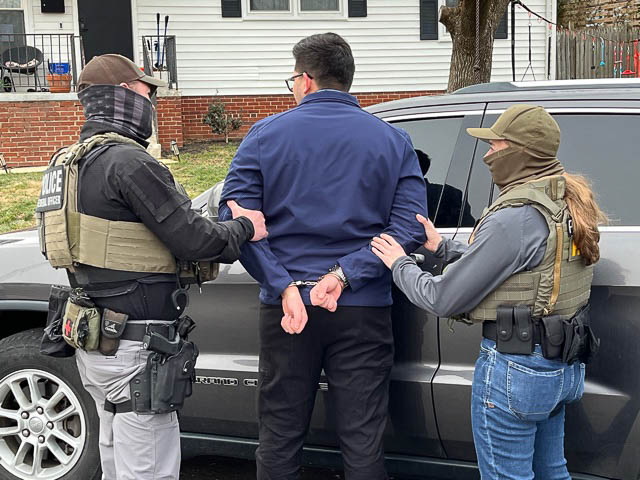
State Department Revokes Green Cards for Iranian Regime-Linked Nationals, Including Relatives of Qassem Soleimani and 1979 Hostage Crisis Spokeswoman Masoumeh Ebtekar
U.S. officials have revoked green cards and visas of multiple Iranian nationals tied to Tehran — including relatives of slain Gen. Qassem Soleimani, relatives of 1979 hostage‑crisis spokeswoman Masoumeh Ebtekar, and others such as Fatemeh Ardeshir‑Larijani and her husband — and ICE arrested Soleimani’s niece Hamideh Soleimani Afshar and her daughter in Los Angeles. The government says Afshar’s 2019 asylum grant was fraudulent, alleges she and others publicly supported the Iranian regime and lived lavishly, and has launched broader USCIS vetting reviews after finding prior screening inadequate; several Iranian diplomats’ visas were also revoked in early December.
📌 Key Facts
- U.S. officials have recently revoked green cards and/or visas for multiple Iranian nationals tied to the Iranian government—at least four people, not limited to Qassem Soleimani’s relatives.
- Hamideh Soleimani Afshar (Soleimani’s niece) and her daughter had their lawful permanent resident status terminated, were arrested by ICE (late Friday) and are currently in ICE custody; DHS now alleges Afshar’s 2019 asylum claim was fraudulent, citing at least four subsequent trips to Iran.
- The State Department and DHS characterized Afshar and her daughter as publicly supporting the Iranian regime, celebrating attacks on U.S. forces, living a “lavish lifestyle” in Los Angeles, and Afshar was quoted by Secretary Marco Rubio as calling the U.S. the “Great Satan.”
- Other named individuals affected include Fatemeh Ardeshir‑Larijani (daughter of late Iranian security official Ali Larijani) and her husband, Seyed Kalantar Motamedi—whose visas were revoked and who have left the U.S.—and Afshar’s husband has been barred from entering the United States.
- Secretary of State Marco Rubio also revoked lawful permanent resident status for relatives of Masoumeh Ebtekar (the 1979 U.S. Embassy hostage‑crisis spokeswoman); those relatives reportedly entered on visas in 2014, obtained green cards via the Diversity Visa Program in 2016, and have been taken into ICE custody pending removal.
- USCIS issued a March 30 alert saying an internal review found prior screening and vetting were “wholly inadequate,” acknowledged some individuals were approved or naturalized who “should not have been,” and placed holds and comprehensive re‑reviews (including potential reinterviews) on pending asylum and immigration‑benefit applications from designated “high‑risk” countries—initially for applicants who entered since the Biden administration took office, with authority to extend further.
- Rubio used a rarely invoked authority to revoke status, linking the move to prior actions he took last year against several pro‑Palestinian activists; his public statements were widely cited in coverage of the revocations.
- The actions are part of a broader recent diplomatic/security posture: on Dec. 4 the State Department revoked or declined to renew visas for several Iranian diplomats and staff at Iran’s U.N. mission (including the deputy ambassador), a move State says was unrelated to later protests or the war, and lawmakers (Rep. Tom Tiffany) have proposed legislation—the SAFER Act—to bar asylum and permit termination/denaturalization for applicants who voluntarily return to the country they claimed to have fled.
📊 Relevant Data
In the Diversity Visa Lottery for fiscal year 2016, 4,501 individuals from Iran were selected as entrants eligible to apply for immigrant visas.
DV 2016 - Selected Entrants — U.S. Department of State
According to a 2024 national public opinion survey, Iranian Americans were nearly evenly divided in their preferences for the 2024 presidential election, with 45% supporting Kamala Harris and 41% supporting Donald Trump.
PAAIA Unveils 2024 National Public Opinion Survey of Iranian Americans — Public Affairs Alliance of Iranian Americans (PAAIA)
From 2016 to 2020, the Executive Office for Immigration Review opened just seven investigations into asylum fraud across all cases.
Fact Sheet: Asylum Fraud and Immigration Court Absentia Rates — Forum Together
📊 Analysis & Commentary (1)
"The piece argues that immigration policy ought to be selective by country — backing tougher vetting and preferential admission for nationals of well‑governed states while treating 'high‑risk' origin countries more restrictively — and treats recent USCIS/State Department revocations and re‑reviews of Iranian‑linked cases as evidence supporting that approach."
📰 Source Timeline (6)
Follow how coverage of this story developed over time
- Secretary of State Marco Rubio says he has revoked the lawful permanent resident status of family members linked to Masoumeh Ebtekar, the spokeswoman for militants who seized the U.S. Embassy in Tehran during the 1979 hostage crisis.
- Rubio states that these individuals, who entered on visas reportedly granted in 2014 and obtained green cards via the Diversity Visa Program in 2016, have been taken into ICE custody pending removal from the United States.
- This case connects the current revocation push to one of the most symbolically potent episodes in modern U.S.–Iran relations, highlighting that relatives of a prominent former hostage‑crisis spokesperson were living in the U.S. as LPRs.
- Rep. Tom Tiffany, R-Wis., has introduced the SAFER Act ('Stopping Asylum Fraudsters Enforcement and Removal Act') to bar asylum grants to any foreign national who voluntarily returns to their home country after claiming persecution.
- The bill would authorize DHS and the attorney general to terminate asylum status and denaturalize asylees who return to their home country while living in the U.S., except where the State Department certifies a legitimate transfer of power and resolution of the original threat.
- Fox reiterates DHS reporting that Hamideh Soleimani Afshar’s 2019 U.S. asylum grant is now viewed as fraudulent in part because she took at least four subsequent trips back to Iran.
- USCIS issued a March 30 alert saying an internal review found prior screening and vetting measures were 'wholly inadequate' and that 'many applicants for naturalization and lawful permanent residence were not sufficiently vetted.'
- USCIS acknowledged that some individuals were approved and naturalized who 'should not have been.'
- In response, USCIS has placed a hold and review on all pending asylum and immigration‑benefit applications filed by aliens from 'high‑risk countries' and will conduct a comprehensive re‑review and potential (re)interviews for all such applicants who entered the U.S. on or after the day Joe Biden took office, with authority to extend this to others.
- The Fox report explicitly links these vetting gaps to how Qasem Soleimani’s niece, Hamideh Soleimani Afshar, and grandniece, Sarinasadat Hosseiny, were able to gain lawful permanent status before their recent arrests in Los Angeles.
- Secretary of State Marco Rubio’s public statement is quoted more fully, including his description of Soleimani Afshar as an 'outspoken supporter of the Iranian regime' who 'celebrated attacks on Americans and referred to our country as the "Great Satan."'
- DHS now publicly alleges Hamideh Soleimani Afshar’s 2019 asylum claim was "fraudulent," citing at least four trips back to Iran after she obtained a green card.
- The article confirms Afshar’s lawful permanent resident status has been terminated and that she and her daughter were arrested Friday night and are currently in ICE custody.
- The State Department says Afshar’s husband has been barred from entering the U.S.
- The piece details government rhetoric that Afshar promoted Iranian regime propaganda, celebrated attacks on U.S. forces, denounced America as the "Great Satan," and lived what officials describe as a "lavish lifestyle" in Los Angeles.
- Secretary Marco Rubio explicitly links this action to his use of the same rarely used authority last year against several pro‑Palestinian activists, including Columbia student Mahmoud Khalil, and notes those efforts have been partially stalled by federal lawsuits alleging First Amendment violations.
- The article adds background that top Iranian security official Ali Larijani was killed in an airstrike last month and that his daughter Fatemeh Ardeshir‑Larijani and her husband have left the United States.
- Confirms that at least four Iranian nationals connected to the current or former Iranian government have had either green cards or U.S. visas revoked, not just Soleimani’s niece and daughter.
- Names additional affected individuals: Fatemeh Ardeshir-Larijani, an academic and daughter of former Iranian national security adviser Ali Larijani, and her husband, Seyed Kalantar Motamedi, whose visas were also revoked.
- Clarifies that the actions against Soleimani’s niece Hamideh Soleimani Afshar and her daughter were taken 'this week' when Secretary of State Marco Rubio determined they were no longer eligible for lawful permanent residency, leading to their late-Friday ICE arrests.
- Adds State Department characterization that Afshar and her daughter had been living a 'lavish lifestyle' in Los Angeles while publicly supporting the Iranian government and anti-American attacks, and quotes Rubio’s X post labeling Afshar an outspoken supporter of the regime who called the U.S. the 'Great Satan.'
- Reveals that in early December the State Department revoked or declined to renew visas for several Iranian diplomats and staffers at Iran’s mission to the United Nations, including the deputy ambassador, and that State says that move on Dec. 4 was unrelated to later protests or the war.