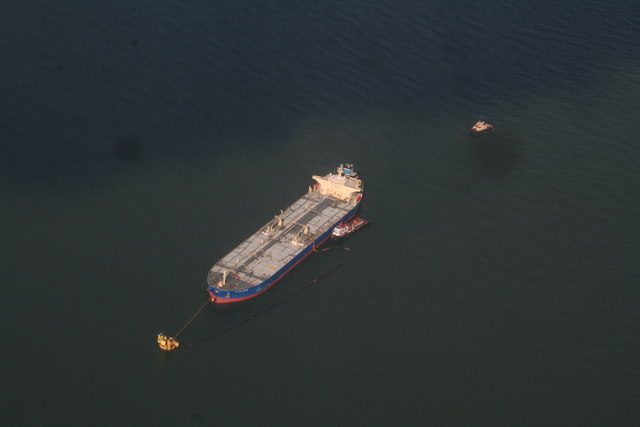
IMF Cuts 2026 Global Growth Forecast and Raises Inflation Outlook on Iran War Energy Shock
The International Monetary Fund this week cut its 2026 global growth forecast to 3.1% from 3.3% and raised its 2026 global inflation projection to 4.4% (up from a prior 3.8%), citing the energy shock tied to the Iran war. The IMF explicitly linked its downgrade to U.S. and Israeli strikes on Iran, Iran’s closure of the Strait of Hormuz and retaliatory attacks on regional energy infrastructure that have pushed oil and gas prices sharply higher; in a severe scenario where the shock persists and central banks hike further, the IMF warned growth could slump to about 2% in 2026 and 2027. The fund also nudged down 2026 forecasts for large economies — the U.S. to about 2.3% and the eurozone to roughly 1.1% — while upgrading Russia’s growth to about 1.1% as energy exporters benefit from higher prices.
The real‑time price and inflation data help explain the shift: U.S. consumer prices surged in March by 0.9% month‑over‑month — the largest monthly jump in nearly four years — lifting headline CPI to about 3.3% year‑over‑year and core CPI to near 2.6% on an annual basis. Wholesale prices also rose, with the Producer Price Index up 0.5% in March and 4.0% year‑over‑year, and energy PPI jumping 8.5% month‑over‑month. Gasoline prices have climbed by more than $1 a gallon since the opening strikes and averaged roughly $4.15 per gallon versus about $2.98 before the war; crude briefly topped $100 a barrel after a single‑day spike above 7%, and ship traffic through Hormuz collapsed from roughly 129 to about 10 transits per day. The disruption extends to LNG: an estimated one‑fifth of global LNG output is effectively offline because of damaged facilities and the Hormuz blockade, while U.S. exporters set record shipments in March and are buying low and selling at large margins in Asia and Europe. Historical elasticities imply these oil moves matter for growth too — with a long‑run output sensitivity to oil prices of about ‑0.010, a 40% jump in oil would shave roughly 0.4 percentage points off global growth, consistent with the material downgrades and regional vulnerabilities the IMF flagged (for example, higher import bills could strain reserves and stoke inflation in net‑importing regions such as Sub‑Saharan Africa).
Coverage of the crisis has shifted perceptibly: early reporting emphasized an immediate inflation spike centered on energy and market dislocations, while later pieces — and the IMF assessment in particular — have broadened the frame to emphasize sustained macroeconomic spillovers, downgraded growth across many regions, and upside risks to inflation that could keep central banks from easing. Outlets such as PBS and NPR amplified the IMF’s message by pairing the forecast change with March CPI and PPI data and with reporting on LNG bottlenecks and crude supply shocks, turning what began as a short‑term commodity story into a picture of a global growth‑inflation tradeoff. Public reaction on social media has reflected those worries: market watchers note rising recession odds and expect delayed or cancelled Fed rate cuts, while analysts such as Goldman Sachs and the OECD have been cited in threads that raise U.S. inflation and nudge down 2026 growth expectations — underscoring why policymakers and markets are watching energy routes, export flows and central bank signals so closely.
📊 Relevant Data
Sub-Saharan Africa is a net importer of oil products with heavy reliance on foreign imports, exposing the region to supply shocks; for example, oil price surges to $100 per barrel could increase South Africa's annual import bill by $6.1 billion, leading to depleted reserves, currency depreciation, and higher inflation.
Sub-Saharan Africa's economy is heavily exposed to the Middle East conflict but solutions exist — Zero Carbon Analytics
The elasticity of global economic output with respect to real oil prices has declined to -0.010 in the period 1991-2022, implying that a 40% increase in oil prices could reduce global GDP growth by approximately 0.4 percentage points relative to baseline.
The Reduced Effects of Oil Price Shocks on Output — Institute of International Finance
Higher oil prices due to the Iran war have boosted Russia's monthly oil revenues to approximately $9 billion, with Urals crude prices jumping from $57 to $115 per barrel, helping to offset a $35 billion budget deficit in early 2026.
📌 Key Facts
- The IMF cut its 2026 global growth forecast to 3.1% (from 3.3% in January) and raised its 2026 global inflation forecast to 4.4% (up from a prior 3.8%), explicitly linking the downgrades to U.S. and Israeli strikes on Iran, Iran’s closure of the Strait of Hormuz, and retaliatory attacks on regional energy infrastructure; in a severe energy‑shock scenario the IMF warns global growth could fall to about 2% in 2026–27.
- The IMF slightly downgraded 2026 growth for major regions (U.S. to ~2.3%, eurozone to ~1.1%, Sub‑Saharan Africa to ~4.3%) while upgrading Russia (an energy exporter) to about 1.1% growth.
- U.S. consumer inflation jumped sharply in March: headline CPI rose 0.9% month‑over‑month (largest monthly increase in nearly four years) and 3.3% year‑over‑year (up from 2.4% in February); gasoline accounted for nearly three‑quarters of the monthly increase, and core CPI was about 2.6% year‑over‑year.
- Producer prices also climbed: the Labor Department reported PPI +0.5% month‑over‑month and +4.0% year‑over‑year (the largest yearly gain in more than three years); energy PPI rose ~8.5% month‑over‑month while core PPI (ex food and energy) moved only modestly, complicating Fed deliberations.
- Energy markets and shipping were disrupted: crude oil spiked (more than 7% on one trading day to above $100/bbl), U.S. pump gasoline rose by more than $1/gal since the attacks and averaged about $4.15/gal (up from $2.98 pre‑war), and Strait of Hormuz tanker traffic fell from roughly 129 to about 10 vessels per day after the blockade began.
- The blockade and damage to regional facilities have sharply reduced global LNG supply: roughly one‑fifth of global LNG (from QatarEnergy) is effectively trapped or damaged, repairs may take months to years, and the IEA has reversed earlier forecasts—now projecting 2026 global oil demand to fall slightly versus a pre‑war expected increase.
- U.S. LNG exporters are recording record shipments and large margins—buying gas near about $3/MMBtu and selling near $20/MMBtu in Asia and Europe—benefiting from the shortage; Cheniere completed a Corpus Christi expansion and S&P projects U.S. LNG supply could grow ~84% over the next five years.
- Markets and policymakers are reacting: equity futures (Dow, S&P 500, Nasdaq) fell on oil and blockade news, labor data showed modest March job growth (~178,000) amid business caution, and Chicago Fed President Austan Goolsbee warned inflation progress has “stalled out” and could become entrenched if energy pressures persist.
📊 Analysis & Commentary (4)
"The WSJ editorial argues that March’s big CPI rise was mainly an Iran‑war driven oil shock and likely temporary, but cautions inflation remains above target and that policy (especially the Fed’s response) will determine whether the uptick becomes persistent."
"Velasco’s piece reads as a cautionary, big‑picture take linking the Iran‑war driven oil shock behind March’s CPI surge to real risk of stagflation and financial stress, urging calibrated monetary policy, targeted fiscal relief, and international steps to ease oil bottlenecks."
"A WSJ opinion piece commenting on IMF warnings about the Iran‑war energy shock argues that U.S. economic structure and policy instincts allow America to benefit (or at least tolerate) instability in Gulf energy markets, treating disruptions as a strategic lever that hurts competitors more than the U.S."
"An opinion piece criticizing President Trump for failing the basic test of managing the large economic fallout from the Iran war energy shock — a failure reflected in IMF downgrades, rising inflation and spiking fuel prices — and urging a coherent, coordinated policy response rather than threats and short‑term fixes."
📰 Source Timeline (8)
Follow how coverage of this story developed over time
- Details that roughly one‑fifth of global LNG supply, produced by QatarEnergy, is effectively trapped by the Strait of Hormuz blockade, with Qatar’s LNG facilities damaged by attacks early in the war.
- Energy experts say Qatar’s LNG plants may take months to repair and years to return to full capacity, prolonging the global natural gas shortfall.
- U.S. LNG exporters set a record for export volumes in March 2026 and are currently buying gas around $3 per MMBtu and selling it near $20 per MMBtu in Asia and Europe, creating an enormous profit spread.
- Cheniere Energy has just completed a new expansion at its Corpus Christi, Texas LNG terminal, and S&P Global projects U.S. LNG supply will grow about 84% over the next five years.
- On‑the‑record remarks from U.S. Secretary of Energy Chris Wright and Cheniere executive Anatol Feygin at CERAWeek in Houston casting U.S. LNG as a "reliable" supplier positioned to exploit the Hormuz disruption.
- IMF trims its 2026 global growth forecast to 3.1% from 3.3% projected in January, down from 3.4% in 2025.
- IMF now projects global inflation of 4.4% in 2026, higher than both the 4.1% rate in 2025 and its prior 3.8% forecast for 2026.
- In a severe scenario where the energy shock persists and central banks hike rates further, IMF warns global growth could fall to 2% in both 2026 and 2027.
- IMF slightly downgrades expected 2026 U.S. growth to 2.3%, eurozone growth to 1.1%, and Sub‑Saharan Africa’s outlook to 4.3%.
- IMF notes Russia, as an energy exporter, is a relative winner, upgrading its 2026 growth forecast to about 1.1% despite sanctions.
- IMF explicitly links the downgrades to U.S. and Israeli strikes on Iran, Iran’s closure of the Strait of Hormuz, and retaliatory attacks on regional energy infrastructure driving up oil and gas prices.
- Labor Department reports the Producer Price Index rose 0.5% from February to March and 4.0% from March 2025 to March 2026, the largest year-over-year gain in more than three years.
- Energy prices within the PPI jumped 8.5% month-over-month in March, while core producer prices (excluding food and energy) rose only 0.1% from February and 3.8% year-over-year.
- Food prices at the wholesale level fell 0.3% in March after a 2.4% surge in February.
- The article notes that the PPI increase was actually smaller than economists had forecast, even as it complicates the Federal Reserve’s inflation fight and fuels debate over whether to raise rather than cut rates.
- The International Energy Agency now forecasts global oil demand in 2026 will fall by an average of 80,000 barrels per day, a sharp reversal from its pre-war forecast of an 850,000 barrel-per-day increase, citing war-related destruction and the shutdown of the Strait of Hormuz.
- Moves the narrative from a 'looming' blockade to one that is now in effect and covering ships entering or leaving Iranian ports.
- Shows tangible early behavioral change by tankers near Hormuz after the blockade begins.
- Introduces the renewed Islamabad diplomatic track as a counterweight to the purely economic and inflation focus of the earlier story.
- Documents crude prices surging more than 7% Monday to above $100 as markets respond to Trump’s specific blockade order and timing.
- Shows fresh equity‑market reaction via Dow, S&P 500 and Nasdaq futures declines ahead of the New York open.
- Reports that Strait of Hormuz ship traffic has collapsed from about 129 to about 10 vessels per day since the war began, a clearer picture of supply disruption feeding gasoline prices.
- Highlights analyst concern that the blockade could widen escalation by forcing U.S. decisions about seizing allied or Chinese‑flagged ships.
- Links the new crude spike to existing U.S. gasoline prices already above $4 a gallon, implying more CPI pressure in coming months if the blockade persists.
- Confirms March CPI rose 0.9% month-over-month, the largest such increase in nearly four years, explicitly tying it to the largest monthly jump in gas prices in about six decades.
- Reiterates that headline CPI was 3.3% year-over-year in March, up from 2.4% in February, and that this is the first inflation read to fully capture Iran war effects.
- Clarifies that core CPI rose 2.6% year-over-year in March, with a modest 0.2% month-over-month gain, suggesting energy price spikes have not yet broadly spilled into other categories.
- Provides updated average national gasoline price of $4.15 per gallon as of Friday, up from $2.98 the day before the Iran war began, according to AAA.
- Highlights economists’ view that current conditions differ from the 2021–22 post‑pandemic inflation spike because the labor market and consumer demand are weaker and there are no new large stimulus checks.
- Confirms CPI rose 0.9% month‑over‑month from February to March, with higher gasoline prices accounting for nearly three‑quarters of that increase.
- Specifies that average gasoline prices have risen by more than $1 a gallon since the U.S. and Israel launched attacks on Iran, and that pump prices have remained high despite a tentative ceasefire.
- Reports March core inflation at 2.6%, highlighting that underlying inflation is also climbing, not just energy.
- Includes on‑the‑record comments from Chicago Fed President Austan Goolsbee that inflation progress has “stalled out” and is now “inching itself up the other way,” raising concern it could become entrenched.
- Notes March job growth of 178,000 after a prior month of cuts, with Goolsbee saying business uncertainty over the war is leading firms to "sit on our hands" rather than hire or fire aggressively.