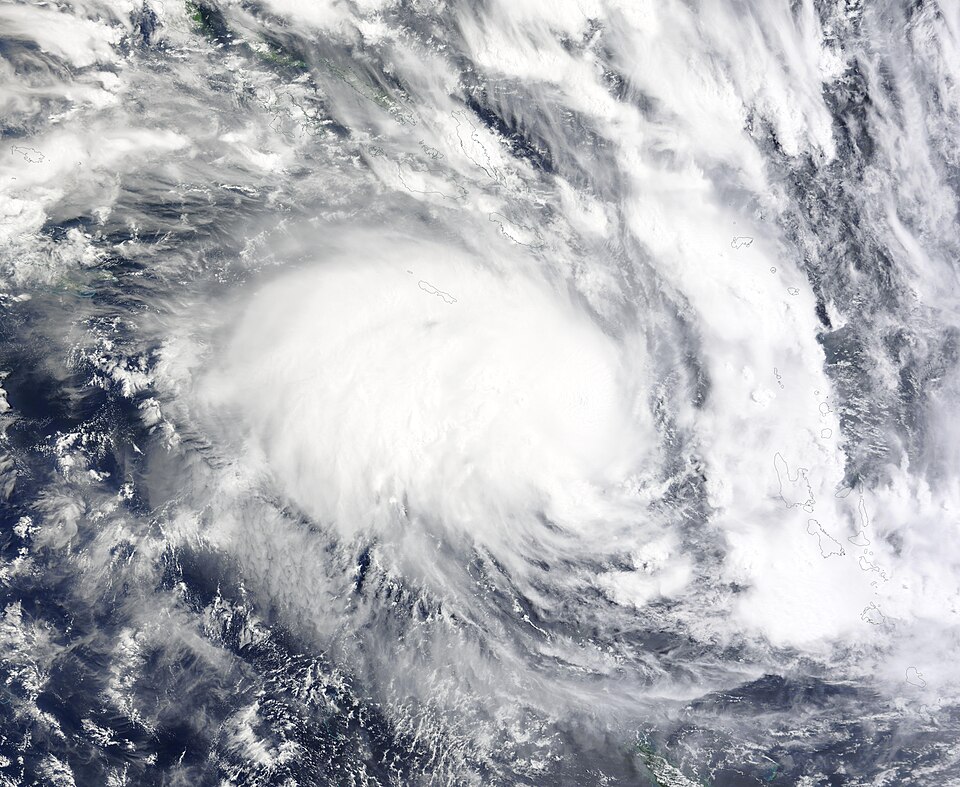
Super Typhoon Sinlaku’s Eyewall Hits Tinian and Saipan; Guam Avoids Direct Strike but Suffers Tropical-Storm Conditions
Super Typhoon Sinlaku’s inner eyewall moved over the Northern Mariana Islands of Tinian and Saipan late Monday night local time (about 10:15 p.m. local / 8:15 a.m. ET), producing sustained winds near 130 mph at the time of landfall on those islands. The storm was far stronger over open ocean, peaking near 180 mph before stabilizing around 175 mph, with typhoon‑force winds extending roughly 80 miles from the center and tropical‑storm‑force winds out to about 275 miles. Typhoon warnings were in effect for Rota, Tinian and Saipan, with tropical‑storm and typhoon watches and warnings covering Guam and nearby northern islands; Guam escaped a direct eyewall strike but was lashed by heavy rain and tropical‑storm‑force gusts — authorities reported gusts in the 60–80 mph range, widespread power outages, school closures and an extended period of hazardous wind and surf through midweek.
Federal and local emergency operations were mobilized before and during the event: the president approved emergency disaster declarations for Guam and the Northern Marianas, and FEMA said it had nearly 100 staff and interagency teams staging support alongside U.S. military assets on the ground despite staffing and funding constraints tied to a prolonged Department of Homeland Security shutdown. The Northern Marianas’ vulnerability to high‑cost storms is well‑documented — the islands average roughly six typhoons a year and past storms such as Soudelor (2015) and the paired impacts of Mangkhut and Yutu in 2018 produced tens of millions of dollars in damage and lost economic activity — a history that highlights how even a near‑miss can inflict serious infrastructure and economic harm, especially as warmer ocean conditions are expected to make the strongest Pacific typhoons more intense over coming decades.
Coverage of Sinlaku shifted as new observations came in: early bulletins emphasized that Guam would not experience typhoon‑force winds and described conditions there as primarily tropical‑storm level, but later reporting from outlets including The New York Times and subsequent CBS updates, along with local Joint Information Center advisories, clarified that Guam would avoid a direct eyewall hit yet still face an extended, hazardous period of tropical‑storm‑force winds and localized flooding and outages. That evolution was reflected on social media as well, where meteorologists urged sheltering in robust structures, commenters flagged radar blind spots that complicate tracking, and others noted the likely use of drones and AI for rapid post‑storm damage assessment — framing both the immediate human safety priorities and the logistical challenges for response and recovery.
📊 Relevant Data
The Northern Mariana Islands experience an average of 6 typhoons per year, though many do not make landfall, with the highest risk occurring from August to November.
Recent typhoons on the Northern Mariana Islands — WorldData.info
Typhoon Soudelor in 2015 caused over $20 million in damages to the Northern Mariana Islands.
CNMI counts costs for Soudelor damage — ReliefWeb
Climate change is expected to intensify typhoons in the Pacific by as much as 14% by 2100 under moderate scenarios, due to warmer ocean waters providing more energy to storms.
Research Highlight: Typhoons Could Intensify by as Much as 14 Percent by 2100 under a Moderate Climate Change Scenario — Scripps Institution of Oceanography
The economy of the Northern Mariana Islands suffered a $51.58 million loss in indirect economic activity from Typhoons Mangkhut and Yutu in 2018.
NMI plan details economic costs of Mangkhut, Yutu — The Guam Daily Post
📌 Key Facts
- Sinlaku peaked at 180 mph over the open ocean — the most powerful storm globally so far this year and the strongest of 2026 — then stabilized with maximum sustained winds near 175 mph after its peak.
- The storm’s inner eyewall moved over Tinian and Saipan around 10:15 p.m. local time (8:15 a.m. ET) with maximum sustained winds near 130 mph (a strong Category 4); Saipan and Tinian remain at greatest risk.
- Forecasts and on‑the‑ground reports indicate Guam is likely to avoid a direct eyewall hit but is experiencing and expecting an extended period of tropical‑storm‑force conditions; gusts up to about 60–80 mph have been recorded and tropical‑storm winds were expected to persist from Monday night through Wednesday.
- Warnings and watches: typhoon warnings are in effect for Rota, Tinian, Saipan, Alamagan, Pagan and Agrihan; Guam is under a tropical‑storm warning and a typhoon watch.
- Wind field: typhoon‑force winds extend roughly 80 miles from the center, and tropical‑storm‑force winds extend up to about 275 miles.
- Local impacts and precautions: Guam reported heavy rain, localized flooding, business closures (including schools), widespread power outages, shelters activated and residents urged to stay indoors and out of the water; U.S. military personnel on the island were ordered to prepare and shelter in place.
- Federal response: President Trump approved emergency disaster declarations for Guam and the Northern Mariana Islands; FEMA is coordinating support, dispatching nearly 100 staff and personnel from EPA, DOT and the U.S. Army Corps of Engineers, and says core emergency response functions continue despite the DHS shutdown (with more than 10,000 disaster personnel still paid and about $3.6 billion remaining in the disaster relief fund).
- Sinlaku became nearly stationary about 30 miles off the Marianas for several hours, a behavior that increased its impacts on the islands.
📰 Source Timeline (5)
Follow how coverage of this story developed over time
- Confirms Sinlaku’s inner eyewall moved over Tinian and Saipan around 10:15 p.m. local time (8:15 a.m. ET) with maximum sustained winds of 130 mph, a strong Category 4 at that point.
- Clarifies that Guam is not expected to see a direct hit, though gusts up to 80 mph have been recorded and tropical-storm-force winds are forecast to persist through Wednesday afternoon.
- Reports concrete local impacts: Guam schools closed Tuesday and Wednesday, widespread power outages acknowledged by the water authority, and authorities urging residents to remain indoors and out of the water.
- Details that Sinlaku earlier became nearly stationary about 30 miles off the Marianas for several hours, and that its peak over open ocean reached 180 mph, making it the most powerful storm globally so far this year.
- Lists current warning configuration: typhoon warnings for Rota, Tinian, Saipan, Alamagan, Pagan and Agrihan, and a tropical-storm warning plus typhoon watch for Guam.
- The New York Times piece further characterizes Sinlaku as an 'extremely dangerous' super typhoon and details updated track forecasts that suggest Guam may avoid a direct eyewall hit while the Northern Marianas, especially Saipan and Tinian, remain at greatest risk.
- It adds more granular on‑the‑ground reporting from residents and local officials about early impacts, including specific wind gusts already recorded on Guam, localized flooding, and the condition of shelters as the outer bands arrive.
- The article provides additional color on constraints posed by the ongoing federal shutdown and how FEMA and military commands are attempting to work around staffing and funding limits while staging assets in the region.
- President Donald Trump approved emergency disaster declarations for Guam and the Northern Mariana Islands on Saturday, unlocking additional federal help with emergency services.
- FEMA says it is coordinating support across multiple agencies and is dispatching almost 100 FEMA staff plus personnel from EPA, DOT and the U.S. Army Corps of Engineers.
- FEMA officials state that emergency response functions continue during the record-long Department of Homeland Security shutdown, with more than 10,000 disaster personnel still paid and about $3.6 billion remaining in the disaster relief fund as of late March.
- The storm is already lashing Guam with heavy rain and tropical-storm-force gusts up to 60 mph early Tuesday, with most businesses closed and residents told to stay home.
- U.S. military officials on Guam have ordered personnel to prepare and shelter in place; the military controls about one-third of the island and uses it as a critical Pacific hub.
- Confirms Sinlaku’s maximum sustained winds have stabilized at 175 mph after peaking at 180 mph on Sunday, making it the strongest storm of 2026 so far, ahead of typhoons Narelle and Dudzai.
- Details the current warning and watch configuration: typhoon warnings for Rota, Tinian and Saipan; tropical storm warnings for Guam, Pagan and Alamagan; typhoon watch for Guam; and tropical storm watch for Agrihan.
- Reports Guam’s Joint Information Center advisory stating that while the threat of typhoon‑force winds for Guam has significantly diminished, the island still faces an extended period of tropical‑storm‑force winds from Monday night through Wednesday.
- Provides updated wind‑field size: typhoon‑force winds extending up to 80 miles from the center and tropical‑storm‑force winds extending up to 275 miles.