United CEO Scott Kirby Floated United–American Airlines Merger to Trump Officials, Sources Say
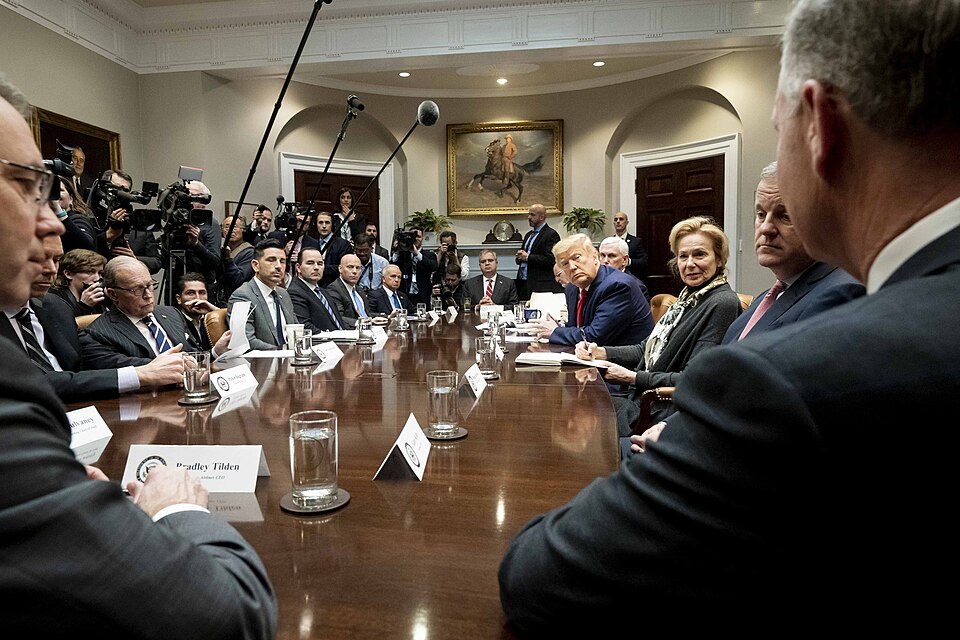
United Airlines CEO Scott Kirby reportedly raised the possibility of a merger between United and American Airlines during a February meeting with Trump administration officials, according to sources and subsequent reporting. The pitch, which multiple sources say occurred earlier this year, would pair two of the country’s largest carriers and was framed as a strategic idea rather than a public proposal; those present described it as an exploratory discussion about industry consolidation and competitive positioning.
Putting the suggestion in market terms helps explain why it would be consequential: Delta, American, United and Southwest each hold roughly similar slices of the domestic market, and a United–American combination would create a carrier with roughly 34% of U.S. domestic revenue passenger miles—well ahead of any single rival. Past academic work shows merger effects can be mixed: a 2014 study of the Delta–Northwest tie-up found only small fare increases on non‑stop routes where overlap was limited, while a 2019 study of the American–US Airways merger found prices fell in large markets but rose in smaller ones. Those outcomes underscore why regulators worry consolidation can have uneven consumer impacts and why antitrust scrutiny would be intense.
Public reaction on social media reflected both enthusiasm and alarm: some investors celebrated the momentum and wondered whether the Trump administration’s pro-business bent could ease regulatory paths, while analysts warned of likely antitrust fights, higher fares for some travelers and potential job losses. Journalists following the story added timing and sourcing detail that moved coverage from rumor to reported fact—David Shepardson and mainstream outlets like CBS posted confirmations that Kirby raised the idea in the February meeting—shifting the debate from speculation about possible industry consolidation to a concrete account that could prompt formal inquiries and closer regulatory attention.
📊 Relevant Data
In the period from February 2025 to January 2026, the domestic market shares by revenue passenger miles for major US airlines are Delta 17.8%, American 17.4%, United 16.7%, and Southwest 17.0%.
Airline Domestic Market Share February 2025 - January 2026 — Bureau of Transportation Statistics
A 2014 study on the Delta-Northwest merger found that it caused only a small increase in fares for non-stop flights, attributed to the carriers having little overlapping in non-stop routes.
The Price Effects of the Delta/Northwest Airline Merger — Review of Industrial Organization
A 2019 study found that the 2013 American Airlines-US Airways merger reduced prices in large markets but increased prices in small markets.
Are legacy airline mergers pro- or anti-competitive? Evidence from recent U.S. airline mergers — International Journal of Industrial Organization
📌 Key Facts
- United CEO Scott Kirby discussed a possible United–American Airlines merger with Trump administration officials, according to unnamed sources.
- A combined United–American would control close to half of U.S. airline market share, raising major antitrust concerns.
- Allied Pilots Association spokesman Dennis Tajer called the prospect "certainly intriguing" while industry analyst Henry Harteveldt said such a merger is unlikely due to the concessions regulators would demand.
📰 Source Timeline (1)
Follow how coverage of this story developed over time