
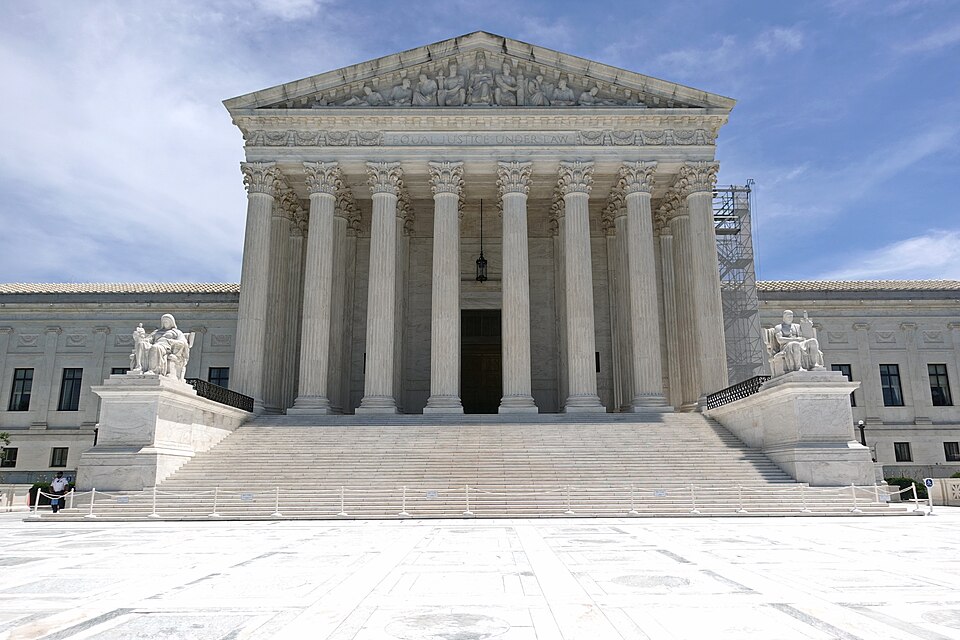
Supreme Court Lets Indiana School's Ban On Anti-Abortion Flyers Stand
The Supreme Court declined to hear an appeal by a Noblesville High School student challenging an Indiana school's ban on anti-abortion flyers on Monday, June 15, 2026, leaving the lower-court ruling intact.[1]
Justice Samuel Alito filed the lone written dissent, urging the court to clarify how Hazelwood intersects with later government-speech decisions.[2] He said the central constitutional question is whether the student-club flyers were private speech or school-sponsored government speech, because only private speech is protected from school censorship.[2] The Seventh Circuit had treated the school's walls as a limited forum and upheld the restriction under Hazelwood as reasonably related to keeping a neutral educational environment.[1]
In fall 2021 a Noblesville High freshman identified in court papers as E.D. formed a Students for Life chapter after securing a faculty sponsor and principal approval. She submitted meeting flyers using the national group's template that showed students holding signs reading "Defund Planned Parenthood" and "I am the Pro-Life Generation." School administrators rejected the posters as too political and later derecognized the club. E.D. and her parents sued the Noblesville School District in December 2021, and the district court granted summary judgment to the school in March 2024. The Seventh Circuit affirmed in August 2025 and denied rehearing en banc before E.D. petitioned the Supreme Court for review.
With the high court's refusal to hear the case, the Seventh Circuit judgment stands and the legal question about when schools may bar political posters remains unresolved.[1] Supporters of the student said the decision shows administrators can silence messages they dislike. Critics warned the court left unsettled an important First Amendment question about when school speech is government versus private.
The mainstream summary does not highlight the implications of Justice Alito's dissent, which argues for a clearer understanding of when schools can restrict political speech, particularly in relation to the Hazelwood precedent. Alito's call for clarification suggests a broader concern that the current legal framework may inadequately protect student expression, a point emphasized by @StudentsforLife, which argues that those in power often manipulate rules against unpopular messages. This perspective underscores a significant tension in the ruling: while the court's decision leaves the status of political speech in schools unresolved, it also raises questions about the fairness and consistency of administrative actions in similar cases.
Additionally, the mainstream account overlooks the deeper context of partisan polarization surrounding abortion issues, as noted in a Cambridge University Press analysis. This polarization has intensified the stakes of such legal battles, with minority viewpoints increasingly influencing policy outcomes in reproductive rights. The summary presents a legal decision but does not fully engage with the societal implications of the ruling, particularly how it reflects broader conflicts over free speech and political expression in educational environments. These dimensions reveal that the implications of the Supreme Court's inaction extend beyond the case itself, touching on fundamental First Amendment rights and the dynamics of political discourse in schools.
Show source details & analysis (2 sources)
📌 Key Facts
- On Monday, June 15, 2026, Justice Samuel Alito filed the lone written dissent from the Supreme Court’s denial of certiorari in E.D.’s case in the dispute over the Indiana school’s ban on anti‑abortion flyers (Justice Samuel Alito).
- In his dissent, Alito called for the Court to clarify the relationship between Hazelwood and later government‑speech decisions, framing that legal tension as an important unresolved First Amendment issue (Hazelwood).
- Alito emphasized the central constitutional question is whether the student‑club flyers are private speech or school‑sponsored government speech, because the First Amendment restricts only censorship of private speech (student‑club flyers).
- The dissent notes that lower courts have struggled to define Hazelwood’s limits and that this case illustrates the ongoing confusion over how Hazelwood applies (Hazelwood’s limits).
- The article recounts that the Seventh Circuit treated the school’s walls as a limited forum for student expression and upheld the flyer restriction under Hazelwood as reasonably related to maintaining a neutral educational environment (Seventh Circuit).
📰 Source Timeline (2)
Follow how coverage of this story developed over time
- On Monday, June 15, 2026, Justice Samuel Alito filed the lone written dissent from the Supreme Court’s denial of certiorari in E.D.’s case.
- Alito’s dissent explicitly calls for the Court to clarify the relationship between Hazelwood and later government‑speech decisions, framing the dispute as an important unresolved First Amendment issue.
- Alito emphasizes that the key constitutional question is whether the student-club flyers are private speech or school-sponsored government speech, because the First Amendment limits only censorship of private speech.
- The dissent notes that lower courts have struggled to define Hazelwood’s limits and that this case illustrates that ongoing confusion.
- The article recaps that the Seventh Circuit treated the school’s walls as a limited forum for student expression and upheld the flyer restriction under Hazelwood as reasonably related to maintaining a neutral educational environment.