
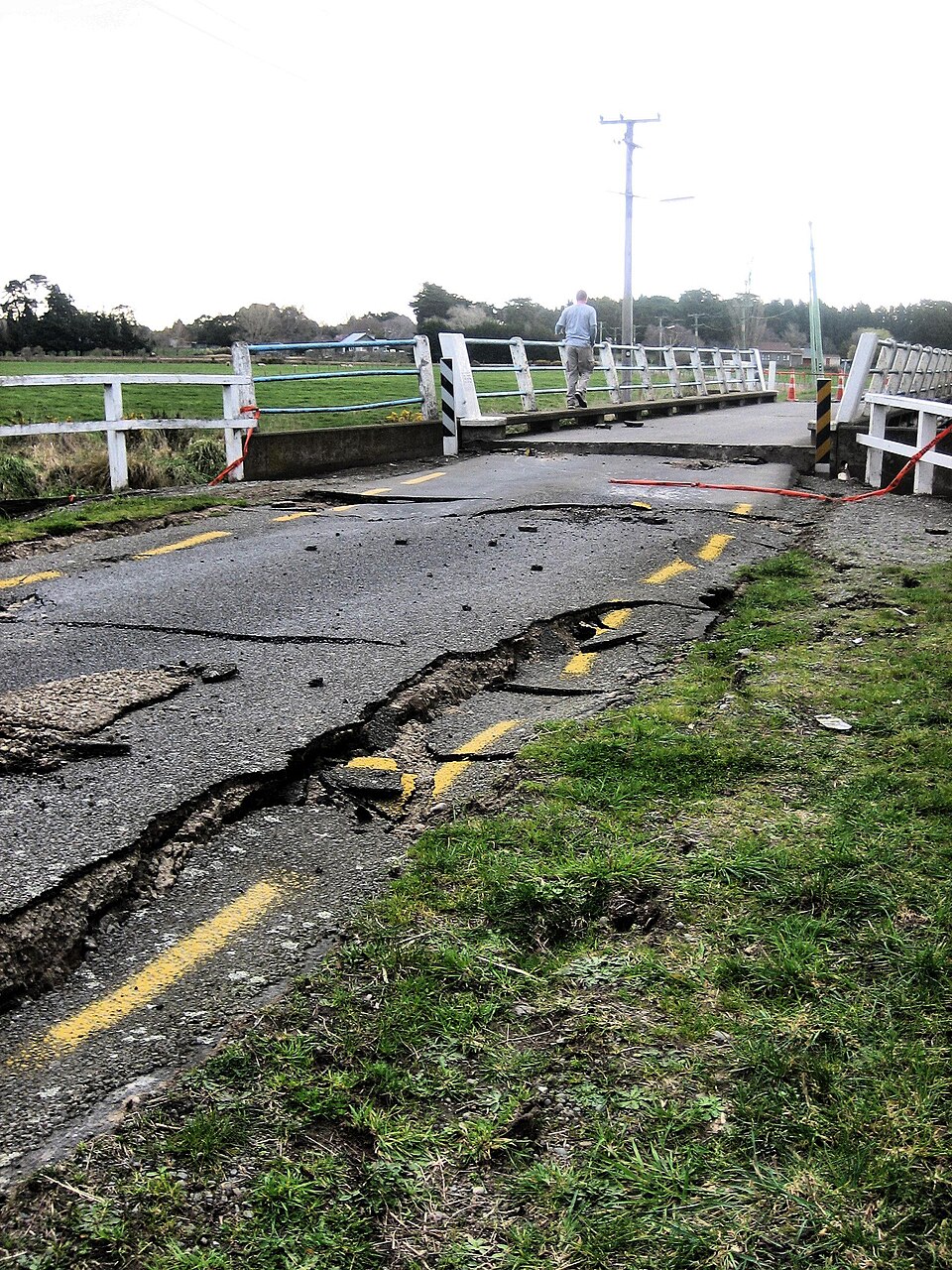
Venezuela Quakes Death Toll Rises As U.S. And Other Nations Deploy Aid
Two powerful earthquakes struck near Morón, Venezuela, minutes apart on Wednesday, June 24, 2026, killing at least 32 people and injuring more than 700 as international aid mobilized.[1]
President Donald Trump said the United States "stands ready" and ordered agencies to prepare assistance, while U.S. officials said search-and-rescue and medical teams were mobilizing.[2] Qatar, Mexico and El Salvador said they will send rescue teams, and several Latin American governments publicly offered humanitarian aid.[1]
Minutes apart on June 24, a roughly 7.1-7.2 foreshock was followed within a minute by a magnitude 7.5 main shock near Morón, both with shallow focal depths.[3] The U.S. Geological Survey called the pair an earthquake "doublet" and warned of likely strong aftershocks, including about a 40% chance of another magnitude 6 or larger within a week.[3] USGS modeling released overnight estimated potential deaths could range from thousands to tens of thousands and projected economic losses in the billions to tens of billions of dollars.[3] Caracas suffered partial building collapses, rescue crews were searching damaged neighborhoods, and Simón Bolívar International Airport near the capital was closed after structural damage.[1]
Early reports focused on visible damage and preliminary casualty counts, but later analyses led by USGS modeling and coverage from NPR and PBS highlighted a much larger human and economic toll.[3]
Acting President Delcy Rodríguez declared a nationwide state of emergency and urged calm as rescue operations continued across affected states.[1]
The mainstream summary does not mention the alarming projections from USGS modeling, which estimate potential fatalities from the earthquakes could range from 10,000 to 100,000, significantly higher than the current reported death toll of 32. This stark contrast highlights the potential scale of the disaster that may unfold as rescue operations continue and assessments become more comprehensive. Additionally, social media discussions reveal that estimates from automated loss models suggest fatalities could be between 2,000 and 12,000, indicating a much graver situation than the mainstream coverage implies. These figures underscore the urgency of the humanitarian response and the need for accurate reporting on the ongoing crisis.
Moreover, while the summary briefly mentions President Trump's offer of assistance, it does not capture the broader context of his statement that the U.S. is "ready, willing and able" to help, which may reflect a significant shift in U.S. foreign policy towards Venezuela amidst its ongoing humanitarian challenges. This framing contrasts with the mainstream narrative that primarily focuses on immediate aid mobilization without addressing the implications of international relations in times of crisis. The structural vulnerabilities in Venezuela's infrastructure, exacerbated by economic decline, further complicate the recovery efforts, as many buildings were constructed under outdated codes, leading to increased damage during seismic events. This critical context is absent from the mainstream account, which primarily emphasizes the immediate aftermath of the earthquakes without delving into the underlying issues that contribute to the disaster's severity.
Show source details & analysis (8 sources)
📌 Key Facts
- Minutes apart on Wednesday, June 24, 2026, two powerful earthquakes struck near Morón — preliminary readings showed a roughly 7.1–7.2 foreshock followed within a minute by a magnitude 7.5 main shock with shallow focal depths (Morón).
- Acting President Delcy Rodríguez declared a nationwide state of emergency on Wednesday night, said at least 32 people were killed and more than 700 injured, described La Guaira as a disaster zone, and reported Simón Bolívar International Airport near Caracas was damaged and closed (Delcy Rodríguez).
- In Caracas multiple buildings partially collapsed (entire walls sheared off, furniture exposed, dust columns in neighborhoods), rescue crews were searching for survivors, and Interior Minister Diosdado Cabello urged residents to remain outdoors because aftershocks could further weaken structures (Caracas).
- Tsunami alerts were briefly issued for nearby territories — the U.S. Pacific Tsunami Warning Center flagged risks for the U.S. Virgin Islands and other islands but advisories, including for Puerto Rico, were quickly lifted or recalled (U.S. Pacific Tsunami Warning Center).
- President Donald Trump posted on Truth Social late June 24 that the United States 'stands ready' to help and had instructed agencies to prepare assistance, while U.S. officials said search-and-rescue teams, medical resources, and a disaster-assistance task force were being mobilized to coordinate with Venezuelan authorities (President Donald Trump).
- Qatar, Mexico and El Salvador are sending rescue personnel (with Qatari teams expected to arrive the next day), and multiple Latin American countries including Argentina, Bolivia, Brazil, Chile, Ecuador, Panama and Uruguay publicly offered humanitarian assistance (Qatar).
- The USGS described the event as an earthquake 'doublet', cautioned that aftershocks were likely (about a 40% chance of another M6+ within a week and an 'almost certainty' of at least one M5), and USGS modeling estimated potential deaths could range from thousands to tens of thousands with economic losses in the billions to tens of billions of dollars (USGS).
📰 Source Timeline (8)
Follow how coverage of this story developed over time
- Acting President Delcy Rodríguez said early Thursday, June 25, 2026, that at least 32 people were killed and at least 700 injured in the June 24 earthquakes, updating casualty figures.
- Rodríguez declared a nationwide state of emergency late Wednesday and said Simón Bolívar International Airport near Caracas was damaged and closed, while subway and natural gas services in Caracas were canceled.
- Rodríguez described the coastal state of La Guaira, about 30 kilometers north of Caracas, as a disaster zone with dozens of buildings collapsed and intensive rescue operations underway.
- The article confirms USGS details that the first quake was a magnitude 7.2 event west of Morón at 22 km depth, followed one minute later by a magnitude 7.5 quake 16 km southwest of Morón at 10 km depth.
- U.S. Secretary of State Rubio announced the United States is immediately deploying search and rescue teams, medical resources, and humanitarian assistance to Venezuela.
- U.S. Undersecretary of State for Foreign Assistance Jeremy P. Lewin said the State Department mobilized a disaster assistance team and task force to coordinate aid with the interim Venezuelan government.
- Rodríguez said that Qatar, Mexico, and El Salvador are sending rescue personnel, with Qatari teams expected to arrive in Venezuela the following day.
- Leaders of Argentina, Bolivia, Brazil, Chile, Ecuador, El Salvador, Mexico, Panama, and Uruguay publicly offered assistance, with several presidents issuing statements and ordering immediate humanitarian support.
- The Ministry of Education canceled school classes for several days and said some school buildings would be used as shelters and donation centers.
- On Wednesday night, June 24, 2026, interim President Delcy Rodríguez announced that at least 32 people were killed and more than 700 injured in the Venezuela earthquakes, the country's first official casualty figures.
- President Donald Trump posted on Truth Social late June 24, 2026 that the two 'massive' earthquakes left 'a devastating number of deaths' and said the United States 'stands ready, willing, and able to help.'
- Trump stated he had instructed all U.S. government agencies to prepare to move quickly to assist Venezuela, signaling a U.S. disaster-response posture.
- Rodríguez declared a state of emergency on June 24, 2026 following the quakes and urged Venezuelans in a televised address to remain calm and unified.
- U.S. Deputy Secretary of State Christopher Landau wrote on X that American officials are in contact with Venezuelan authorities and are mobilizing assistance.
- CBS video report published Wednesday, June 24, 2026, shows extensive visible structural damage in Caracas and active search-and-rescue operations following the 7.2 and 7.5 earthquakes.
- The segment confirms that rescue crews were already searching for survivors in heavily damaged areas of the capital on June 24, 2026.
- The piece reiterates that acting President Delcy Rodriguez declared a state of emergency after the twin quakes.
- NPR reports that the first quake was a magnitude 7.2 foreshock followed by a 7.5 main shock less than a minute later on Wednesday, June 24, 2026, around 6 p.m. Eastern, with epicenters about 3 miles apart near Morón.
- USGS seismologist Paul Earle describes the pair as an earthquake "doublet" and explains that quakes this close in time make it difficult to precisely determine magnitudes and locations because seismogram signals overlap.
- USGS modeling on Wednesday evening estimated potential deaths from the 7.5 quake could range from thousands to tens of thousands and projected economic losses in the billions to tens of billions of dollars.
- NPR reports that the 7.5-magnitude event is the largest earthquake to strike Venezuela since 1900, when a 7.7-magnitude quake hit the country.
- The article confirms that Simón Bolívar International Airport in Caracas suffered structural damage and has been closed following the quakes.
- USGS aftershock forecasting cited by Earle gives roughly a 40% chance of another magnitude 6 or larger quake in the same region within the next week and an "almost certainty" of at least one magnitude 5 aftershock.
- Tsunami warnings previously issued for Puerto Rico and the U.S. Virgin Islands were recalled by Wednesday night, and no tsunami advisory remained in effect.
- Acting Venezuelan President Delcy Rodríguez declared a state of emergency on Wednesday evening, said several states had sustained damage and urged the population to remain calm and united.
- The Fox News article confirms that the two powerful earthquakes struck shortly after 6 p.m. local time on Wednesday, June 24, 2026, near the coastal city of Morón, about 104 miles west of Caracas.
- It reports that one of the quakes hit during a baseball game in Venezuela, sending players and spectators running from the stadium as the ground shook, with video showing fans rushing toward the exits.
- Authorities reported structural damage in parts of Caracas, including collapsed walls and damaged buildings, and Interior Minister Diosdado Cabello urged residents to remain outdoors where it was safe because aftershocks could further weaken structures.
- Eyewitnesses in Caracas described being tossed around by the shaking and seeing entire walls collapse, with furniture visible from the street and dust columns rising in multiple neighborhoods.
- The article reiterates that tsunami advisories were briefly issued for Puerto Rico and the U.S. Virgin Islands and then canceled after officials determined the threat had passed.
- As of Wednesday night, officials were still assessing the scale of damage and casualties, and the New York Times was cited as saying the full human toll was not yet clear.
- On Wednesday evening, June 24, 2026, two powerful earthquakes struck Venezuela minutes apart: a magnitude 7.1 quake at 22 km depth west of Morón, followed by a magnitude 7.5 quake at 10 km depth with an epicenter 16 km southwest of Morón.
- The quakes occurred shortly after 6 p.m. local time and are among the strongest to hit Venezuela in more than a century.
- In Caracas, multiple buildings partially collapsed, with entire walls sheared off and interior furniture visible from the street; dust columns were seen in at least two capital neighborhoods.
- Interior Minister Diosdado Cabello reported "alarming situations" with collapsed homes and buildings in Caracas, said people had likely been injured, and urged motorists to yield to ambulances and emergency vehicles.
- Cabello advised residents to remain outdoors due to expected aftershocks that could further damage weakened structures and emphasized special care for children and the elderly.
- Caracas residents described intense side-to-side building shaking that knocked down interior furnishings and left crowds sheltering outdoors with pets after dark.
- The U.S. Pacific Tsunami Warning Center issued a tsunami alert for the Virgin Islands, and Dominican authorities issued an alert for their island; an alert for Puerto Rico was quickly lifted.
- CBS published a video segment at 6:45 p.m. Central on Wednesday, June 24, 2026, reiterating that a preliminary 7.1 magnitude earthquake struck northwest Venezuela that evening.
- The segment confirms the U.S. Geological Survey's preliminary 7.1 magnitude reading and notes that tsunami alerts were triggered in the region.
- The clip features CBS meteorologist Zoe Mintz providing on-air explanation of the quake and associated tsunami alerts but does not materially change previously reported location, magnitude, or advisory scope.