
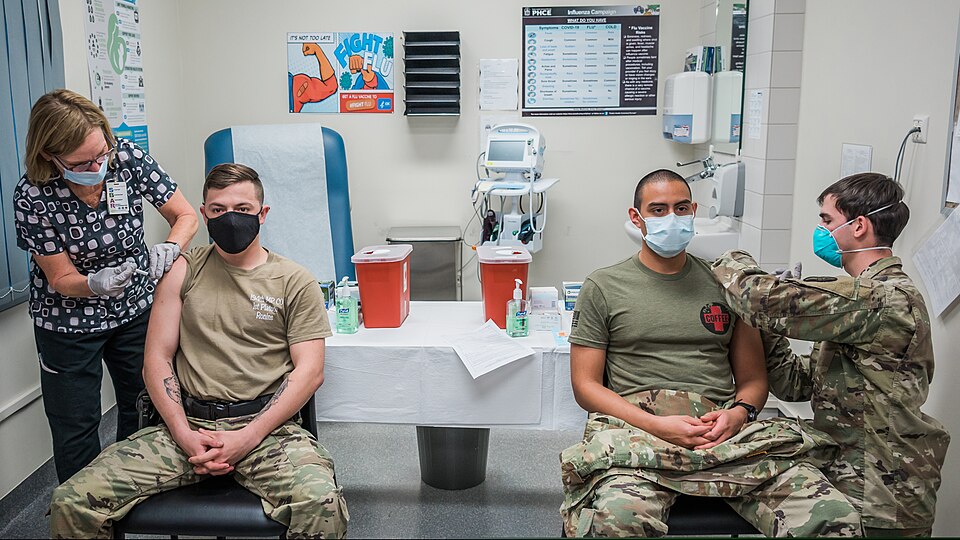
Pentagon Reimposes Flu Shots For Recruits As Lackland Sees Outbreak
The Pentagon is reimposing mandatory flu vaccinations for military recruits after a flu outbreak at Lackland Air Force Base in Texas infected 275 people, officials said.[1]
Defense Secretary Pete Hegseth had made the annual flu vaccine voluntary in late April, then allowed services to seek exemptions for high-risk groups.[1] All military departments obtained exemptions by early June that let them continue requiring shots for recruits and others in communal or high-exposure settings, Pentagon spokesman Sean Parnell said.[1]
On April 21, 2026, Hegseth announced the end of the decades-long mandatory flu policy, calling the prior rule overly broad.[1] The change immediately let services ask for carve-outs, which they did in May and secured approval after a Pentagon risk review. At Joint Base San Antonio, vaccination coverage among new Air Force trainees fell from nearly 100% to about 40% by early June 2026, raising readiness concerns.
The shifts have prompted political and public debate. Some lawmakers and commentators blame the April decision for undermining force readiness in close-quarters training, while others argue that young recruits face low flu risk and that mandates can erode trust.
The mainstream summary does not mention that the outbreak at Lackland Air Force Base reached 275 cases shortly after Defense Secretary Hegseth made flu vaccinations optional, highlighting a direct correlation between policy change and the outbreak. This detail, noted by military journalist @saddamscribe, underscores concerns about the impact of reduced vaccination rates on military readiness and public health. Furthermore, while the summary acknowledges political and public debate, it does not capture the depth of criticism directed at Hegseth's decision, with calls for accountability and even his dismissal emerging from various commentators on social media.
Additionally, the summary overlooks the broader context of declining trust in health institutions, which has influenced vaccine mandate policies. A 2022 article in BMJ Global Health discusses how COVID-19 vaccine mandates have eroded public trust, leading to a preference for targeted exemptions rather than universal mandates. This trend is further supported by a January 2025 KFF Tracking Poll indicating a decline in public trust in health agencies, particularly among Republicans, which may explain the military's shift towards voluntary vaccination approaches. These perspectives suggest that the implications of the flu vaccination policy changes extend beyond immediate health concerns, reflecting deeper societal issues regarding trust in public health directives.
Show source details & analysis (1 source)
📊 Relevant Data
Flu vaccination coverage among new Air Force trainees at Joint Base San Antonio fell from nearly 100% to about 40% after the general mandate was lifted in April 2026.
Military services again requiring recruits to get flu shots as Air Force outbreak grows — ABC News
The U.S. Air Force enlisted 30,166 new recruits in fiscal year 2025, meeting 100.22% of its goal.
FY25 Sees Best Recruiting Numbers in 15 Years — Department of Defense
📌 Key Facts
- By early June 2026, all military departments obtained exemptions allowing them to keep requiring flu vaccines for recruits and other high-risk groups.
- A flu outbreak at Lackland Air Force Base in Texas has infected 275 people in recent weeks, officials told CBS News.
- Defense Secretary Pete Hegseth made the annual flu vaccine voluntary for service members in late April 2026 before the recruit exemptions were approved.
- Chief Pentagon spokesman Sean Parnell said the exemptions followed a comprehensive risk review to protect readiness and at-risk populations.
📰 Source Timeline (1)
Follow how coverage of this story developed over time