
Trump Housing Bill To Become Law Without Signature As New Federal Rules Reshape Market
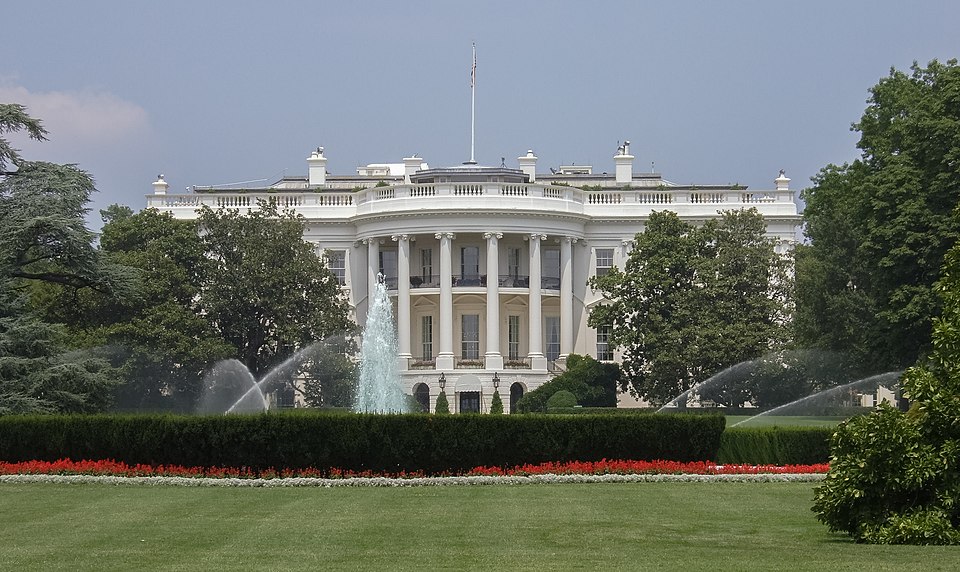
President Trump said he will not sign the 21st Century ROAD to Housing Act, but the bill will become law at 12:01 a.m. Saturday, July 11, 2026, unless he issues a veto.[1]
Trump framed his refusal as a protest over the Senate's failure to pass the SAVE America Act.[2] The White House confirmed he will let the measure become law without his signature rather than veto it.[3] Congress approved the package by wide margins, leaving its enactment likely even without a presidential signature.[4]
On June 22 the Senate approved the bill 85-5 and the House passed it 358-32 the next day.[4] Speaker Mike Johnson formally transmitted the bill to the White House on June 29, starting the 10-day constitutional clock.[4] The measure bundles more than 40 bipartisan provisions and includes a Trump-backed cap that bars corporate landlords that already own at least 350 single-family homes from buying additional houses.[5] It also uses federal carrots and sticks—upzoning incentives, conditions on federal housing funds, faster permitting, modernized building standards and grants for manufactured and modular housing—to push local zoning change and speed lower-cost construction.[6]
Early coverage emphasized Trump's personal dismissal of the bill and his comments calling it "a yawn." PBS News Later reporting shifted to underscore that his refusal was explicitly tied to the stalled SAVE America Act and to the political fallout within the GOP over trading a bipartisan housing win for leverage on election rules.[7]
Prices are at record highs: the National Association of Realtors put the June median existing-home price at about $440,660, with regional single-family medians ranging roughly from $346,600 in the Midwest to $633,600 in the West.[7] Lawmakers say the bill is meant to help address a roughly 10 million-home shortage, but affordability remains strained—fewer than 4 in 10 non-homeowner households can afford a typical $200,000 starter home, and Redfin estimates roughly $117,000 in annual income is needed to buy the average home.[3]
The mainstream summary emphasizes Trump's personal dismissal of the housing bill, framing his refusal to sign it as a protest linked to the stalled SAVE America Act. However, Rob Henderson argues that this framing overlooks the deeper structural issues driving millennial economic anxiety, such as rising housing costs and constrained supply, which the bill does not fully address. He contends that while the legislation offers some relief, it fails to tackle the cumulative disadvantages faced by younger generations, including student debt and stagnant wages. This perspective highlights that the political maneuvering surrounding the bill may exacerbate public distrust and delay meaningful solutions.
Furthermore, Halina Bennet notes that the bipartisan nature of the 21st Century ROAD to Housing Act signifies a shift towards a pro-supply policy agenda, which the mainstream coverage does not fully capture. She emphasizes that while the bill is not a comprehensive solution to the housing crisis, it represents a significant step forward in addressing local zoning constraints and incentivizing housing production. The summary's focus on Trump's theatrical response downplays the potential long-term implications of the bill's federal tools, which could reshape local development incentives and contribute to alleviating the housing shortage if implemented effectively.[8][9]
Show source details & analysis (10 sources)
📊 Relevant Data
Minimum lot size zoning regulations increase home sales prices by 14 percent and rents by 9 percent when doubled.
The effects of residential zoning in U.S. housing markets — Journal of Urban Economics
Upzoning reforms in New York City were associated with about 4,000 additional housing units (0.17 new units per upzoned parcel) within four years compared to expectations.
How Big Do Upzonings Affect Housing Supply? — Urban Institute
📌 Key Facts
- Under the Constitution, the 21st Century ROAD to Housing Act will automatically become law at 12:01 a.m. Saturday, July 11, 2026, if President Trump does not issue a veto (21st Century ROAD to Housing Act).
- President Trump publicly said he will not sign the bill as a protest over the Senate’s failure to pass the SAVE America Act, but the White House confirmed he will allow the measure to become law without his signature rather than veto it (SAVE America Act).
- Congress shipped the package with overwhelming bipartisan margins — the Senate passed it 85–5 on June 22, 2026 and the House 358–32 on June 23, and Speaker Mike Johnson formally transmitted the bill to the White House on June 29, 2026, starting the 10-day constitutional clock (Speaker Mike Johnson).
- The bill bundles more than 40 bipartisan provisions and includes a key Trump-backed cap that prevents corporate landlords that already own at least 350 single‑family homes from buying additional single‑family houses (cap that prevents corporate landlords).
- Lawmakers built federal 'carrots and sticks' into the package — incentives for local upzoning, conditions on federal housing funds, accelerated permitting and modernized building standards, plus grants and programs to boost manufactured and modular housing and curb speculative bulk purchases — to reshape local zoning and speed lower‑cost construction (new federal programs and grants).
- The measure is intended to address a roughly 10 million‑home national shortage and arrives as prices hit records: the National Association of Realtors reported a June 2026 median existing‑home price of $440,660 (up from $432,700 a year earlier) with regional single‑family medians of $564,800 in the Northeast, $346,600 in the Midwest, $377,700 in the South and $633,600 in the West (June 2026 median existing-home price of $440,660).
- Affordability remains strained: outside measures cited in coverage show fewer than 4 in 10 non‑homeowner households can afford a typical $200,000 starter home (LendingTree) and Redfin estimates a household needs roughly $117,000 in annual income to afford the average home (fewer than 4 in 10 non‑homeowner households).
- Some Republicans warned that tying the housing bill to the SAVE America Act could backfire politically and undermine a rare bipartisan achievement, creating tensions within the GOP about messaging going into the midterms (Republicans).
- Senate Democratic leader Chuck Schumer publicly criticized Trump’s priorities on July 10, 2026, tweeting on X: 'His priorities couldn't be clearer: higher cost for families and more power for himself' (Chuck Schumer).
📊 Analysis & Commentary (4)
"An opinion piece interpreting millennials' fear of downward mobility as a justified response to persistent structural problems — especially housing affordability — and criticizing partisan political maneuvers (such as the handling of the bipartisan housing bill) for delaying or diluting policies that could improve younger Americans' economic prospects."
"The author contends that the bipartisan 21st Century ROAD to Housing Act marks the arrival of a practical 'abundance' agenda — a supply‑focused turn in housing policy that, despite political theatrics around the president's refusal to sign, advances meaningful federal tools to increase housing production while acknowledging implementation limits."
"The City Journal piece argues against rent freezes, contending they are politically appealing but economically damaging — reducing maintenance and new supply and harming long‑term affordability — and that policymakers should pursue supply expansion and targeted aid instead of broad price controls."
"The author argues that housing has become a top federal priority and that the bipartisan 21st Century ROAD to Housing Act — which will become law even without the president’s signature — is a meaningful, pragmatic set of incentives to nudge localities toward more housing; however, its ultimate value depends on careful implementation and political will at the state and local level rather than presidential posturing."
📰 Source Timeline (10)
Follow how coverage of this story developed over time
- On July 10, 2026, PBS reported detailed examples of the “new housing regulations and incentives” in the 21st Century ROAD to Housing Act that will take effect when it becomes law at 12:01 a.m. on July 11, 2026.
- The segment explains how specific federal carrots and sticks are designed to change local zoning and permitting behavior, including incentives for upzoning and penalties or conditions tied to federal housing funds.
- PBS describes new federal programs and grants aimed at boosting construction of lower-cost units, including support for manufactured and modular housing and mechanisms intended to curb speculative bulk purchases by large investors.
- The report outlines how the law will be implemented across different levels of government, highlighting which agencies will administer key pieces and how quickly some of the new rules are expected to roll out after enactment.
- CBS reports on July 10, 2026, that the bipartisan housing bill is set to become law overnight into Saturday, July 11, 2026, despite President Trump's refusal to sign it.
- The segment characterizes the measure as a 'landmark bipartisan housing bill,' underscoring its scale and significance as it takes effect without Trump's signature.
- On Friday morning, July 10, 2026, President Trump again posted on Truth Social that he will not sign the 21st Century Road to Housing Act, explicitly framing it as a protest over the Senate’s failure to pass the SAVE America Act.
- NPR specifies the constitutional clock expires at 11:59 p.m. Eastern on Friday, July 10, 2026, after which the bill will automatically become law if Trump neither signs nor vetoes it.
- The article details that the bill contains more than 40 provisions from both parties and highlights a key Trump-backed measure capping new single-family home purchases by corporate landlords that already own at least 350 houses.
- On Friday, July 10, 2026, President Trump reiterated that he "will not sign" the 21st Century ROAD to Housing Act and again did not say whether he would veto it.
- CBS specifies the constitutional deadline: the housing bill will automatically become law at 12:01 a.m. Saturday, July 11, 2026, if the president does not issue a veto.
- The White House, when asked for clarification of Trump’s stance, simply re-sent his Truth Social post rather than providing additional explanation.
- CBS cites June data from the National Association of Realtors showing a June 2026 median existing-home price of $440,660, up from $432,700 a year earlier, noting most Americans are priced out.
- The article emphasizes some Republicans see the bill as a key housing-affordability achievement before the November midterm elections and were baffled by Trump’s refusal to sign.
- On Friday, July 10, 2026, President Trump publicly reiterated that he will not sign the 21st Century ROAD to Housing Act, posting that he will withhold his signature in protest of the Senate's failure to pass the SAVE America Act.
- The article notes that because the 10-day decision window expires on Friday, July 10, 2026, the housing bill can still become law that day without Trump's signature so long as he does not veto it.
- The piece underscores that Trump's stance is exacerbating tensions with Republicans in a midterm year and short-circuiting their preferred messaging on tackling housing costs.
- On Friday, July 10, 2026, the White House confirmed Trump will allow the 21st Century ROAD to Housing Act to become law without his signature rather than veto it.
- Trump publicly framed his refusal to sign as a protest over the Senate's failure to pass the SAVE America Act voter ID bill, calling the housing package "a yawn" and "so unimportant" by comparison.
- The article reiterates that the bill is intended to address a roughly 10 million home national shortage and notes fresh National Association of Realtors data showing a June 2026 median home sale price of $440,600, an all‑time high.
- Senate Democratic leader Chuck Schumer responded on July 10 on X, saying "His priorities couldn't be clearer: higher cost for families and more power for himself."
- On Friday, July 10, 2026, President Trump told reporters he will not sign the 21st Century ROAD to Housing Act, reaffirming that stance as the bill approaches automatic enactment.
- Trump explicitly framed his refusal as a protest against Senate inaction on the SAVE America Act and said he wants Congress to move first on that voting and election bill.
- The article adds more detailed White House and congressional reaction about the standoff, including concerns from Republicans that tying housing to SAVE could backfire politically and undermine a rare bipartisan achievement.
- It clarifies that under the Constitution the ROAD to Housing Act will still become law at midnight on July 10 unless Trump vetoes it, underscoring that his threat is about symbolism and leverage rather than blocking enactment outright.
- The 21st Century ROAD to Housing Act is poised to become law automatically at midnight on Friday, July 10, 2026, if President Trump neither signs nor vetoes it.
- Speaker Mike Johnson formally transmitted the bill to the White House on June 29, 2026, starting the 10-day constitutional clock (excluding Sundays).
- President Trump canceled a June 24, 2026 signing ceremony and has since called the bill "a yawn," while publicly prioritizing the separate SAVE America Act on election rules.
- The Senate passed the bill 85-5 on June 22, 2026, and the House passed it 358-32 on June 23, showing veto-proof bipartisan support.
- If Trump takes no action, the bill will become law without his signature because Congress remains in session and a pocket veto is not available.
- The article details that the bill aims to cut federal regulatory barriers, push local zoning reform, modernize building standards, accelerate permitting, strengthen homelessness programs, promote manufactured and modular housing, and limit large institutional investors in single-family homes.
- Article confirms the new National Association of Realtors June 2026 median existing-home price at $440,660, essentially matching the previously reported $440,600 record level and noting prices have risen for 36 straight months.
- It adds detailed regional median single-family prices for June 2026: $564,800 in the Northeast, $346,600 in the Midwest, $377,700 in the South, and $633,600 in the West.
- The story links the record price data to the 21st Century ROAD to Housing Act, noting that Congress passed the bill but President Trump canceled a late-June signing ceremony and has said he will not sign it until lawmakers pass the SAVE America Act.
- The piece highlights outside affordability metrics, including LendingTree’s estimate that fewer than 4 in 10 non-homeowner households can afford a typical $200,000 starter home and Redfin’s finding that households need roughly $117,000 in annual income to afford the average home.