
France And Spain Wildfires Force About 200,000 To Evacuate Or Shelter
Fast-moving wildfires in France and Spain forced about 200,000 people to evacuate or shelter at home on Saturday, July 25, 2026.[1]
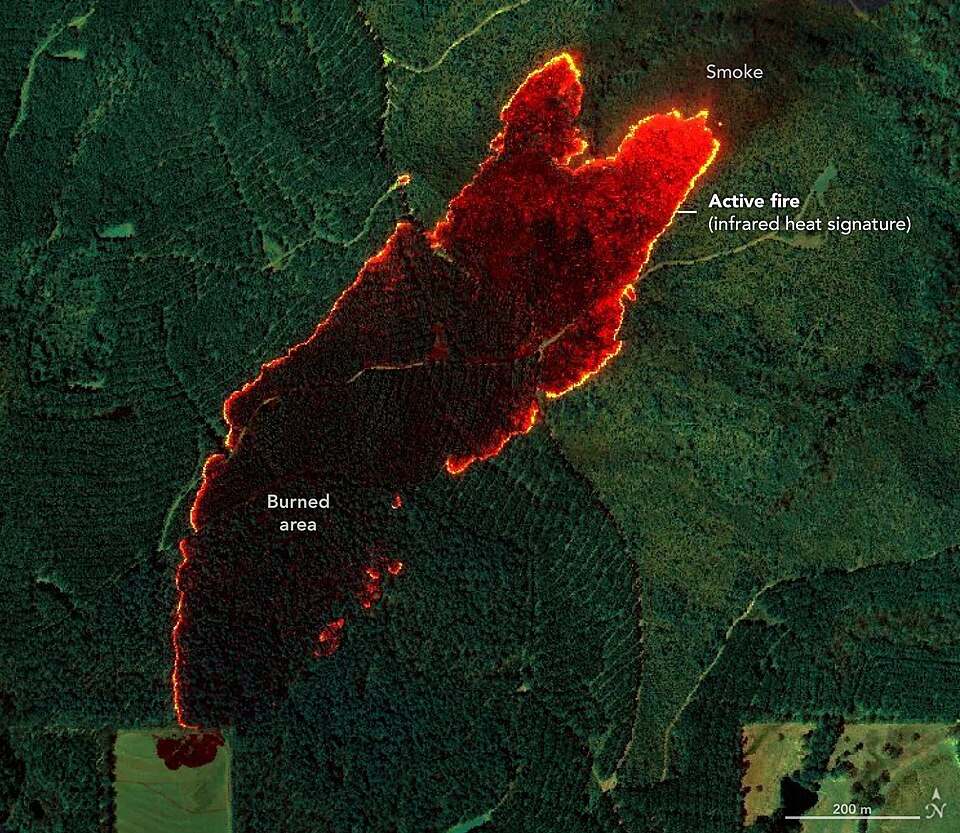
French authorities ordered more than 140,000 people out of the Gironde and Landes regions, including roughly 40,000 residents and tourists around the Cap Ferret peninsula.[1] The main blaze near Cap Ferret has burned roughly 125 square kilometers, destroyed 53 homes and a campsite, and injured 42 firefighters.[2] France activated the European Union civil-protection mechanism, called in water-bombing planes from other countries, mobilized hundreds of troops and for the first time used an adapted Airbus A400M to drop retardant.[1]
On June 24, France recorded its hottest day on record and Spain set multiple June highs above 40°C. A heatwave that began May 22 and a second intense period in June left vegetation tinder-dry, created drought conditions and raised fire danger across southwestern France and central Spain.
Midweek reports estimated roughly 87,000 people had been evacuated in France and Spain before the toll rose sharply.[2] By Saturday mainstream outlets updated the number to about 200,000 as officials widened evacuation orders and called in international firefighting help.[1]
Updated satellite mapping shows the total burned area across European Union countries this year is already the second largest on record.[1] Spanish officials say about 1,140 square kilometers have burned in Spain so far in 2026.[2] Prime Minister Pedro Sánchez declared a national wildfire emergency for the Madrid region and visited the fire zone to oversee response efforts.[3]
The mainstream summary does not mention that wildfires in France have already burned more than 42,000 hectares in 2026, surpassing the total for all of 2025 and representing about four times the average burned area for this time of year. This alarming statistic underscores the severity of the current wildfire crisis, which is further highlighted by the fact that across the EU, 1,254 fires larger than 30 hectares have been recorded in 2026, more than double the long-term average. These figures indicate a significant escalation in wildfire activity that the summary overlooks, suggesting a broader trend of increasing fire frequency and intensity in the region.
Where the mainstream account frames the wildfires primarily as immediate threats to life and property, the context provided by the European Union’s Copernicus monitoring agency indicates that human-caused climate change is a driving factor behind the unprecedented heat and dry conditions fueling these fires. Spanish Prime Minister Pedro Sánchez has noted that these extreme weather events exceed prior scientific projections, highlighting the urgent need to address climate change as a fundamental cause of the crisis. This critical perspective is absent from the mainstream coverage, which primarily focuses on the immediate impacts rather than the underlying environmental factors.
Show source details & analysis (6 sources)
📊 Relevant Data
Wildfires in France have burned more than 42,000 hectares so far in 2026, exceeding the total for all of 2025 and about four times the average burned area at the same point in prior years.
Wildfire in southern France under control, blaze rages on in Spain — Euronews
Across the EU, 1,254 fires larger than 30 hectares have been mapped so far in 2026, more than double the long-term average of 569 for the same period.
Current wildfire situation in Europe — Joint Research Centre (European Commission)
📌 Key Facts
- As of Saturday, July 25, 2026, fast-moving wildfires in France and Spain forced about 200,000 people to evacuate or shelter at home.
- French authorities ordered the evacuation of more than 140,000 people from the Gironde and Landes regions, including roughly 40,000 residents and tourists around the Cap Ferret peninsula.
- The main blaze near Cap Ferret has burned roughly 125 square kilometers (about 50 square miles), destroyed 53 homes and a campsite, and injured 42 firefighters.
- France activated the European Union civil-protection mechanism, called in water‑bombing aircraft from other countries, mobilized large numbers of troops (about 500 already committed with another 500 scheduled), and for the first time used an adapted Airbus A400M to drop flame retardant.
- Spanish authorities declared a national wildfire emergency near Madrid and ordered more than 60,000 people either to evacuate or remain indoors because of smoke and fire risk.
- Spanish Prime Minister Pedro Sánchez said roughly 321,000 acres have burned across Spain since the start of 2026, warned the climate emergency is worsening, and visited the Madrid-area fire zone to oversee response efforts.
- Updated satellite mapping shows the total burned area across European Union countries this year is already the second largest on record, with Spain reporting about 1,140 square kilometers burned so far in 2026.
- Wildfires are also affecting other parts of southern Europe: fires in Sicily and Calabria have forced evacuations amid extreme heat and winds, and a firefighter was killed in Caltanissetta, Sicily.
📰 Source Timeline (6)
Follow how coverage of this story developed over time
- On Saturday, July 25, 2026, Spanish Prime Minister Pedro Sanchez visited the fire zone near Madrid, said the priority was to save lives, and announced that his government had declared a national emergency.
- Sanchez said fires have already burned about 130,000 hectares of forest in Spain this year, compared with an annual average of 100,000 hectares over the past decade.
- French Interior Minister Laurent Nunez said on July 25 that nearly 242,000 acres had burned in France so far this year, calling it a historic record and noting at least 167,000 people had been evacuated in France alone.
- French Prime Minister Sébastien Lecornu said the Gironde fire had grown so intense it was generating its own winds and reiterated that evacuation orders must be respected without delay.
- French President Emmanuel Macron has deployed 1,000 soldiers near Bordeaux and, on July 25, ordered a modified A400M military transport aircraft – capable of dropping 20 tons of retardant – to join smaller firefighting planes, marking the first operational use of that experimental configuration.
- Around 100 Paris firefighters are being sent to reinforce efforts in southwest France, in addition to 45 firefighters and six vehicles already deployed from the capital, a senior fire official told AFP.
- The article reiterates that Spain and France have requested and received additional firefighting aircraft from other European countries, with Italy sending two Canadair water-bombing planes.
- As of Saturday, July 25, 2026, New York Times live coverage raised the combined total of people in France and Spain ordered to evacuate or shelter at home to about 200,000, updating earlier lower estimates.
- French authorities widened evacuation orders in the Gironde and Landes regions, including about 40,000 people around the Cap Ferret peninsula, in response to a main blaze that has burned roughly 125 square kilometers.
- France activated the European Union civil-protection mechanism and called in additional water‑bombing aircraft, while also deploying roughly 500 troops with another 500 scheduled, and for the first time used an adapted Airbus A400M to drop flame retardant.
- Spanish authorities declared a national wildfire emergency near Madrid and ordered more than 60,000 people either to evacuate or remain indoors because of smoke and fire risk.
- Updated satellite mapping cited in the live coverage shows total burned area across European Union countries this year is already the second largest on record, with Spanish officials saying about 1,140 square kilometers have burned in Spain so far in 2026.
- As of Saturday, July 25, 2026, fast-moving wildfires in France and Spain have forced about 200,000 people to evacuate or shelter at home, up from earlier counts of roughly 87,000 evacuees.
- French authorities have ordered the evacuation of more than 140,000 people from the Gironde and Landes regions in southwestern France, including precautionary evacuations in several western suburbs of Bordeaux on July 25.
- Prime Minister Sébastien Lecornu said the main Gironde fire had burned about 35,000 acres and destroyed 53 homes as of Friday night, July 24, and described it as a blaze that generates its own winds and can abruptly change direction.
- Interior Minister Laurent Nuñez said on July 25 that the Gironde fire was moving east toward the Bordeaux area but that the city of Bordeaux itself was not under immediate threat.
- In Spain, more than 60,000 people near Madrid have been evacuated or ordered to remain indoors, and authorities have declared a national emergency in the affected region, calling the blaze in the Madrid area the worst wildfire in the region's history.
- Prime Minister Pedro Sánchez said on July 25 there is a "window of opportunity" to fight the Madrid-area fire as temperatures temporarily ease, but warned that strong winds and dry thunderstorms could complicate firefighting efforts.
- France has mobilized 500 military troops to support firefighting operations, with another 500 to be deployed on Saturday, July 25, and for the first time is using an adapted Airbus A400M military cargo aircraft to drop flame retardant on the fires.
- Sánchez said more than 321,000 acres have burned across Spain since the beginning of 2026, compared with a 10-year annual average of about 247,000 acres, and warned that the climate emergency is worsening and exceeding prior scientific projections.
- As of Friday, July 24, 2026, authorities estimate around 87,000 people have been evacuated in France and Spain due to large wildfires, including about 67,000 residents in France alone.
- The main French blaze near Cap Ferret on the Atlantic coast has burned approximately 125 square kilometers (about 50 square miles) since Wednesday, July 22, 2026, and has destroyed 53 homes and a campsite, injuring 42 firefighters.
- French President Emmanuel Macron said France will receive EU reinforcements, including two Croatian Canadair aircraft, two Portuguese Air Tractor aircraft, and two Black Hawk helicopters from the Czech Republic and Slovakia; Spain is receiving Canadair planes from Italy and Greece.
- Spanish authorities declared a national wildfire emergency for the first time, with two major fires west of Madrid merging and burning 30 square kilometers by Friday afternoon and prompting evacuation of around 18,000 people in the Madrid region.
- A separate fire in Ávila province, less than two hours northwest of Madrid, has burned about 90 square kilometers and forced another 1,500 evacuations, while Spain’s second-largest recorded fire in Guadalajara has consumed roughly 320 square kilometers over the last week.
- Spanish Minister for the Ecological Transition Sara Aagesen said 1,140 square kilometers have already burned in Spain in 2026, more than five times the area burned in the first half of 2025, and the government attributes increased fire severity partly to climate change and land-use changes.
- Wildfires are also burning in Sicily, Italy, where high temperatures above 40°C, low humidity and wind have forced scattered evacuations and were blamed for the death of a firefighter in Caltanissetta.
- On Friday, July 24, 2026, French Interior Minister Laurent Nunez said about 40,000 people have been or are being evacuated in southwestern France due to the Cap Ferret-area wildfire, up from earlier estimates of about 20,000.
- Nunez reported that the fire near Cap Ferret has burned more than 25,000 acres and destroyed or damaged around 80 homes, about 50 of them completely.
- French President Emmanuel Macron said France has activated the EU civil protection mechanism and the European Union will provide three water-bombing planes to help fight the fires.
- Spanish authorities declared a state of emergency in the Madrid region, where more than 10,000 people have been evacuated from two major fires burning within roughly 62 miles of the capital, and smoke has reached parts of Madrid.
- French southeast regions around Cotignac have seen dozens of fires since Tuesday, with officials reporting about 25 houses destroyed there, while heavy smoke and evacuations are also reported in Spain, Sicily and Calabria in Italy.
- European Forest Fire Information System satellite data show total burned area across EU countries so far this year is already the second largest on record.