
Charter Plane Crash At Alaska Radar Site Kills Eight, Including Air Force Officer And Army Corps Workers
A chartered Cessna 441 carrying eight people crashed while on approach to the Cape Newenham Long Range Radar Site Airport on August 20, 2026, killing everyone aboard.[1]
NTSB Alaska region chief Clint Johnson said there were two pilots and six passengers and that the plane departed Ted Stevens Anchorage International Airport before crashing about 12:15 p.m. local time while on approach.[2] The NTSB said the aircraft was on its second instrument approach in heavy fog after the pilots aborted a first landing attempt, and automated observations showed visibility fall from roughly 10 miles to under a quarter-mile within about 15 minutes of the crash.[3]
The Cape Newenham facility was built in the 1950s for Soviet missile warning, is now an unmanned long-range radar site with a gravel runway, and is managed by the Pacific Air Forces Regional Support Center; contractors visit periodically for maintenance.[2] Alaskan Command described the flight as a civilian-contracted charter supporting the radar site.[4] Security Aviation, the Anchorage operator identified by Sen. Lisa Murkowski, said it is "heartbroken," is cooperating with investigators and declined to speculate on the cause.[2]
Initial news reports confirmed the crash and the deaths of all eight people aboard.[5] Later reporting identified two U.S. Army Corps of Engineers employees among the dead and said the Air Force on August 24 publicly identified 2nd Lt. Leah R. Borsich as one of the victims.[6] Military leaders called the crash "a devastating loss for our military family" and said their priority was support for families and colleagues.[4]
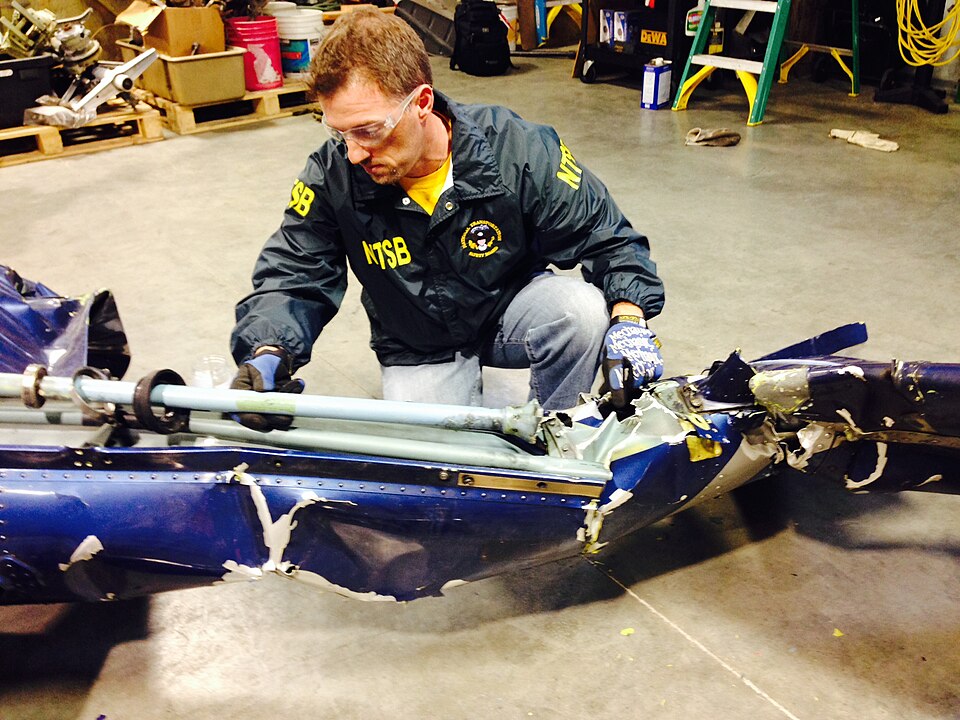
The FAA and the National Transportation Safety Board said they will investigate the crash, and NTSB investigators were reported traveling to the scene to document the wreckage and gather evidence.[2]
The mainstream summary does not mention that Alaska's aviation accident rates are significantly higher than the national average, with the total accident rate being 2.35 times higher and the fatal accident rate 1.34 times higher, according to NTSB data from 2008 to 2017. This context is crucial for understanding the operational challenges faced by flights in the region, particularly in adverse weather conditions like those present during the crash. The summary also overlooks the structural issues contributing to these elevated rates, such as minimal radar coverage, sparse weather observation systems, and regulatory exemptions for many charter operations, which could have implications for safety standards in civilian-contracted missions like the one that ended tragically on August 20, 2026.[7]
Additionally, the summary does not explore the specific operational difficulties that charter flights face in Alaska, including the reliance on small commuter aircraft to access remote locations. The phenomenon of Controlled Flight into Terrain (CFIT) is particularly relevant here, driven by rapidly changing weather and challenging terrain, which the mainstream account fails to address. Understanding these factors could provide deeper insights into the risks associated with such flights and the tragic outcomes that can result from them.[7]
Show source details & analysis (8 sources)
📊 Relevant Data
Alaska's total aviation accident rate was 2.35 times higher than the national average and the fatal accident rate was 1.34 times higher, per NTSB data covering 2008-2017.
US agency releases report aimed at Alaska aviation safety — AP News
📌 Key Facts
- All eight people aboard the charter aircraft were killed in the crash at the Cape Newenham Long Range Radar Site Airport on August 20, 2026, the military confirmed. Cape Newenham Long Range Radar Site Airport
- The aircraft was a twin‑engine Cessna 441 that departed Ted Stevens Anchorage International Airport and crashed about 12:15 p.m. local time on August 20, 2026 while on approach to Cape Newenham. Cessna 441
- NTSB Alaska region chief Clint Johnson said the plane was on its second instrument approach in heavy fog after the pilots aborted a first landing attempt, and automated observations showed visibility fall from roughly 10 miles to less than a quarter‑mile within about 15 minutes of the crash. NTSB Alaska region chief Clint Johnson
- Two U.S. Army Corps of Engineers employees were among the dead; authorities said there were two pilots and six passengers aboard and that the victims included an Army member, civilian contractors and Security Aviation crew members — on August 24 the Air Force publicly identified 2nd Lt. Leah R. Borsich as one of the eight. 2nd Lt. Leah R. Borsich
- Alaskan Command described the flight as a 'civilian‑contracted' charter supporting the Cape Newenham radar site, which is managed by the Pacific Air Forces Regional Support Center. Alaskan Command
- Security Aviation, the Anchorage‑based operator identified by Sen. Lisa Murkowski, said it is 'heartbroken,' expressed condolences, is cooperating with investigators and declined to speculate on the cause. Security Aviation
- The FAA and NTSB confirmed they will investigate the crash, NTSB investigators were traveling to the scene on August 21, 2026, and military leaders including Lt. Gen. Robert Davis called the crash 'a devastating loss for our military family' and emphasized support for families and colleagues. Lt. Gen. Robert Davis
- The Cape Newenham outpost — built in the 1950s for Soviet missile warning, closed as a manned station in 1983 and now visited periodically by contractors — sits on a mountain slope with a gravel runway where the FAA recommends GPS/instrument approaches. Cape Newenham outpost
📰 Source Timeline (8)
Follow how coverage of this story developed over time
- On Monday, August 24, 2026, the Air Force publicly identified 2nd Lt. Leah R. Borsich, 23, of the 611th Civil Engineer Squadron at Joint Base Elmendorf-Richardson, as one of the eight people killed in the August 20 crash near the Cape Newenham Long Range Radar Site Airport.
- Pacific Air Forces Regional Support Center commander Col. Timothy Meerstein issued a statement describing Borsich as a 'positive leader' who 'led with professionalism, compassion and purpose' and said her presence 'strengthened the bonds between the people around her.'
- The Air Force confirmed that, in addition to the pilots, the victims included an Army member, civilian contractors, and Security Aviation crew members supporting operations at the Cape Newenham Long Range Radar Site.
- Security Aviation, the Anchorage-based operator of the Cessna 441 charter flight, released a statement saying it is 'heartbroken' by the crash, expressed condolences to families, thanked military and rescue teams, and said it is cooperating with investigators while declining to speculate on the cause.
- NTSB Alaska region chief Clint Johnson said the Cessna 441 crashed around 12:15 p.m. local time on Thursday, August 20, 2026, during its second instrument approach to the gravel runway in heavy fog after the pilots had aborted a first landing attempt due to poor visibility.
- National Weather Service data cited in the report show that an automated observation near the Cape Newenham airport recorded fog with visibility about 10 miles shortly before the crash, dropping to less than a quarter-mile roughly 15 minutes later.
- Fox News confirms via military statement that two of the eight people killed in the August 20, 2026 crash near the Cape Newenham Long Range Radar Site were U.S. Army Corps of Engineers employees, aligning with but independently corroborating earlier identifications.
- The article reports that the twin-engine Cessna 441 "got caught in fog" on Thursday, August 20, 2026, while flying from Anchorage to the Cape Newenham Long Range Radar Site, reinforcing low-visibility weather as a factor.
- Lt. Gen. Robert Davis issued a detailed public statement describing the crash as a "devastating loss for our military family" and emphasizing that the victims were "dedicated professionals carrying out a vital mission in a demanding environment."
- The military stated that families of the employees have been notified and that identities will be released 24 hours after notification, providing a timing benchmark for future name disclosures.
- Sen. Lisa Murkowski released a statement offering condolences, noting her own extensive travel with Security Aviation in Alaska and publicly thanking the U.S. Coast Guard, NTSB, Alaska State Troopers, and the Rescue Coordination Center for their response.
- The New York Times article confirms the aircraft was a Cessna 441 that departed Ted Stevens Anchorage International Airport and crashed around 12:15 p.m. local time on Thursday, August 20, 2026, west of Cape Newenham LRRS Airport.
- Alaskan Command described the flight as a 'civilian-contracted' mission and issued a public statement praising those aboard as 'dedicated professionals carrying out a vital mission in a demanding environment,' while declining to provide further mission details.
- The article notes that the Cape Newenham airport is closed to the public and serves a long-range military radar site.
- Sen. Lisa Murkowski posted a statement on X noting her extensive travel with Anchorage-based Security Aviation and publicly thanking the U.S. Coast Guard, NTSB, Alaska State Troopers and the Rescue Coordination Center for their response.
- Sen. Dan Sullivan said he had requested a briefing on the incident from the NTSB and FAA and publicly offered condolences, and the FAA confirmed that both it and the NTSB will investigate the crash.
- Article confirms that two of the eight people killed were U.S. Army Corps of Engineers employees traveling as part of a Corps project delivery team supporting a U.S. Air Force project at Cape Newenham.
- Identifies the accident aircraft as a twin-engine Cessna 441 that departed Anchorage bound for Cape Newenham Long Range Radar Site Airport, about 450 miles west.
- Provides additional operational detail about the radar site, noting it was built in the 1950s for Soviet missile warning and now monitors airspace toward Russia, North Korea and China, with a gravel strip on a mountain slope where FAA recommends GPS/instrument landings.
- Describes weather around the time of the crash: an automated station near the airport reported low clouds, fog and about 10 miles visibility shortly before the crash, with visibility dropping to less than one-quarter mile about 15 minutes afterward.
- Quotes Alaskan Command’s Lt. Gen. Robert Davis calling those aboard "dedicated professionals carrying out a vital mission in a demanding environment" and describing the crash as a "devastating loss for our military family."
- Notes that the Cape Newenham outpost has been closed since 1983 and is now visited only periodically by civilian contractors for radar maintenance.
- Reports that U.S. Sen. Lisa Murkowski said the flight was operated by Security Aviation, an Anchorage-based charter company, and that the company did not immediately comment.
- Confirms National Transportation Safety Board investigators were traveling to the crash scene on Friday, August 21, 2026, and outlines investigative priorities such as whether any emergency was declared and precise weather conditions at impact.
- The Associated Press report confirms the crash occurred Thursday, August 20, 2026, at Cape Newenham Long Range Radar Site Airport, about 450 miles west of Anchorage.
- Alaskan Command's statement characterizes the aircraft as a "civilian-contracted" charter and says the radar site is managed by the Pacific Air Forces Regional Support Center.
- Lt. Gen. Robert Davis said those on board were "dedicated professionals" on a "vital mission" and emphasized that the current priority is support for families, friends and teammates.
- NTSB Alaska region chief Clint Johnson specified that there were two pilots and six passengers on board and that the plane departed Anchorage and is believed to have crashed early Thursday afternoon while on approach to Cape Newenham.
- The U.S. military confirmed on Thursday, August 20, 2026, that all eight people aboard the charter aircraft were killed in the crash at the Cape Newenham Long Range Radar Site Airport.
- The aircraft is described by Alaskan Command as a civilian-contracted charter supporting the Cape Newenham Long Range Radar Site, part of a remote network that tracks aircraft in Alaska's airspace and along its borders.
- U.S. Air Force Lt. Gen. Robert Davis issued a formal statement calling the deaths "a devastating loss for our military family and the communities we serve" and emphasizing support for families and colleagues.
- The military reiterated that the radar site is managed by the Pacific Air Forces Regional Support Center and highlighted its role in monitoring Alaska airspace, but did not detail the specific mission of those on board.
- The NTSB said the plane departed Anchorage and is believed to have crashed early Thursday afternoon while on approach to Cape Newenham.