
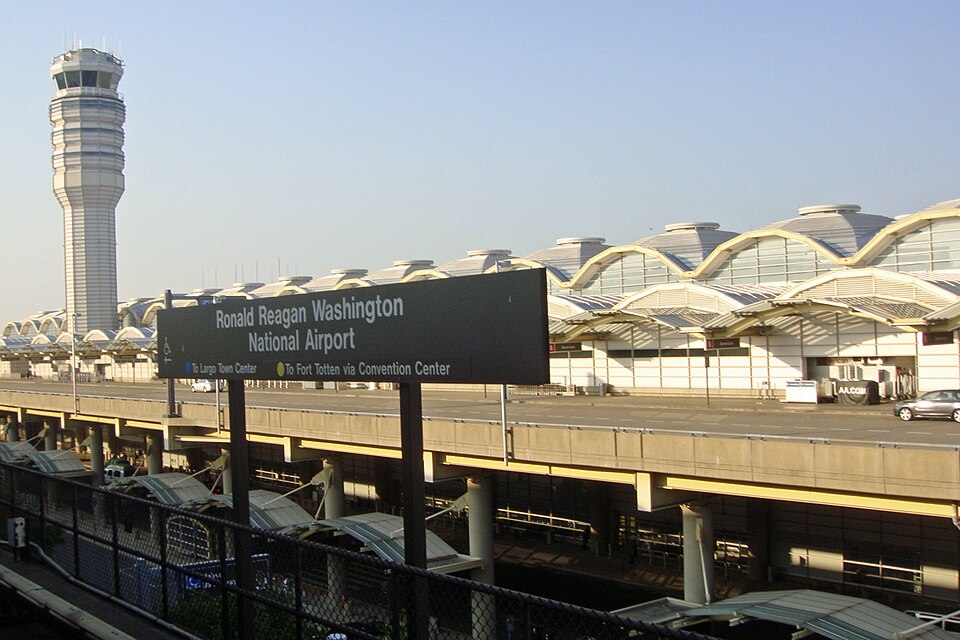
Marine One Radio Failures Recur After NTSB Details Near-Miss Over D.C.
Marine One again had trouble reaching Washington, D.C., air traffic controllers while preparing to take off on Thursday, August 27, 2026, and contact was not made until another pilot intervened.[1]
The incident came about an hour after the National Transportation Safety Board released a preliminary report saying Reagan controllers did not hear Marine One's required three-minute warning calls during an August 4 near-miss.[2] The report also said an attempted backup relay through the Joint Base Anacostia-Bolling helicopter facility failed.[2] The Federal Aviation Administration said controllers established contact before Thursday's takeoff but did not explain why the radio problems appeared to recur.[1] Transportation Secretary Sean Duffy had said on August 11 that interference issues had been fixed and such a failure "should not take place again," a claim contradicted by Thursday's incident.[1]
On July 31, 2025 the White House announced plans for a new State Ballroom, and demolition of the East Wing began in October 2025; construction has continued into August 2026.[3] The NTSB said having Marine One airborne at the same time as an Envoy Air E-170 appeared to violate Federal Aviation Administration safety procedures adopted after a January 29, 2025 midair collision that killed 67 people.[2] Preliminary NTSB estimates put the minimum lateral separation at just over 0.8 miles and the vertical separation at about 700 feet, and the Envoy crew received a traffic alert but never saw the helicopter.[2]
The FAA said it took immediate action after the August 4 incident, including relocating an antenna to improve communications and reviewing procedures.[2] White House spokesman Kush Desai praised Marine One pilots as "the finest aviators in the world" and said officials continue to work with military, FAA and security personnel to ensure the president's safety.[2]
The mainstream summary does not mention that independent recordings captured Marine One's required three-minute warning calls, which went unheard by Reagan controllers, raising questions about the reliability of air traffic communication. @JimLaPorta pointed out this critical detail, suggesting that the issue is not merely a failure of equipment but potentially a systemic problem within the air traffic control framework. Furthermore, while the summary notes the FAA's actions post-incident, it overlooks that controllers had flagged the radio failures a week prior to the incident, indicating a troubling pattern of negligence that persisted despite prior warnings. @fuelmeupcc highlighted this alarming oversight, emphasizing that the same airspace had previously witnessed a tragic midair collision, which underscores the gravity of these communication failures.
Additionally, the mainstream account does not address the broader context of institutional trust issues within the FAA, as noted by The Atlantic. The analysis suggests that years of disinvestment and political dysfunction have left air traffic control underfunded and outdated, contributing to repeated system failures that erode public confidence. This perspective adds depth to the narrative, framing the communication failures not just as isolated incidents but as symptoms of a larger, systemic problem within federal aviation management.
Show source details & analysis (3 sources)
📌 Key Facts
- The NTSB preliminary report released August 27, 2026, says Marine One pilots made the standard three-minute warning calls on August 4, 2026, but Reagan National air traffic controllers did not hear them on official tower recordings even though separate ATC.com recordings captured the calls.
- Controllers and Marine One pilots had met about one week before the August 4 incident to address past missed three-minute warning calls and agreed to relay the warning via another party if direct contact failed, but the pilots' attempt to use the helicopter facility at Joint Base Anacostia-Bolling as a backup also failed to reach controllers, according to the NTSB.
- The NTSB says having the Envoy Air jet and Marine One airborne at the same time appeared to violate FAA safety procedures adopted after the January 29, 2025 midair collision that killed 67 people; preliminary estimates put their minimum separation at just over 0.8 miles laterally and about 700 feet vertically, and the Envoy crew received a traffic alert but never saw the helicopter.
- The FAA said it took immediate action after the August 4 incident — including relocating an antenna to improve communications between Reagan controllers and Marine One and reviewing procedures — and asserted the three-minute notification was communicated by alternate means and acknowledged by a controller before takeoff.
- In an August 11 CBS News interview, Transportation Secretary Sean Duffy said interference issues had been fixed and that such a communication problem "should not take place again," a claim contradicted by a recurring failure on August 27, 2026.
- About an hour after the NTSB publicly released new details on August 27, 2026, Marine One again had trouble communicating with air traffic controllers as it was about to take off; calls went unheard until another pilot intervened, after which controllers ultimately established contact before takeoff, and the FAA confirmed contact was made but did not explain why the radio issues appeared to recur.
- The Pentagon-FAA agreement requiring a three-minute warning before presidential helicopter departures predates the 2025 fatal midair crash, White House officials reiterated that President Trump was never in danger during the August 4 loss-of-separation incident, and White House spokesman Kush Desai called Marine One pilots "the finest aviators in the world," saying the White House continues working with military, FAA and security personnel to ensure the president's safety.
📰 Source Timeline (3)
Follow how coverage of this story developed over time
- On Thursday afternoon, August 27, 2026, Marine One again had trouble communicating with air traffic controllers in Washington, D.C., as it was about to take off.
- During the August 27 incident, Marine One's calls to controllers went unheard until another pilot intervened, after which controllers ultimately established contact before takeoff.
- The August 27 event occurred about an hour after the NTSB publicly released new details about the August 4 near-miss involving Marine One and a commercial jet from Reagan National Airport.
- Transportation Secretary Sean Duffy had said in an August 11 CBS News interview that interference issues had been fixed and that such a communication problem "should not take place again," a claim contradicted by the August 27 failure.
- The FAA issued a statement confirming that air traffic controllers established contact with Marine One prior to the August 27 takeoff but did not address why the radio issues appeared to recur.
- The NTSB preliminary report released August 27, 2026, says Marine One pilots made the standard three-minute warning calls on August 4, 2026, but Reagan National air traffic controllers did not hear them on official tower recordings, even though separate ATC.com recordings captured the calls.
- Controllers and Marine One pilots had met one week before the August 4 incident to address past missed three-minute warning calls and agreed on an alternative plan to relay the warning via another party if direct contact failed.
- On August 4, Marine One pilots attempted to relay the three-minute call through the helicopter facility at Joint Base Anacostia-Bolling, but that backup notification also failed to reach controllers according to the NTSB.
- The NTSB states that having both the Envoy Air jet and Marine One airborne at the same time appeared to violate FAA safety procedures adopted after the January 29, 2025 midair collision near Reagan that killed 67 people.
- Preliminary NTSB estimates place the minimum separation between Marine One and the Envoy Air flight at just over 0.8 miles laterally and about 700 feet vertically; the Envoy crew received a traffic alert but never saw the helicopter.
- The FAA said it took immediate action after the August 4 incident, including relocating an antenna to improve communications between Reagan controllers and Marine One and reviewing procedures, and asserted that the three-minute notification was communicated by alternate means and acknowledged by a controller before takeoff.
- The Pentagon-FAA agreement requiring a three-minute warning before presidential helicopter departures predates the 2025 fatal midair crash; officials reiterated that President Trump was never in danger during the August 4 loss-of-separation incident.
- White House spokesman Kush Desai issued a statement calling Marine One pilots "the finest aviators in the world" and said the White House continues working with military, FAA and security personnel to ensure the president's safety.