
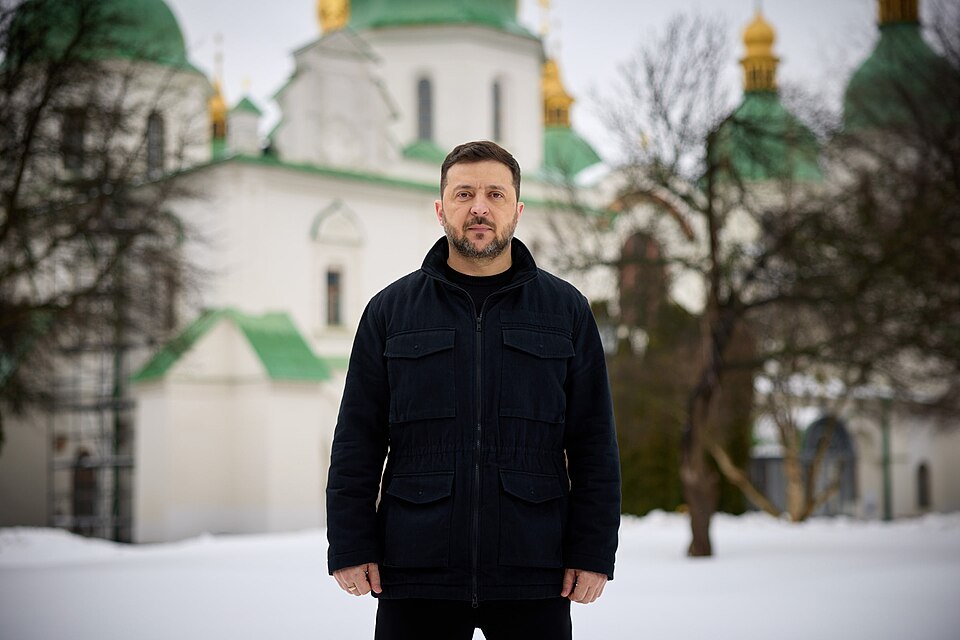
Trump Sanctions Waiver On Russia Draws Zelenskyy Warning As Ukraine Hits Russian Oil
President Donald Trump on Friday night, October 16, 2026, signed an executive order pausing new U.S. sanctions and tariffs on Russian energy and goods, a move Kyiv warns would strengthen Moscow's war effort.[1]
The order waived 100% tariffs that were set to begin under the Lindsey O. Graham Sanctioning Russia Act and also halted the law's planned 500% tariffs on Russian goods.[2] Trump formally invoked the law's national-interest waiver and told Congress he had certified that pausing the sanctions served U.S. interests.[2] Lawmakers from both parties blasted the move as effectively propping up Vladimir Putin, calling it beyond irresponsible and saying it undercut congressional intent.[3]
The Lindsey O. Graham Act had been signed by Trump in late September 2026 after an 86-11 Senate vote and was designed to slap steep tariffs on major buyers of Russian oil and gas.[3] The law specifically targeted top importers such as China, India and Turkey to cut Kremlin energy revenue.[2] Critics also pointed to Trump's separate decision a week earlier to buy at least 300,000 tons of Russian diesel now, with larger purchases planned, which opponents say will aid Russia's war effort.[2]
Early coverage from CBS News and NPR focused on the administration easing restrictions and arranging energy deals with Moscow.[2] Later reporting, led by PBS and followed by additional CBS accounts, shifted to bipartisan congressional outrage and repeated public warnings from Ukrainian President Volodymyr Zelenskyy that U.S. waivers would embolden Russia.[1] Congress is in recess until after the November 3 midterms, making a rapid legislative reversal unlikely, and the waivers will remain until the administration decides otherwise.[3]
Show source details & analysis (7 sources)
📌 Key Facts
- On Friday night, October 16, 2026, President Trump signed an executive order waiving 100% tariffs that were set to start under the Lindsey O. Graham Sanctioning Russia Act Lindsey O. Graham Sanctioning Russia Act.
- The October 16 order also waived the law's 500% tariffs on Russian goods and halted certain other sanctions, with waivers to remain until the administration "determines that further action is appropriate" 500% tariffs.
- Trump formally invoked the law's national-interest waiver clause by certifying to Congress that halting the sanctions is in the U.S. national interest and notifying lawmakers of that decision national-interest waiver clause.
- The paused measures explicitly include sanctions on Russian officials, banks and a "shadow fleet" of oil tankers that help move Russian energy exports shadow fleet of oil tankers.
- Lawmakers from both parties condemned the waiver — with Sen. Thom Tillis calling it "beyond irresponsible" and Senate Majority Leader Chuck Schumer saying it gave "the Russian economy life support" — and both chambers are in recess until after the November 3, 2026 midterms, making a quick legislative counter unlikely Sen. Chuck Schumer.
- Ukrainian President Volodymyr Zelenskyy on October 17 urged supporters to defend the Graham Act, called the U.S. decision "unfortunate," warned that blocking the sanctions would embolden Russia and weaken Ukraine’s ability to respond, and thanked both Democrats and Republicans who backed the law Volodymyr Zelenskyy.
- Zelenskyy told Meet the Press on October 18 that further U.S. waivers would strengthen Vladimir Putin's war effort, confirmed that U.S.-Ukraine intelligence sharing had resumed after being "blocked for some period," and said negotiator Rustem Umerov met U.S. envoy Jared Kushner about possible next steps Meet the Press.
- Critics pointed to Trump's separate decision to buy an initial 300,000 tons of Russian diesel — with 500,000 tons slated for November and 1 million tons thereafter — and said those purchases, together with the sanctions pause, would aid Russia’s war effort without meaningfully lowering global fuel prices 300,000 tons of Russian diesel.
- On Sunday, October 18, 2026, Ukraine launched more than 1,000 drones at Russia, igniting fires at the Petersburg Oil Terminal and the Ruchi oil depot in St. Petersburg; Russia said its forces destroyed 1,015 drones while local officials reported at least one dead and five wounded more than 1,000 drones.
📰 Source Timeline (7)
Follow how coverage of this story developed over time
- The article notes that as of October 19, 2026, Zelenskyy is still grappling with the implications of President Trump's recent decision to invoke a national-interest waiver that paused the Lindsey O. Graham Sanctioning Russia Act and of a new U.S. deal to import Russian diesel.
- Zelenskyy frames these U.S. policy moves as benefiting Russian President Vladimir Putin at a time when Ukraine is facing renewed mass strikes on its energy grid.
- The piece adds that a Trump-brokered truce proposal covering energy infrastructure 'came to nothing,' with no effective protection for Ukrainian power facilities against Russian attacks.
- On Sunday, October 18, 2026, Ukraine launched more than 1,000 drones at Russia in one of its largest aerial attacks of the war, igniting fires at the Petersburg Oil Terminal and the Ruchi oil depot in St. Petersburg.
- Local governor Alexander Beglov said at least one person was killed and five wounded in the St. Petersburg attacks, which also targeted a logistics center for retailer Ozon and a VK-operated data center.
- Russia's Defense Ministry said its forces destroyed 1,015 Ukrainian drones across 15 Russian regions, occupied Crimea and the Black Sea during the October 18 operation.
- Russian strikes on Sunday, October 18, 2026, hit the southern Ukrainian city of Zaporizhzhia, killing a woman and wounding at least two others, including a 6-year-old girl, according to local officials.
- In an October 18 'Meet the Press' interview, Zelenskyy warned that further U.S. waivers of Russia sanctions would strengthen Vladimir Putin's war effort and confirmed that U.S.-Ukraine intelligence sharing had resumed after being 'blocked for some period of time.'
- Trump told reporters late Saturday, October 17, 2026, that they did not yet know his decision on future Russia sanctions, despite his October 16 executive order waiving planned measures under the Lindsey O. Graham Sanctioning Russia Act.
- Zelenskyy said on social media later October 18 that Moscow had violated Trump's 'energy ceasefire' 76 times and that Russian strikes on energy facilities in four Ukrainian regions had left tens of thousands of families without power.
- Zelenskyy wrote that he spoke Sunday with U.S. presidential envoys Steve Witkoff and Jared Kushner about the results of an October 9 meeting between U.S. and Ukrainian negotiating teams in Miami and about 'next steps in diplomacy.'
- On Saturday, October 17, 2026, President Donald Trump signed an executive order formally putting implementation of the Lindsey Graham Act’s new Russia sanctions on hold just two days before a statutory deadline.
- The paused measures include sanctions on Russian officials, banks and a shadow fleet of oil tankers that help move Russian energy exports.
- Ukrainian President Volodymyr Zelenskyy issued a social-media statement on October 17 calling the U.S. decision to "completely disregard the Lindsey Graham Act" unfortunate and urging supporters to speak out so the act can still be implemented.
- Zelenskyy thanked both Democrats and Republicans who backed the law and warned that blocking it would embolden Russia and weaken Ukraine’s ability to respond to attacks.
- Zelenskyy said Ukraine’s lead negotiator Rustem Umerov met U.S. presidential envoy Jared Kushner on Friday, October 16, and that the U.S. is working on a possible three-way meeting involving himself, Trump and Russian President Vladimir Putin.
- Overnight Russian attacks reported in this article killed at least four people in Ukraine, including an ambulance driver, and wounded dozens; Ukrainian drones killed one woman in a Russian border region and disrupted flights at Moscow airports.
- Sen. Richard Blumenthal, a co-author of the sanctions bill, said Trump’s waivers "have nothing to do with our national security, and everything to do with sucking up to Vladimir Putin," sharpening congressional criticism.
- The article links Trump’s pause of the Lindsey Graham Act sanctions to his earlier agreement to purchase Russian diesel, which critics in both parties say will aid Russia’s war effort without meaningfully lowering global fuel prices.
- The Associated Press/PBS report, published Saturday, October 17, 2026, characterizes Trump's move as an "abrupt" and indefinite waiver of the sanctions days before they were to take effect.
- Lawmakers from both parties publicly condemned the waiver on Saturday, with Sen. Thom Tillis calling it "beyond irresponsible" and accusing the administration of capitulating to a "Russian dictator who illegally invaded Ukraine."
- Sen. John Cornyn said "Lindsey would be appalled," highlighting the late Sen. Lindsey Graham's role in crafting the sanctions law that passed the Senate 86-11.
- Senate Majority Leader Chuck Schumer described Trump's actions as "giving the Russian economy life support" and called the diesel deal with Putin a "deal with the devil."
- Sen. Elizabeth Warren accused Trump of "thumbing his nose" at Congress and "enabling Vladimir Putin to continue his war of aggression," and urged colleagues to act to reverse course.
- The article underscores that both the House and Senate are in recess until after the November 3, 2026 midterm elections, making a rapid legislative response to the waiver unlikely.
- The AP piece reiterates that the Lindsey Graham Russian Sanctions Act had been negotiated for nearly a year, passed the Senate 86-11, and was designed to impose steep tariffs on major importers of Russian oil and energy products to cut funding for Russia's war on Ukraine.
- Skeptics in Congress are quoted as having warned when Trump signed the bill in September 2026 that he might not follow or enforce it.
- On Friday, October 16, 2026, President Donald Trump signed an executive order pausing implementation of the Lindsey O. Graham Sanctioning Russia Act just two days before its sanctions were due to take effect.
- On Saturday, October 17, 2026, Ukrainian President Volodymyr Zelenskyy publicly urged supporters to defend the new U.S. sanctions regime and called the American decision to "completely disregard" the Graham Act "unfortunate" while stopping short of directly criticizing Trump.
- Zelenskyy said blocking the sanctions would encourage Russia to continue killing and attacks on Ukraine's energy infrastructure and argued that limiting Ukraine's ability to retaliate would not bring peace.
- Sen. Richard Blumenthal, a co-drafter of the Graham legislation, issued a statement accusing Trump of turning his back on Congress and allies and said the waivers were about "sucking up to Vladimir Putin," not U.S. national security.
- The article reiterates that Trump's separate decision a week earlier to buy at least 300,000 tons of Russian diesel in an initial tranche, plus 500,000 tons in November and 1 million tons afterward, has been criticized across party lines as aiding Russia's war effort without meaningfully lowering global fuel prices.
- Ukrainian officials reported that Russian attacks overnight before October 17, 2026 killed at least four people, including an ambulance driver, and wounded dozens in Ukraine, while Ukrainian drones killed a woman in a Russian border region and disrupted flights at Moscow airports.
- On Friday night, October 16, 2026, President Trump signed an executive order waiving 100% tariffs that were set to start Sunday on the world's five largest importers of Russian crude oil and natural gas under the Lindsey O. Graham Sanctioning Russia Act.
- The same October 16 executive order also waived the law's 500% tariffs on Russian goods and halted certain other sanctions on Russia, with waivers to remain until the administration "determines that further action is appropriate."
- Trump formally invoked the law's national-interest waiver clause by certifying to Congress that halting the sanctions is in the U.S. national interest and said he had sent that notification.
- The Graham Act, signed by Trump in late September 2026, specifically targets major buyers of Russian oil and gas, including China, India and Turkey, and was designed to impose 100% tariffs beginning Sunday before the waiver.
- The article notes that these waivers came one week after Trump eased sanctions on Russian diesel and announced an import deal with Russian President Vladimir Putin, highlighting an ongoing policy shift away from years of tight U.S. restrictions on Russian energy exports.
- A bipartisan group of senators earlier in the week labeled the diesel waivers a "betrayal of the people of Ukraine" and urged Trump to enforce the sanctions and tariffs in the Graham law to increase economic pressure on Russia and its main energy customers.